Get all your news in one place.
100's of premium titles.
One app.
Start reading
The Times of India
The Times of India
World
TOI World Desk

In 1980, California released more than 1.5 billion sterile Mediterranean fruit flies after an invasive outbreak threatened over 250 crops, eradicating the infestation before it could permanently invade California's orchards

In 1980, when the Mediterranean fruit fly first appeared in California, agricultural officials feared one of the region’s worst pest invasions since settlement. The medfly, as it is commonly known, can infect more than 250 types of fruits, vegetables, and nuts, and for this reason, it is considered one of the most damaging agricultural pests in the world. The establishment of the pest would have caused considerable economic losses to the multi-billion dollar farming industry in California, along with strict export regulations and continuous damage to crops.

Get breaking news anytime, anywhere. Download the TOI app now!

California ultimately turned to what was then the largest Sterile Insect Technique campaign, releasing more than 1.5 billion sterile male Mediterranean fruit flies to overwhelm the wild population and stop reproduction.

A tiny insect with the potential to devastate agriculture

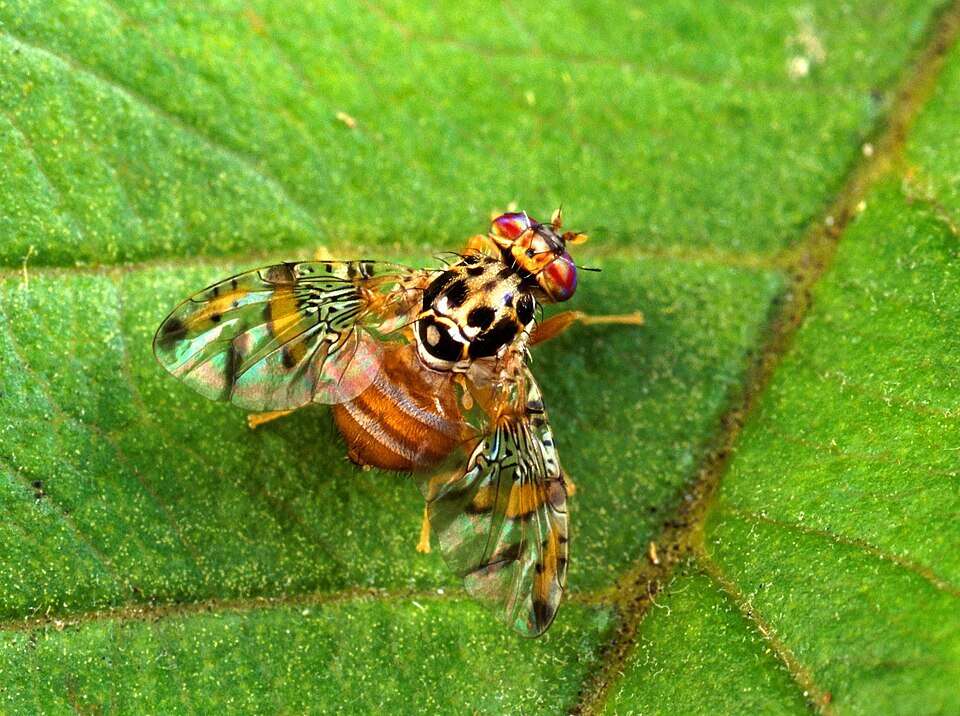
The Mediterranean fruit fly ( Ceratitis capitata ) is native to sub-Saharan Africa but has spread across many tropical and subtropical regions through international trade. Female flies lay their eggs beneath the skin of ripening fruit, where the larvae feed on the pulp, causing fruit to rot before harvest.

Unlike many crop pests that attack only a few plant species, medflies are highly adaptable. They infest citrus fruits, peaches, apricots, apples, pears, avocados, tomatoes and many other commercially valuable crops. Because California grows hundreds of fruit and vegetable varieties, the arrival of the insect immediately raised concerns among scientists and policymakers.

According to California Agriculture , the first confirmed medfly detection in California occurred in 1975 near Culver City. Five years later, much larger infestations appeared simultaneously in Northern and Southern California. The 1980–82 Northern California outbreak alone led to the capture of more than 300 wild medflies across several counties and prompted an eradication campaign covering about 1,300 square miles. Officials declared the outbreak eradicated in 1982 after an operation costing roughly $100 million.

However, medflies continued to appear in later years, particularly in Southern California, leading researchers to question whether repeated introductions through imported produce or small resident populations were responsible.

How sterile insects became California's secret weapon

Early eradication programmes relied heavily on aerial applications of the insecticide malathion, a strategy that generated public opposition because of concerns about human health and environmental impacts.

Scientists therefore expanded the use of the Sterile Insect Technique, an environmentally friendly method first developed during the mid-twentieth century. Male medflies are mass-reared in specialised facilities, sterilised using carefully controlled doses of radiation and then released into the wild. Since sterile males still compete successfully for mates, wild females that mate with them produce no viable offspring, causing populations to decline over successive generations.

Unlike pesticides, which can affect human health, crops and insect populations, sterile males neither sting nor bite humans and have little effect on the environment because they prevent reproduction. In California, the scale of the project increased tremendously over time. Eventually, more than one and a half billion sterile medflies were released in California, with millions of sterile male flies being released through aircraft in quarantine areas every week.

Today, sterile medflies are still released whenever new outbreaks are detected, allowing authorities to respond rapidly without resorting to widespread pesticide spraying.

Research shows integrated control made the difference

Although the Sterile Insect Technique became one of California's most recognisable pest-control tools, researchers caution that it was not a standalone solution.

Research, published in California Agriculture, examined California's repeated medfly outbreaks between 1975 and 1991. Carey noted that ten eradication programmes had already cost more than $150 million and argued that the threat was likely to remain long-term because of California's favourable climate, abundant backyard host plants and repeated introductions through international travel and trade. He also observed that no medfly population had been eradicated using sterile insects alone; successful programmes relied on combining SIT with surveillance, quarantine and other control measures.

Subsequent research has reinforced the value of integrated pest management. Mathematical models of the Sterile Insect Technique show that releasing very large numbers of sterile insects can successfully suppress pest populations, but the method performs best when combined with complementary control strategies rather than used in isolation.

California's experience has since influenced pest-control programmes around the world. Similar sterile insect campaigns are now used against Mediterranean fruit flies and other invasive pests in countries including Mexico, Guatemala and several Mediterranean nations.

Almost half a century later, the Mediterranean fruit fly still poses a threat to the state because new introductions can arrive through international trade and transportation. The worst-case scenario of permanent establishment in California’s commercial orchards remains unlikely because of constant monitoring and rapid response. The programme became a strong example of biological control replacing broad pesticide use with a more targeted and environmentally friendly approach. Although sustaining the programme entails costs, it remains a notable example of the Sterile Insect Technique.

Sign up to read this article
Read news from 100's of titles, curated specifically for you.
Already a member? Sign in here
Related Stories
Top stories on inkl right now
One subscription that gives you access to news from hundreds of sites
Already a member? Sign in here
Our Picks
Fourteen days free
Download the app
One app. One membership.
100+ trusted global sources.