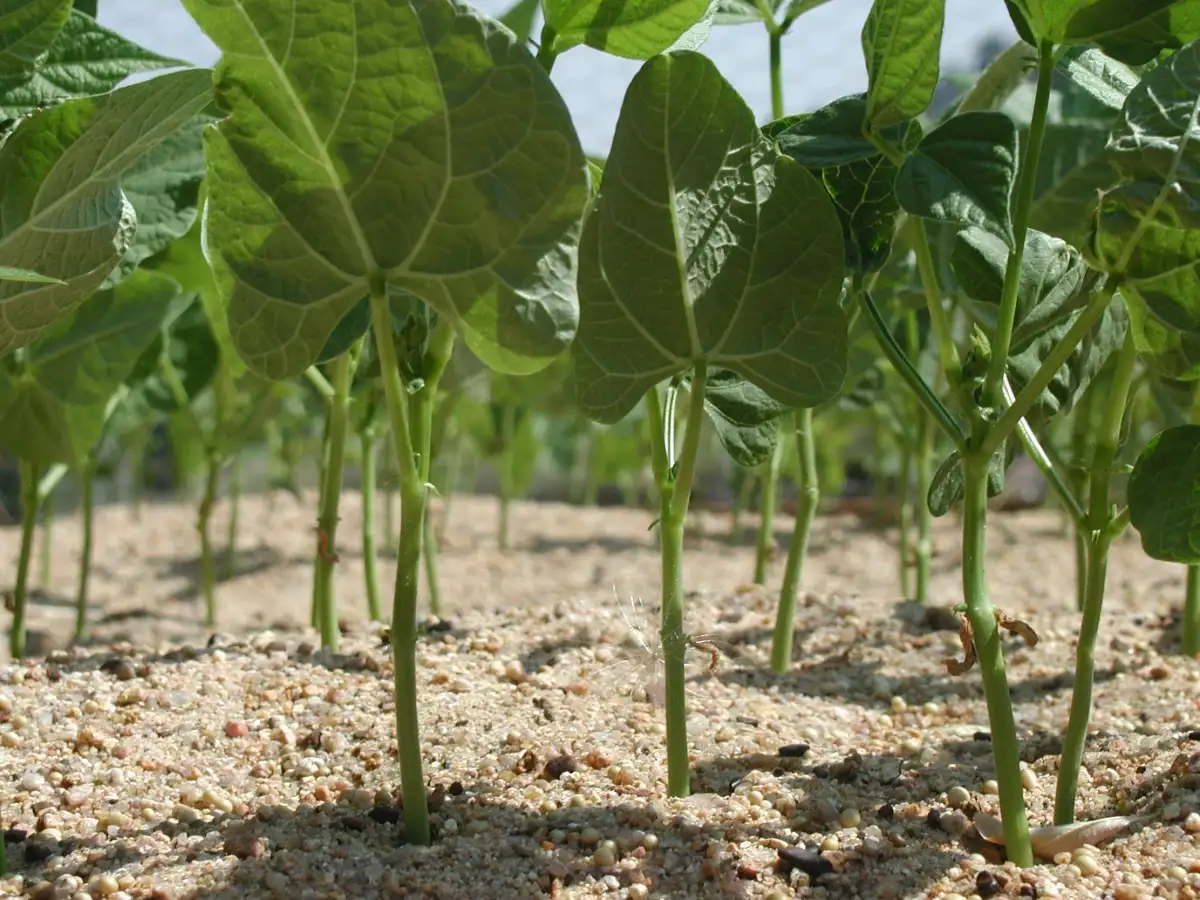
There's a maroon-and-tan speckled bean growing in gardens throughout the US with a more resilient survival story than you'd expect. It vanished from its own family's kitchen table, was mailed to strangers for safekeeping, and returned home fifteen years later, carried back by a granddaughter who didn't even know it still existed. According to Seed Savers Exchange, the non-profit organization that has dedicated fifty years to the preservation of heirloom seeds, the story begins in 1975 with Missouri gardener Lina Sisco. Sisco's grandmother had brought a small plump bean to Missouri sometime in the 1880s, and, by the time Sisco herself was an old woman, she decided to send two varieties of her family's Lina Sisco Bird Egg bean to a new seed-saving organization that had just printed its first newsletter. She tucked in a quarter of postage and a note saying she hoped the group would "have good luck with them." And that random act of generosity is what has kept the bean alive until now, a lineage that, in 2026, stretches back roughly 140 to 146 years, well beyond any single "50-year" benchmark.
The bean that outlived its own family's memory

The best part of the story is that Sisco's own descendants nearly lost it, too. In 1990, her granddaughter Becky Silva wrote to the Seed Savers Exchange organisation, noting that she'd been hunting for "Granny's Beans" (the ones she'd remembered growing up to) only to find that her mother's people had never replanted them. The line had quietly died out at home, while the version her grandmother mailed away survived, not by sitting untouched in storage, but because the exchange's members had spent fifteen years actually growing it out, saving its seed, and passing it along each season. The organization then mailed Silva's family some of the very lineage her grandmother had given away a decade and a half earlier. It's a tidy irony: the strangers who kept replanting Lina's beans turned out to be better custodians of her family's heirloom than her own descendants were.
Why one heirloom bean is a small stand-in for the diversity on our plates
It's not only a lovely, feel-good story of familial and intergenerational care, but the reason that this bean, and seeds like it, is rooted in a problem the wider world is only beginning to grasp. A frequently referenced 2014 study titled “Increasing homogeneity in global food supplies and the implications for food security,” by Khoury et al., published in the Proceedings of the National Academy of Sciences, found that global diets have grown approximately 36% more similar across fifty years, dominated by a small subset of crops like wheat, maize, soy, and a few others, pushing out the diverse array of grains, legumes, and vegetables that had previously fed humanity. Khoury's team warned that this "homogenization of food supply" could leave the system more vulnerable to pests, disease, and climate shocks.