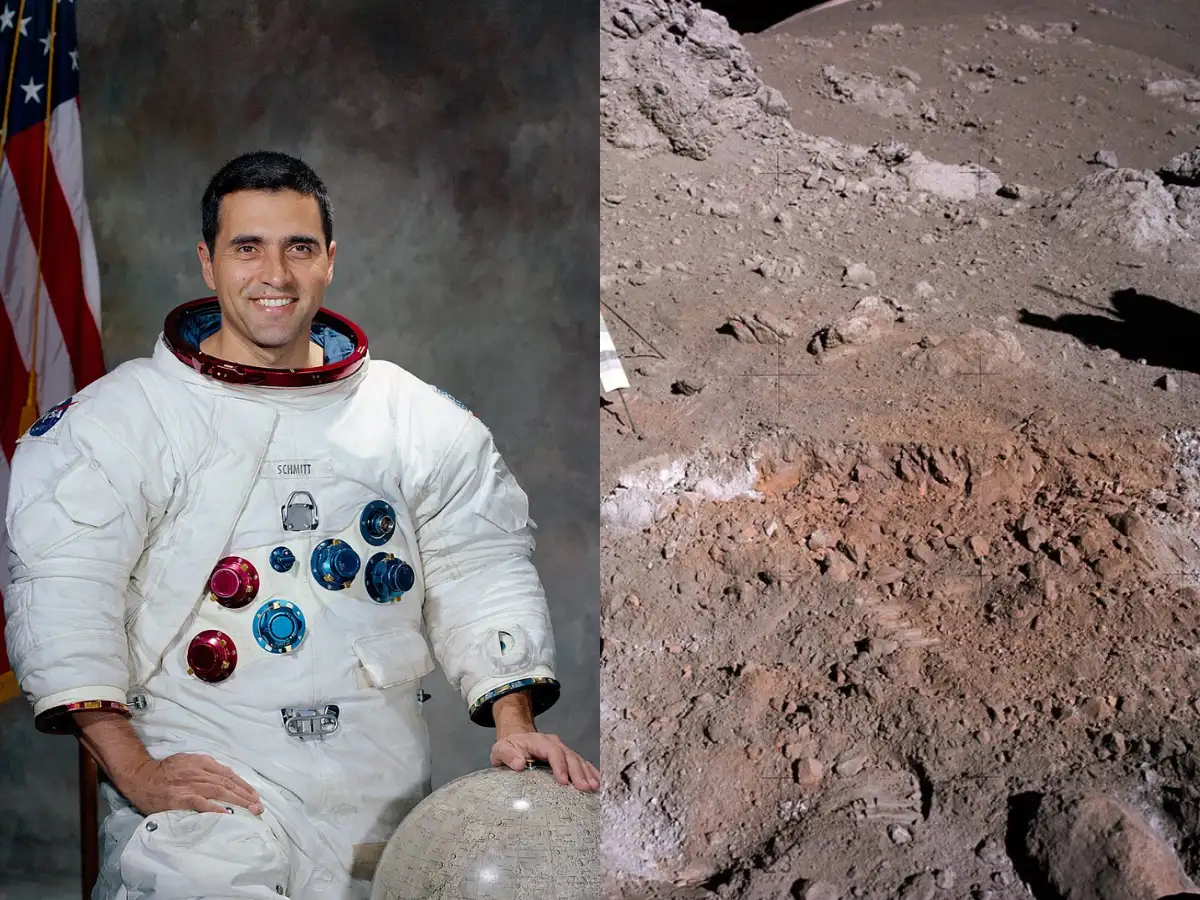
On December 12, 1972, during Apollo 17's second moonwalk at Shorty Crater, astronaut-geologist Harrison "Jack" Schmitt spotted something odd underfoot and called out, "There is orange soil!" according to a NASA History Office account of the mission published in News & Notes. Commander Eugene Cernan checked it out personally and agreed it was real. This exchange was recorded in the mission audio logs and led to the discovery of tiny beads of volcanic glass that had been lying on the Moon for billions of years.
A find nobody expected