Get all your news in one place.
100's of premium titles.
One app.
Start reading
The Economic Times
The Economic Times

In 1969, Neil Armstrong brought Moon rocks back to Earth. NASA fed some of the lunar dust to German cockroaches, Japanese quail, and other animals

When Neil Armstrong and Buzz Aldrin returned from the Moon in 1969, they brought back something NASA had never handled before: rocks and dust from another world.

But before those precious lunar samples could be considered safe, NASA had to answer a strange but serious question — could anything on the Moon pose a threat to life on Earth?

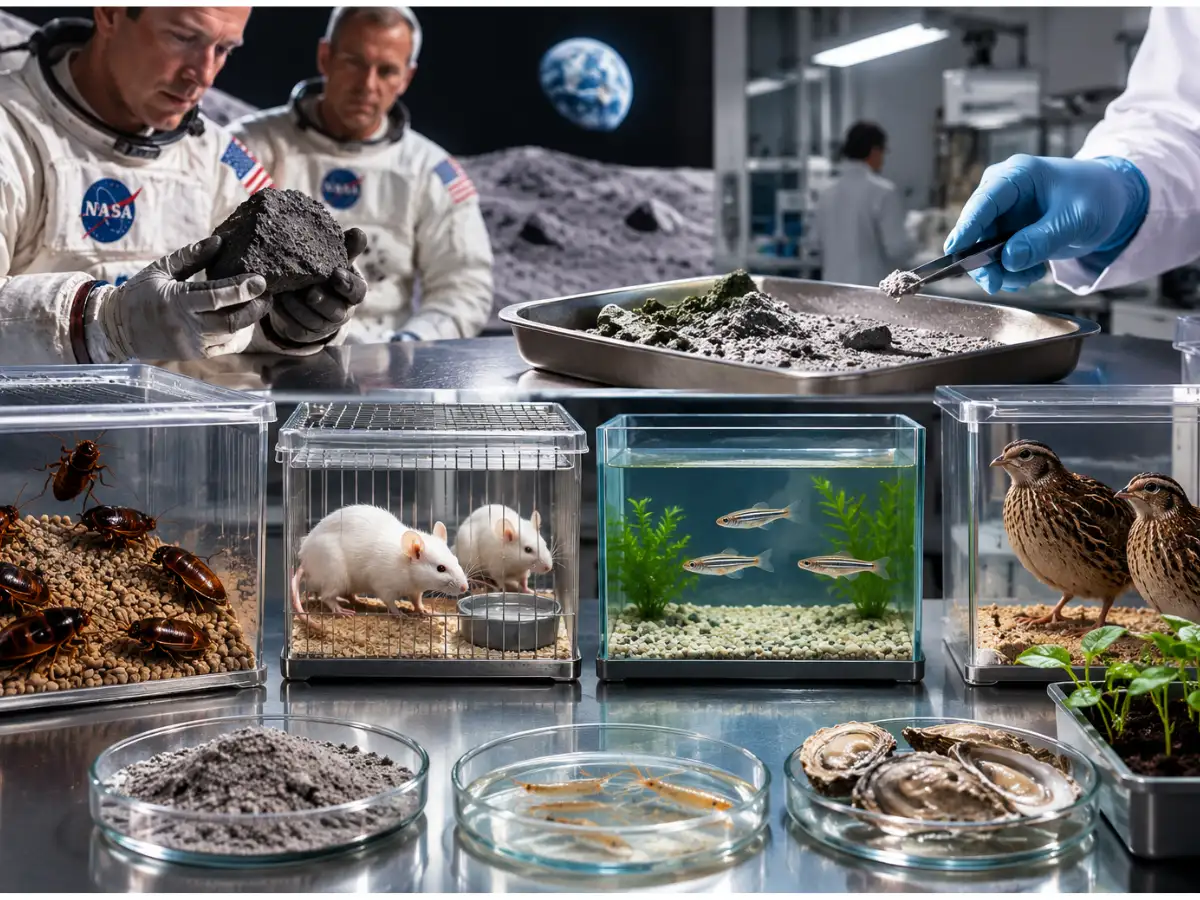
To find out, scientists launched an unusual series of biological tests. Some of the Apollo 11 lunar material was ground into dust and given to animals, including German cockroaches.

The cockroaches had lunar samples mixed into their food. Mice and Japanese quail were injected with lunar material, while fish and shellfish were exposed to moon dust through their water. NASA also tested houseflies, moths and other species to represent different forms of life.

The experiments were part of a massive effort to make sure the Moon rocks did not contain unknown organisms or other biological hazards that could potentially affect Earth's ecosystem.

The astronauts themselves were also quarantined after returning from the Moon. Armstrong and Aldrin spent about three weeks in isolation, while mice that had been injected with lunar material were monitored closely.

NASA officials weren't just checking whether humans would be safe. They wanted to know whether lunar material could harm animals, plants or any other part of Earth's biosphere.

The results were reassuring.

The German cockroaches survived their unusual lunar diet, while the animals generally showed no evidence that the samples contained anything capable of reproducing or causing disease. Oysters were the major exception, with many dying during the tests, although scientists attributed the deaths to the fact that the animals were being studied during their mating season.

NASA also worked with the U.S. Department of Agriculture to expose plants to lunar material. Tomatoes, tobacco, cabbage, onions and ferns were among the plants tested by growing them in lunar soil or exposing them to lunar samples.

Scientists also searched the lunar material for microorganisms that might survive and grow on Earth.

They found no evidence of extraterrestrial organisms.

The testing continued with samples returned by subsequent Apollo missions. By the time Apollo 14 returned in 1971, NASA had gained enough confidence in the safety of lunar material to end the strict quarantine procedures and stop the animal experiments.

The episode is now a bizarre footnote in the Apollo program: before humans could freely handle rocks from the Moon, NASA made cockroaches, mice, fish, birds and plants test them first.

Sign up to read this article
Read news from 100's of titles, curated specifically for you.
Already a member? Sign in here
Related Stories
Top stories on inkl right now
One subscription that gives you access to news from hundreds of sites
Already a member? Sign in here
Our Picks
Fourteen days free
Download the app
One app. One membership.
100+ trusted global sources.