Get all your news in one place.
100's of premium titles.
One app.
Start reading
The Economic Times
The Economic Times
Team Global

In 1969, NASA launched Bonnie the monkey for a planned 30 days in orbit; his condition deteriorated after about 8 days, and the mission was ended early

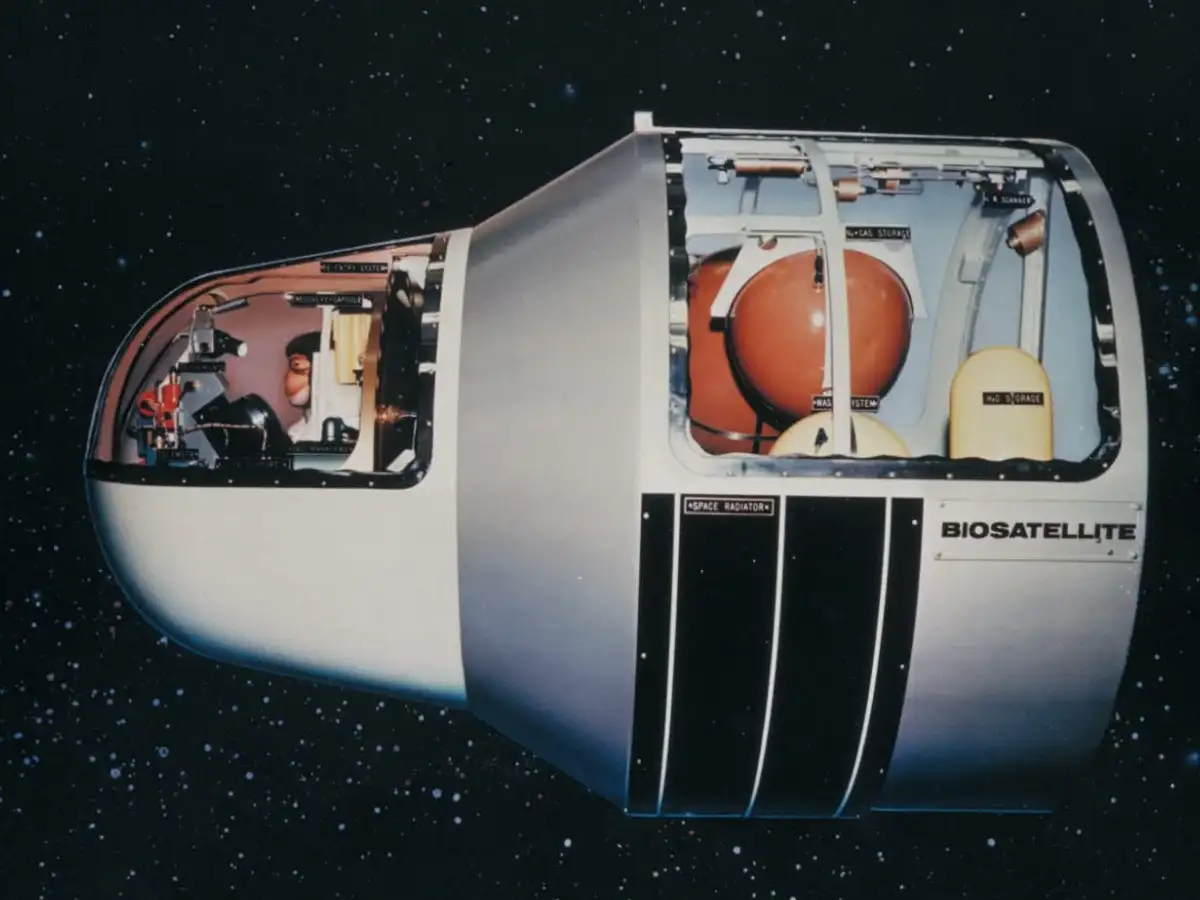
About three weeks before Neil Armstrong took his historic step on the Moon, there was another living being that was traveling a lonely way from the Earth, and very few people seem to know about him. This animal was Bonnie, a 6-kilogram pig-tailed macaque monkey placed inside the satellite Biosatellite III on June 28, 1969, and launched from Cape Canaveral. His task was to travel around the Earth for thirty days, while being monitored by sensors measuring the brain wave pattern, heart rate, and chemical composition of his body. According to NASA's own history archives, the mission never even came close to its completion, as it was aborted after less than nine days in space due to Bonnie’s failing health conditions, and he eventually died of a heart attack caused by dehydration.

A body wired for science, alone in the dark
There was much more to the experiment than mere floating through space. NASA scientists had fitted Bonnie with devices to record his cardiovascular functions, brain activity, and behavioral responses, in addition to monitoring how his body coped with water and salt balance in zero gravity, all while Bonnie was confined in an enclosed capsule without any companionship of other living beings around him. The experiment carried out in 1969 was highly invasive by NASA standards.

Sign up to read this article
Read news from 100's of titles, curated specifically for you.
Already a member? Sign in here
Related Stories
Top stories on inkl right now
One subscription that gives you access to news from hundreds of sites
Already a member? Sign in here
Our Picks
Fourteen days free
Download the app
One app. One membership.
100+ trusted global sources.