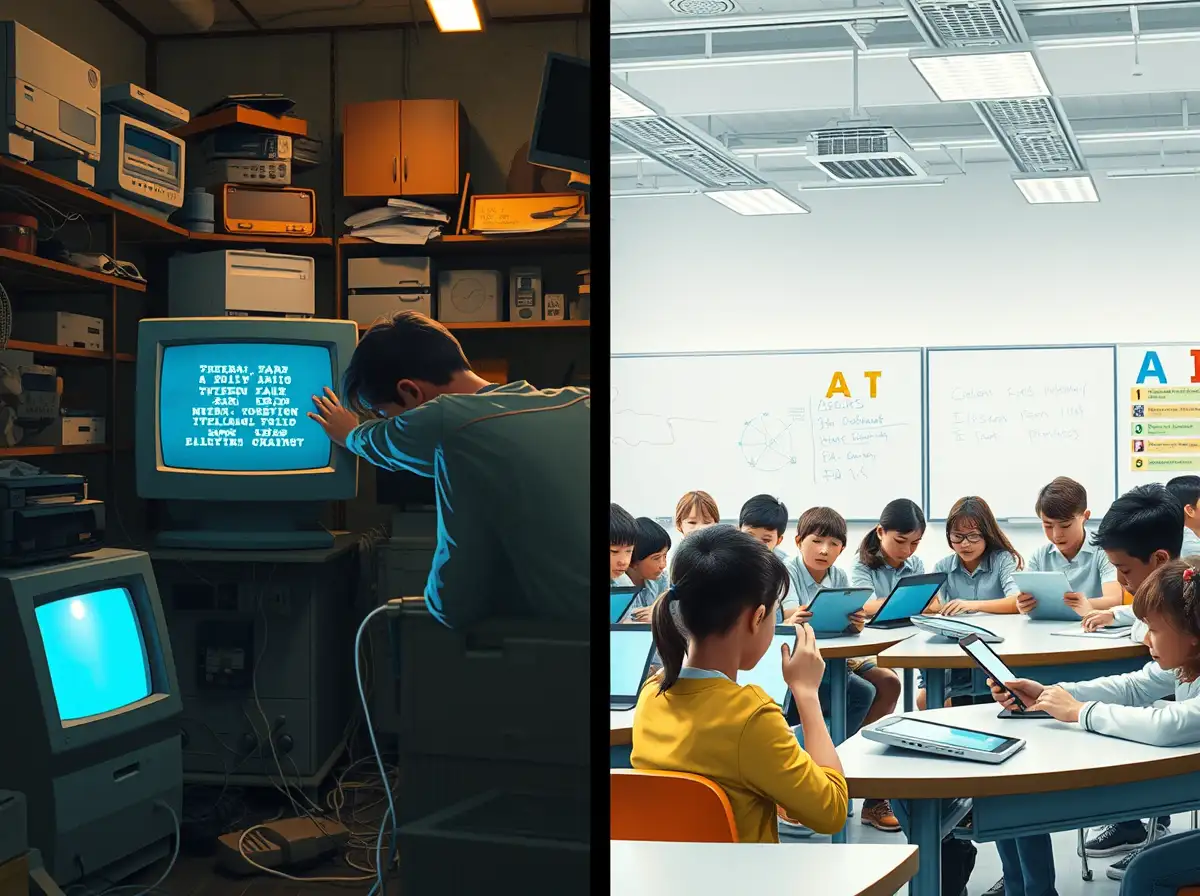
In 1969, in what some regard as the birth of the internet, two connected computers at the University of California, Los Angeles, passed test data through a 15-foot cable. During 1960s, the modern internet was still unimaginable to most people. There were no smartphones, social media platforms, streaming services or websites connecting billions of users. Yet inside a university laboratory in Los Angeles, a small experiment was about to change the course of technology. Researchers at the University of California, Los Angeles, attempted to send the word “LOGIN” from a computer at UCLA to another computer at the Stanford Research Institute, more than 300 miles away. The system crashed after transmitting only the letters “LO,” but that tiny exchange became a defining moment in the history of computer networking. UCLA identifies the event as the first message sent over ARPANET, the precursor to today’s internet.
The story began with Leonard Kleinrock, a UCLA computer scientist whose earlier research helped establish the theoretical foundation for packet-switched computer networks. Packet switching was revolutionary because it offered a way to divide information into smaller units, or packets, and move those packets efficiently through a network. Instead of requiring an entire communication channel to remain dedicated to one conversation, network resources could be shared dynamically. Kleinrock had published foundational work on packet-switching theory years before ARPANET became operational. His research helped provide the intellectual framework for a system in which computers could communicate across a distributed network.