
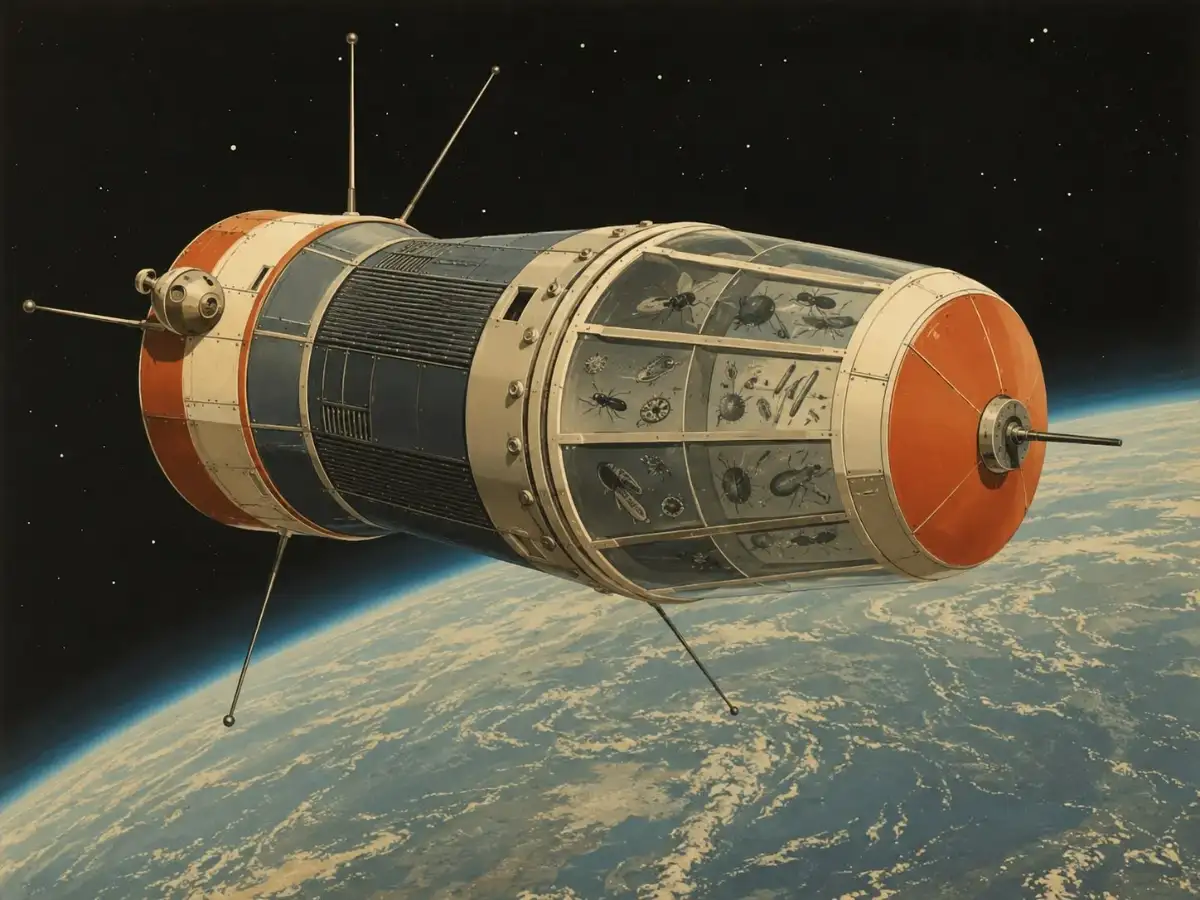
In December 1966, during the Cold War period of space competition between NASA and the Soviet Union, and roughly two and a half years prior to sending humans to the Moon, the United States space agency secretly launched a strange object into Earth's orbit: a satellite containing more than 10 million organisms, all non-human. NASA's own historical archives state that Biosatellite I was carrying a genuinely ambitious undertaking to determine what space does to living things before humans were too far from home, in which "13 select biology and radiation experiments" were aboard, including some insects, frog eggs, microorganisms and plants.
The capsule's retrorocket then simply failed to ignite, and all the insects, bacteria and more were lost, never to return to Earth. NASA and NSSDC records indicate the reentry vehicle separated as planned, but with the deorbit motor failed, the capsule was left in a slowly decaying orbit; it re-entered and burned up in the atmosphere on February 15, 1967. This outcome is well documented, not an open question.















