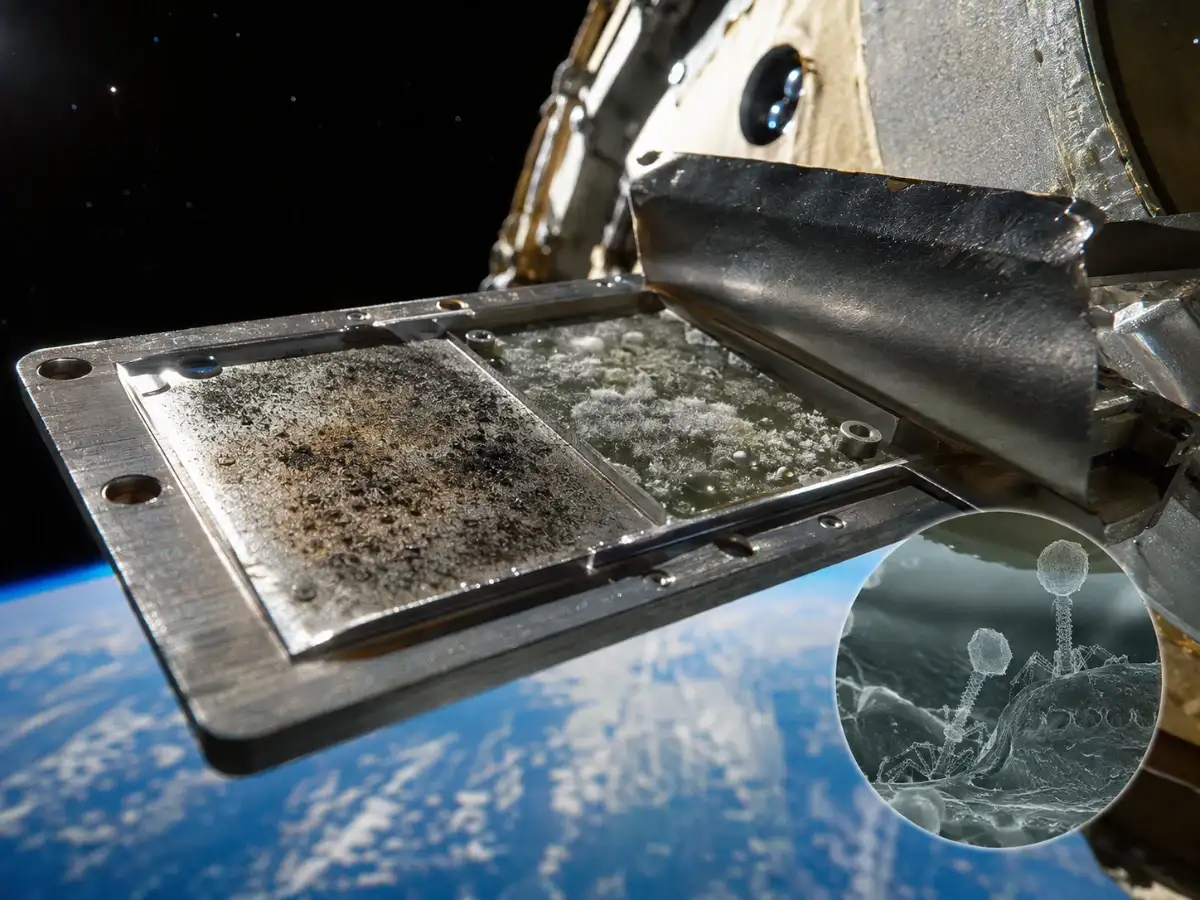
Long before the International Space Station began routine biological experiments in orbit, NASA strapped fungal spores and a virus to the outside of two tiny capsules, sent them into space, and waited to see what would survive. At the time, very little was known about how ordinary Earth life would hold up outside a spacecraft, with no cabin, no filtered air, and no barrier against the raw glare of the sun. According to a 2010 review in Microbiology and Molecular Biology Reviews, researchers date the first tests of this kind to 1966, during the Gemini 9 and Gemini 12 missions. Scientists were interested in one simple question: could life survive in space, with nothing but a little piece of metal to protect it?
A tiny payload with a big question