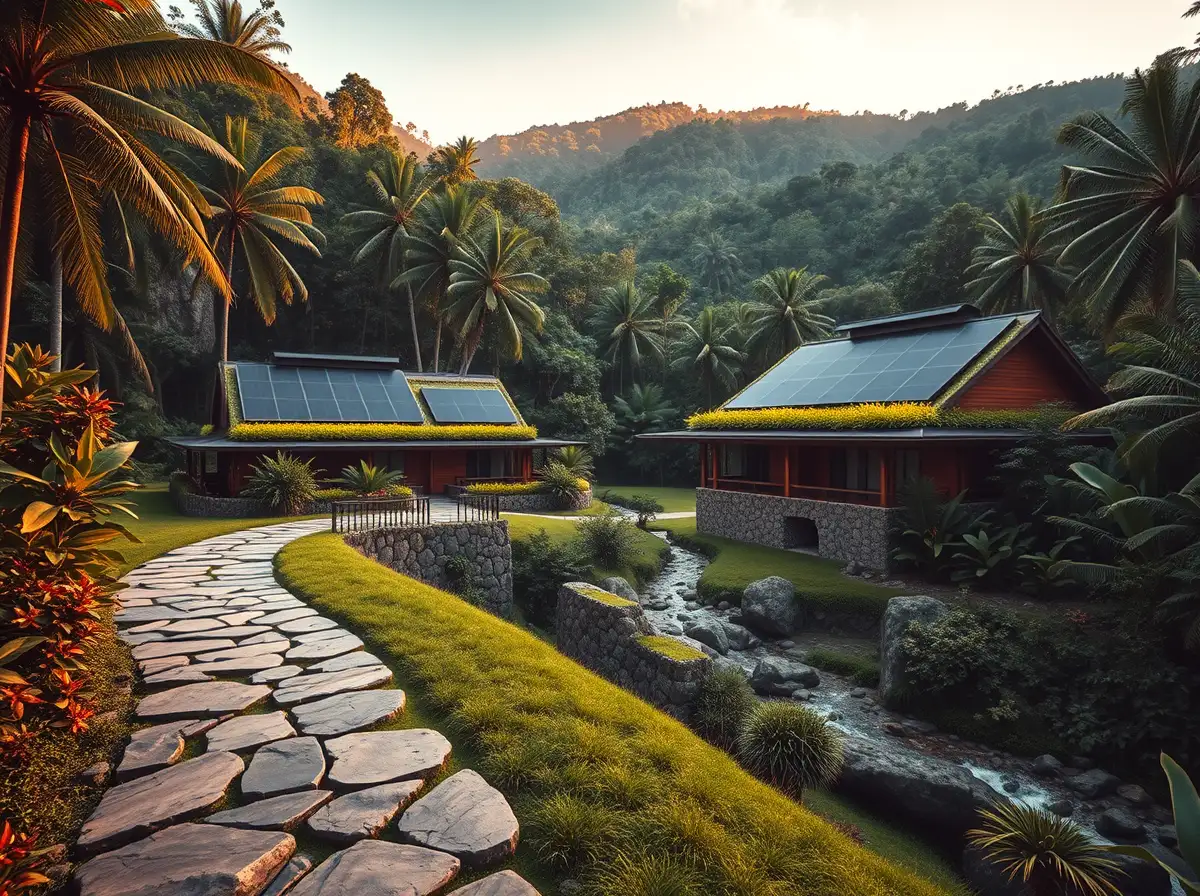
In 1960, while filming "Mutiny on the Bounty" in French Polynesia, Marlon Brando encountered a place so beautiful and secluded that it would eventually become one of the defining passions of his life. Tetiaroa, a ring of small islands surrounding a brilliant turquoise lagoon, was more than a tropical escape for the Hollywood star. It became a vision for living alongside nature rather than simply consuming it. More than six decades later, that vision survives through The Brando, a 35-villa luxury resort on the Onetahi motu that combines extraordinary hospitality with conservation, renewable energy and environmental research. The story is remarkable because Tetiaroa has evolved from a celebrity hideaway into a living experiment in sustainable tourism—where the luxury experience is designed around protecting the fragile ecosystem that makes the destination so extraordinary.
Tetiaroa's story, however, began long before Brando arrived. The atoll has deep Polynesian cultural roots and was historically associated with Tahitian royalty and traditional gatherings. Its landscape is made up of 13 motus encircling a lagoon, creating an environment where beaches, reefs, seabirds, marine life and vegetation exist in delicate balance. Brando reportedly first became captivated by the atoll while exploring during the production of *Mutiny on the Bounty*. What began as fascination eventually became a long-term commitment: he purchased the motus in 1966 and began imagining a place where people could experience the beauty of the atoll without destroying it. His environmental interests were unusually forward-looking for the era, including renewable resources, organic farming and alternative energy.