Get all your news in one place.
100's of premium titles.
One app.
Start reading
The Times of India
The Times of India
World
TOI World Desk

In 1957, Nevis released cactus moths to clear prickly pear from rangeland; the insects spread and later threatened native cacti in Florida

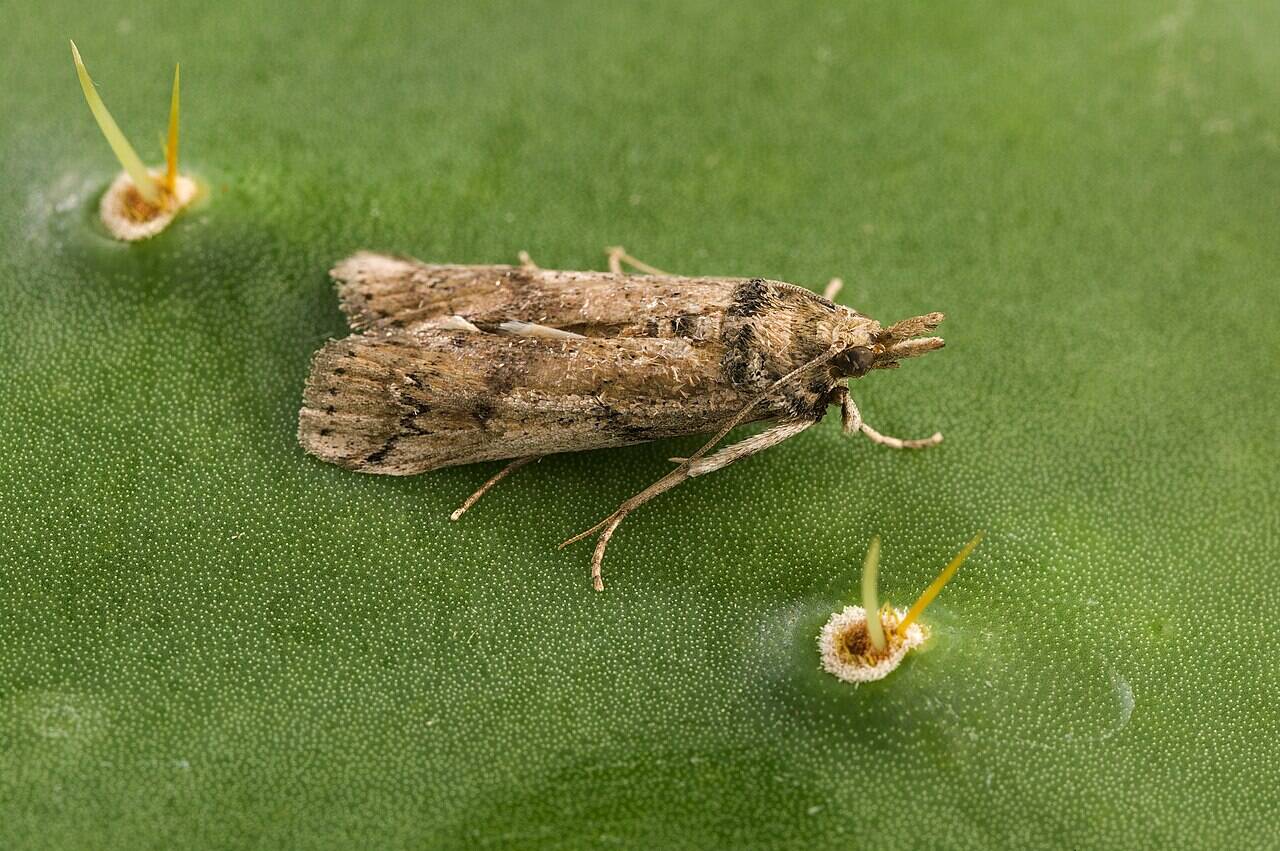
A moth introduced to combat an invasive plant has become a conservation concern far from its native range. This case involves the South American cactus moth, which was introduced into the Caribbean in the 1950s to control invasive prickly pear cactus. While the strategy worked in some regions, the moth later threatened native cacti in parts of North America.

Get breaking news anytime, anywhere. Download the TOI app now!

The history of the cactus moth is described in detail in the article Sticking It to the South American Cactus Moth on the USDA AgResearch Magazine. The text describes how scientists investigated the behaviour of the moth, the effect of its activity on native cacti and potential ways to monitor the distribution of the insect. It shows how a species introduced to solve one environmental problem can create another in a new ecosystem.

A moth to control an invasive cactus

The South American cactus moth is originally native to South America and adapted to prickly pear cacti there. However, in other parts of the world, the prickly pear cactus began to be considered an invasive species. To address the problem, researchers began investigating the plant’s natural enemies.

The cactus moth became a case study in biological control for invasive cactus species. In Australia, the moth was introduced to help control invasive prickly pear cactus, and it reduced cactus populations in areas where the plant had become a major problem. This success led researchers and land managers to consider whether the same approach could work in other locations.

The USDA AgResearch Magazine article notes that the cactus moth (Cactoblastis cactorum) was introduced to the Caribbean island of Nevis in 1957, at the request of the island's government, to control pest prickly pear cacti. The adult cactus moth lays its eggs on prickly pear cactus plants. After hatching, the larvae enter the cactus pads, where they feed internally and weaken the plant.

However, the moth later spread beyond the locations where it was intentionally released. Over time, it moved through parts of the Caribbean and eventually reached Florida.

According to the USDA AgResearch Magazine article, the cactus moth was first found in Florida in 1989. It raised concerns in North America, where several native prickly pear cactus species could serve as alternative hosts for the insect.

When a biological control success posed a new problem

Biological control has been used in many regions to manage invasive species by introducing their natural enemies. However, the case of the cactus moth proved the importance of proper assessment before such a release.

The concern was that the moth would not have the same impact everywhere. In locations where invasive prickly pear cactus caused problems, the insect provided a possible way to reduce cactus growth. The challenge increased when the moth reached areas with native prickly pear cactus species that had not evolved alongside it.

The USDA AgResearch Magazine article describes methods for monitoring the cactus moth’s spread and explores ways to reduce its impact. Researchers worked on understanding where populations were found, how the insect moved and how it affected cactus plants.

One approach examined by researchers was the sterile insect technique. This method involves releasing sterile insects to reduce the chances of successful reproduction in wild populations. The USDA researchers explored whether this approach could help manage cactus moth numbers.

Scientists also developed monitoring methods to detect new populations. Tracking the insect’s movement was important because early detection could help managers respond before populations became more established. A species that is beneficial in one habitat may behave very differently in another environment.

A lesson on achieving balance between solutions and consequences

It is a case study in how a species that once seemed like a solution became a conservation issue. The researchers argue that future biological control programmes should carefully assess potential effects on non-target native species before introducing new biological control agents.

Climate, native plants and existing ecological relationships can influence whether an introduced organism remains useful or creates new management challenges.

For Florida and other areas with native prickly pear cacti, the arrival of the cactus moth created a need for research and monitoring. Protecting native plants required scientists to understand the insect’s behaviour and develop ways to track its spread.

The cactus moth story shows that ecosystems do not always behave as people expect. A remedy created for one problem may end up having unintended effects on other ecosystems.

Sign up to read this article
Read news from 100's of titles, curated specifically for you.
Already a member? Sign in here
Related Stories
Top stories on inkl right now
One subscription that gives you access to news from hundreds of sites
Already a member? Sign in here
Our Picks
Fourteen days free
Download the app
One app. One membership.
100+ trusted global sources.