
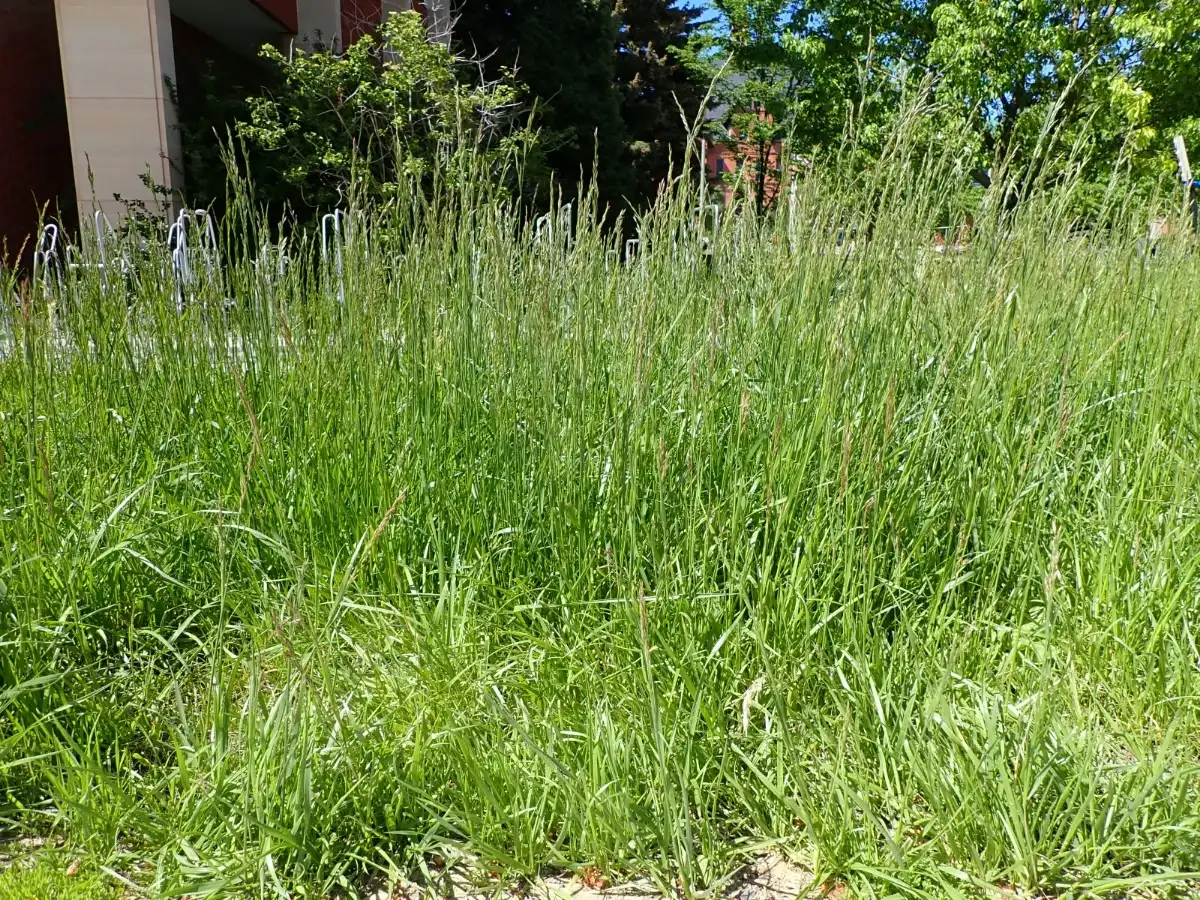
Imagine a single grass seed, accidentally collected from a steep hillside in Kentucky in 1931, which would go on to carpet an area the size of Illinois. This is the remarkable tale of the tall fescue grass, and the influence it continues to have on our daily lives. Tall fescue itself had already been growing in the eastern U.S. for over a century by the 1930s; what happened in 1931 was that University of Kentucky agronomist E.N. Fergus spotted an unusually hardy strain of it on a Menifee County farm. He collected seed from the patch, tested it through the decade, and the resulting variety was finally released to farmers in 1943 under the name “Kentucky 31,” according to a 2025 University of Kentucky article. Within 20 years, it had become widely used across the eastern U.S., and it remains so almost a century later.
A humble discovery that took over the countryside














