On July 26, 1943, Los Angeles was hit by a cloud so thick and irritating that residents feared the city was under a chemical attack. Visibility fell to about three blocks, while people complained of burning eyes, irritated throats and a sharp smell that was compared with bleach. It was the middle of World War II, and the possibility of an enemy gas attack did not seem far-fetched. But there was no foreign weapon in the air. It occurred during a heat wave, when weather conditions helped keep polluted air close to the ground. The episode was an early warning that the city's growing industrial and automobile emissions could interact with its geography and weather.
Get breaking news anytime, anywhere. Download the TOI app now!

The “gas attack” that originated in Los Angeles
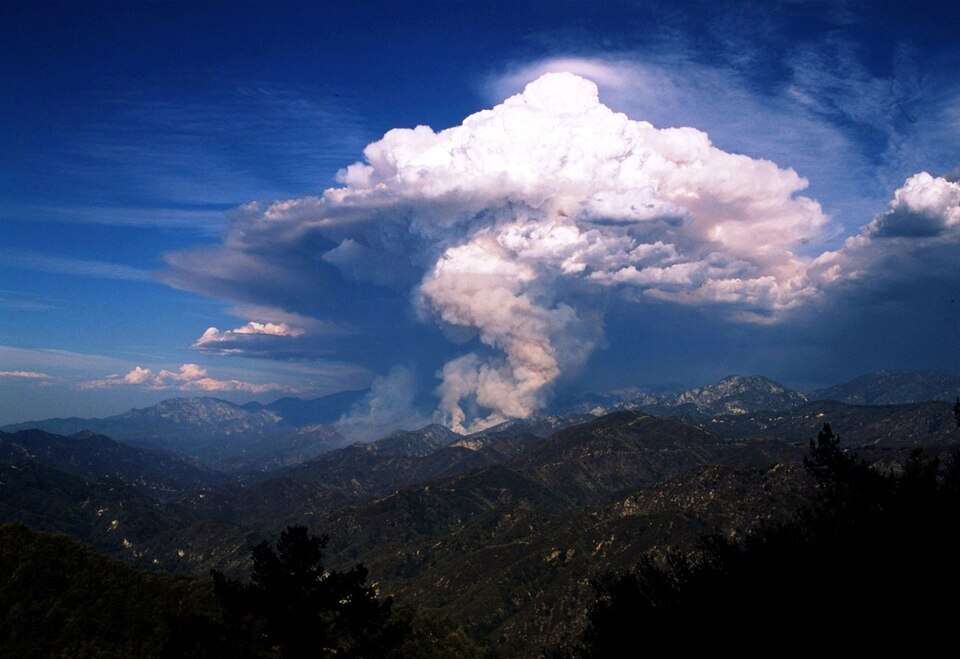
The 1943 cloud did not resemble the smoke residents usually associated with factories. According to the South Coast Air Quality Management District , the pall of smoke and fumes cut visibility to three blocks and caused an eye-stinging, throat-scraping sensation. With World War II underway, some residents feared the city was under a chemical attack.
The first explanations focused on local industry. Officials pointed to a Southern California Gas Company plant that was producing butadiene, a chemical used in synthetic rubber manufacturing. The plant was temporarily shut down after public pressure, but the smog continued to appear. That made it increasingly difficult to blame the entire problem on a single industrial facility. The episode also showed that the problem was not simply a cloud of smoke drifting into the city from somewhere else. Something was happening in the atmosphere itself.
Scientists eventually uncovered a different kind of pollution
It took years to work out what was happening. In the early 1950s, chemist Arie Haagen-Smit at the California Institute of Technology helped establish the chemistry behind Los Angeles smog. His research showed that hydrocarbons and nitrogen oxides could react in sunlight to produce ozone and other oxidising compounds. These substances were not simply being released into the atmosphere in the form that residents experienced. They were being formed through chemical reactions after pollutants had entered the air.
According to research published in Industrial & Engineering Chemistry , hydrocarbons and nitrogen oxides can undergo photochemical reactions in sunlight, producing oxidising compounds associated with Los Angeles smog. These pollutants can irritate the eyes, damage plants and contribute to the deterioration of rubber, helping explain the distinctive effects of the city’s photochemical smog. The discovery changed the understanding of urban air pollution. Pollutants from different sources could interact in the atmosphere and produce new compounds. Cars became increasingly important to that story as Los Angeles grew. Vehicle exhaust released nitrogen oxides and hydrocarbons, while industrial activity contributed additional pollutants. The region's geography and weather made the situation worse: mountains surrounding the Los Angeles basin could restrict the movement of air, while temperature inversions could prevent pollutants from dispersing vertically. That combination helped create the conditions in which emissions could accumulate and undergo photochemical reactions.
The 1943 cloud became the beginning of a long fight
The incident did not solve Los Angeles' pollution problem; instead, it marked the start of a much longer struggle. Over the coming ten years, smog would occur more and more often. This time, however, scientists and officials had to confront a problem that could no longer be explained only as industrial smoke.
The South Coast Air Quality Management District also notes that the Los Angeles County Board of Supervisors established the Los Angeles County Air Pollution Control District in 1947, creating the nation's first countywide air pollution control programme. By the early 1950s, research had identified ozone and photochemical reactions as key features of Los Angeles smog, while subsequent regulations increasingly targeted pollution from industrial sources and vehicles. The 1943 episode marked an important turning point in the region’s effort to understand and control air pollution.
The “hellish cloud” was not an enemy weapon after all. If the pollution had come from a single factory, closing that factory might have solved the problem. Instead, Los Angeles was dealing with a system in which pollutants from many sources could combine and change after entering the atmosphere. It showed that the most dangerous pollution is not always smoke that can be traced to a single source. Sometimes, the atmosphere itself can turn emissions from everyday activities into something far more irritating and difficult to control.