The history of penicillin is often told as a story of one remarkable discovery. In 1928, Alexander Fleming noticed that a mould contaminating a laboratory culture had destroyed nearby bacteria, revealing the antibacterial substance that would become known as penicillin. But discovering penicillin was only the beginning. Turning that discovery into a medicine that could be produced in meaningful quantities required years of experimentation, improvisation, teamwork, and eventually a revolution in industrial fermentation.
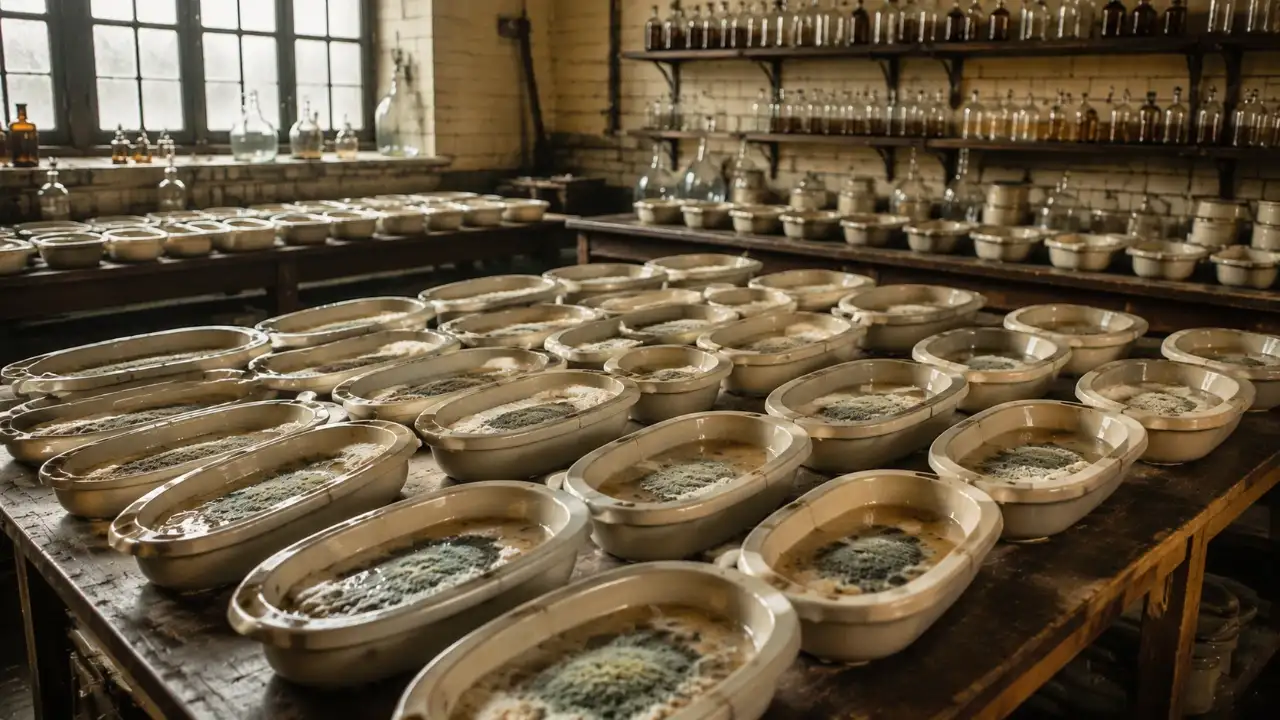
In 1940, the scientists working at Oxford experienced a surprisingly basic problem: they did not have the equipment required to manufacture large quantities of penicillin. Modern antibiotic production relies on enormous stainless-steel fermentation tanks, but that technology was not yet available to them. Instead, the Oxford team developed an ingenious small-scale system using hundreds of shallow ceramic vessels, some based on the shape and practical design of hospital bedpans. This improvised method helped keep penicillin production moving at a critical moment and offered a bridge between Fleming’s laboratory discovery and the industrial manufacturing approaches that would later transform medicine.