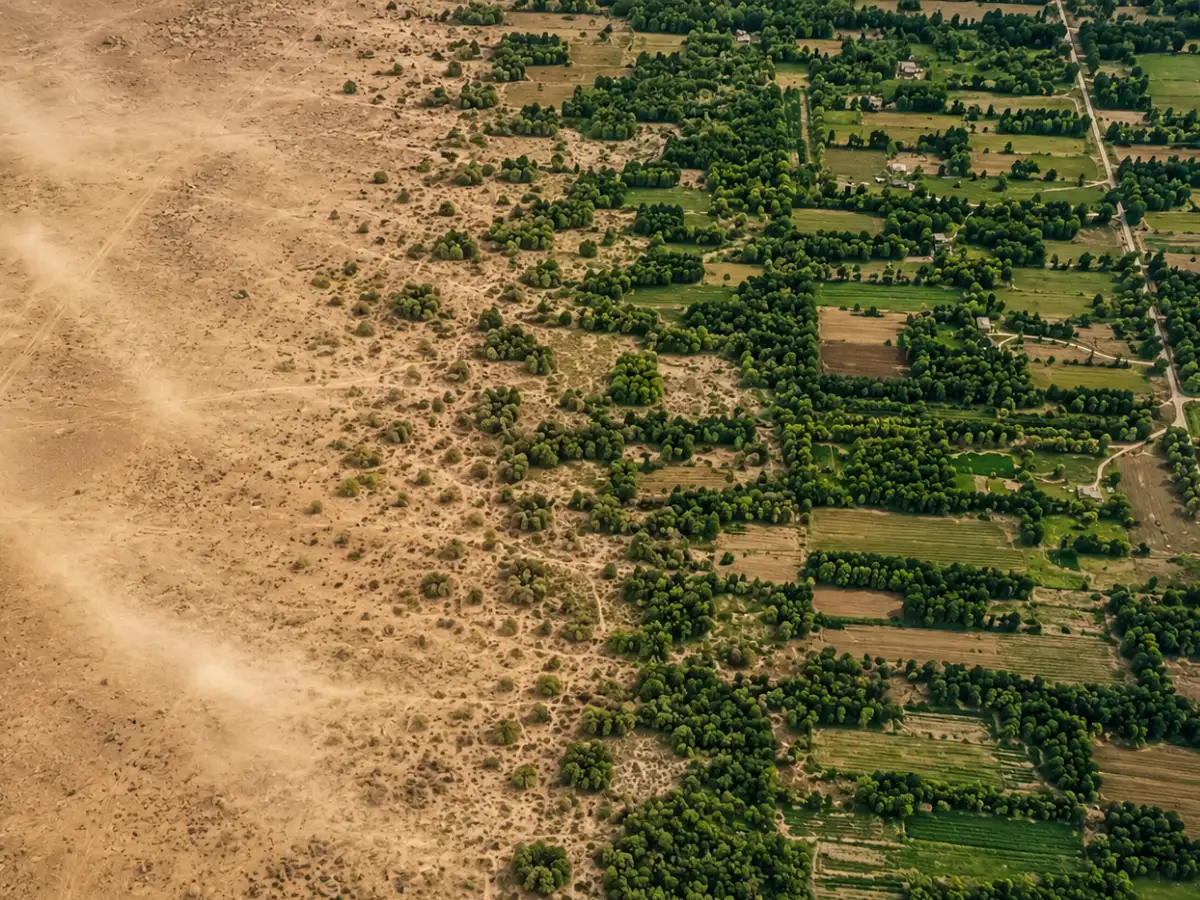
In the 1930s, giant dust storms swept across the American Great Plains. Farmland topsoil blew away in thick black clouds. Some of it reached as far as Washington, D.C. This disaster is now called the Dust Bowl. To fight it, the federal government did something big: it planted a living wall of trees across the middle of the country. According to research by Sarah Karle, Laura Weakly, and Gary Bentrup, hosted by the US Forest Service, nearly 220 million tree seedlings were planted. That effort led to 18,600 miles of tree rows called shelterbelts on 240,000 acres on 30,000 farms.
Here is the story of that project, and why researchers are now digging through 90-year-old paperwork to bring it back to life.

Why FDR bet on trees during the Great Depression
By 1935, drought and dust had already forced many Great Plains families off their land. President Franklin D. Roosevelt considered soil conservation on private farms a public responsibility. According to the same US Forest Service research paper, this idea was controversial at the time. Most New Deal programs applied only to public land or public buildings and did not provide federal funding for conservation work on private land. Many politicians and foresters were uneasy about paying to plant trees on private farms using unproven methods.
The History Nebraska historical marker on the project says the government pushed forward anyway. Between 1935 and 1942, the U.S. Forest Service, Works Progress Administration, and the Civilian Conservation Corps planted windbreaks throughout the Great Plains. The program was called the Prairie States Forestry Project. The marker text says Nebraskans played a leading role, planting almost 4,170 miles of windbreaks on 6,944 farms and 51,621 acres. It also identifies one early belt at the John Schleusener farm in Antelope County as the first windbreak established under the project in Nebraska, planted in April 1935.