Get all your news in one place.
100's of premium titles.
One app.
Start reading
The Economic Times
The Economic Times
Team Global

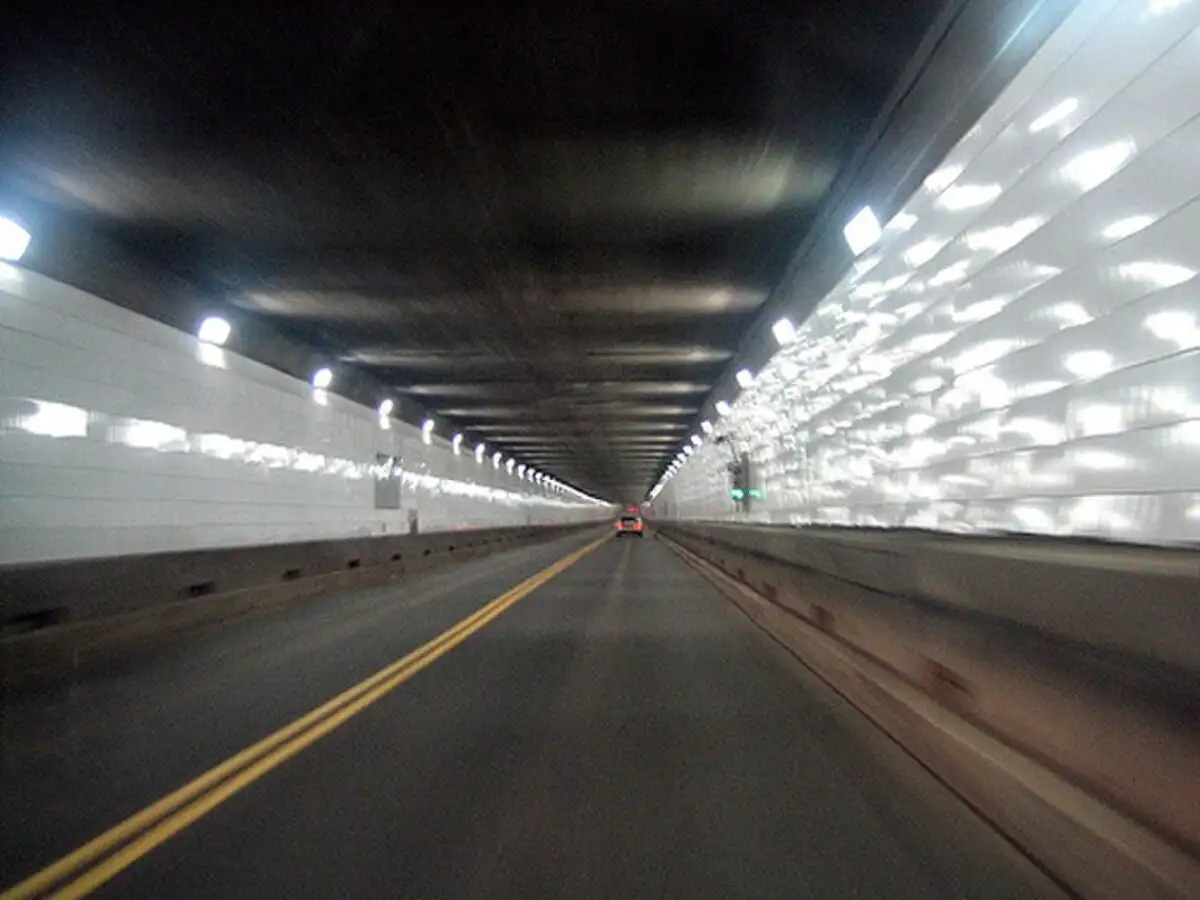
In 1930, Detroit and Windsor opened an underwater road tunnel; 96 years later, the mile-long crossing still serves motorists between the two cities

The Detroit–Windsor Tunnel was one of the world's earliest underwater vehicular tunnels that still proves to be an inspiration for building water-immersed tube tunnels. The tunnel officially opened in November 1930, introducing a new way for travelers to move across the US and Canada, that is, between Detroit (Michigan) and Windsor (Ontario). Even nearly a century later, the tunnel remains an essential transportation link, carrying about 12,000 vehicles on an average day while continuing to serve commuters, tourists, and commercial travelers.

This construction method is known as the immersed tube technique. It helps reduce many of the geological challenges associated with deep tunnel construction. Modern engineering research, as mentioned in the book Handbook of Tunnel Engineering: Volume I: Structures and Methods, continues to recognize immersed tube tunnels as an efficient solution for river and harbor crossings because they can shorten construction time while maintaining long-term structural reliability. The Detroit–Windsor Tunnel’s success proved the practicality of this construction method, paving the way for similar underwater transportation projects across the globe.

A groundbreaking engineering marvel

The construction of the Detroit-Windsor Tunnel started in 1928 and faced numerous technical problems that had to be solved by the engineering experts. Instead of cutting tunnels in solid rock beneath the riverbed, engineers constructed tunnel sections from large steel pipes in a dry dock. These sections were transported to the site of construction, placed in a trench dug in the riverbed, and joined to the next section of the tunnel, followed by sealing and covering of the pipes.

The tunnel itself was constructed approximately 75 feet below the bottom of the Detroit River. The groundbreaking design of this structure had a great influence on other subsequent similar underwater crossings built in later decades, making it an important milestone in civil engineering.

Sign up to read this article
Read news from 100's of titles, curated specifically for you.
Already a member? Sign in here
Related Stories
Top stories on inkl right now
One subscription that gives you access to news from hundreds of sites
Already a member? Sign in here
Our Picks
Fourteen days free
Download the app
One app. One membership.
100+ trusted global sources.