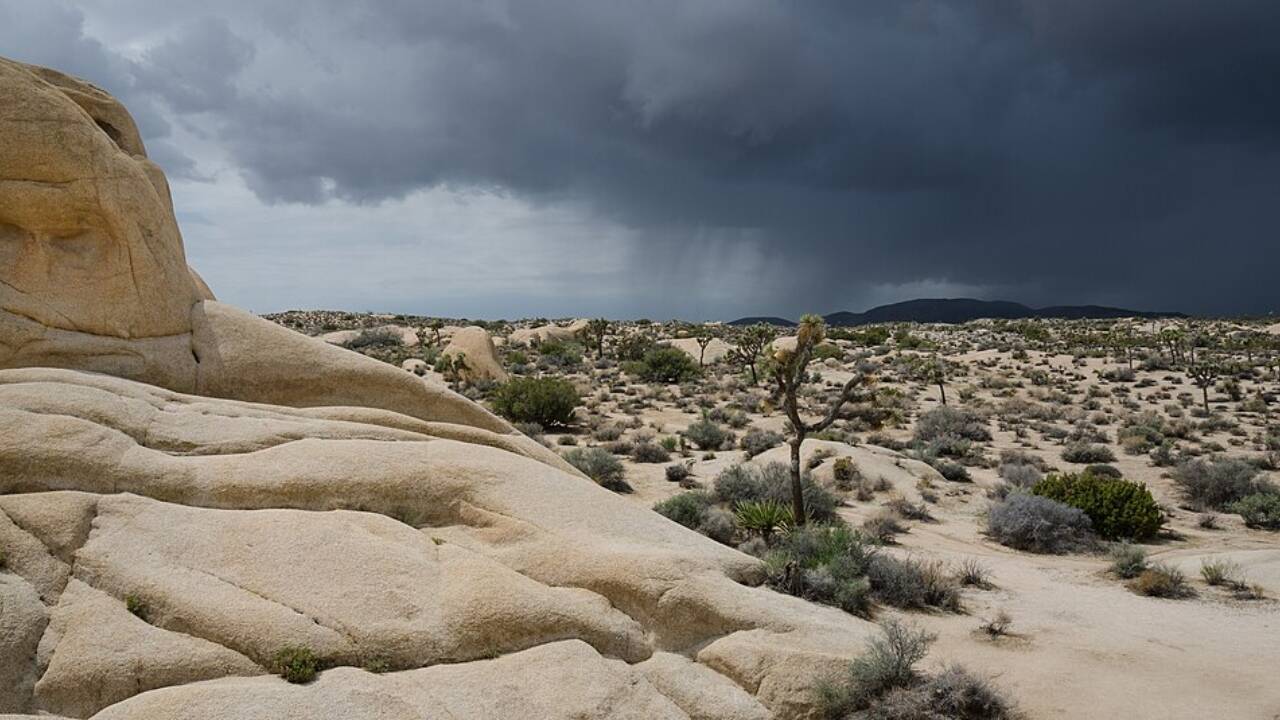
Long before Joshua Tree became one of the United States’ most iconic national parks, most of its desert landscape faced an uncertain future. Mining operations, unchecked development and commercial collectors who dug up cacti and Joshua trees for sale threatened one of California’s most distinctive ecosystems. According to the National Park Service (NPS), the turning point for Joshua Tree came through the efforts of Minerva Hamilton Hoyt, a Pasadena conservationist whose passionate campaign transformed the public’s perception of the desert. Her work culminated in 1936, when American President Franklin D. Roosevelt established Joshua Tree National Monument, which safeguarded more than 825,000 acres of the Mojave and Colorado deserts under the Antiquities Act.
Get breaking news anytime, anywhere. Download the TOI app now!

A desert exhibition that changed public opinion
According to the National Park Service, Hoyt became alarmed during the 1920s after seeing the widespread destruction of California’s native desert vegetation. It is worth noting that Joshua Tree and cacti were routinely uprooted by commercial collectors, while expanding mining activity and settlement steadily eroded natural landscapes. However, determined to convince the general public that the desert deserved similar protection as forests and mountains, Hoyt organised travelling exhibitions which showcased the beauty of desert ecosystems. Notably, one of her most celebrated displays came in 1928, when she transported an entire California desert exhibit, including native plants, rocks and sand, across the country in seven freight cars for the Garden Club of America exhibition in New York. The display attracted nationwide attention and challenged the common belief that deserts were barren and unworthy of protection.
According to the National Park Service, renowned landscape architect Frederick Law Olmsted Jr. invited Hoyt to help prepare California’s State Parks Survey, where she identified the Joshua tree forests of the Little San Bernardino Mountains as landscapes deserving of permanent protection. Hoyt went on to establish the International Desert Conservation League, which commissioned scientific studies by botanists and ecologists and launched a letter-writing program urging federal officials to preserve the landscapes before irreversible damage occurred.
President Roosevelt stepped in to protect the desert
According to the National Park Service, Hoyt met President Roosevelt, Interior Secretary Harold Ickes, and National Park Service leaders during the early years of the New Deal. In those meetings, she reportedly argued that California’s deserts possessed exceptional scientific, ecological and scenic value. Following this, the president reportedly instructed the NPS to evaluate the proposal, although negotiations over railroad lands and mining interests reduced the size of the planned reserve from more than one million acres to around 825,340 acres. However, despite these compromises, the campaign succeeded and on 10 August 1936, Roosevelt signed Presidential Proclamation 2193 , thus officially establishing Joshua Tree National Monument.
According to the president’s proclamation, the monument protected lands containing objects of historic and scientific interest under the Antiquities Act of 1906. Notably, the official administrative history of Joshua Tree has reported that one of the principal motivations behind the designation was to stop the destruction of native desert vegetation by commercial plant collectors while preventing incompatible development and thus safeguarding the region’s geological formations and archaeological sites. Notably, historians consider Hoyt’s campaign one of the earliest successful efforts to secure large-scale protection specifically for desert ecosystems in the United States.
In 1994, Joshua Tree National Monument was redesigned as Joshua Tree National Park, thus expanding its protected landscape and reinforcing its status as one of America’s leading desert conservation areas. The NPS says millions of visitors now experience landscapes that might have been fragmented by mining, plant harvesting and development had Hoyt’s campaign failed.