
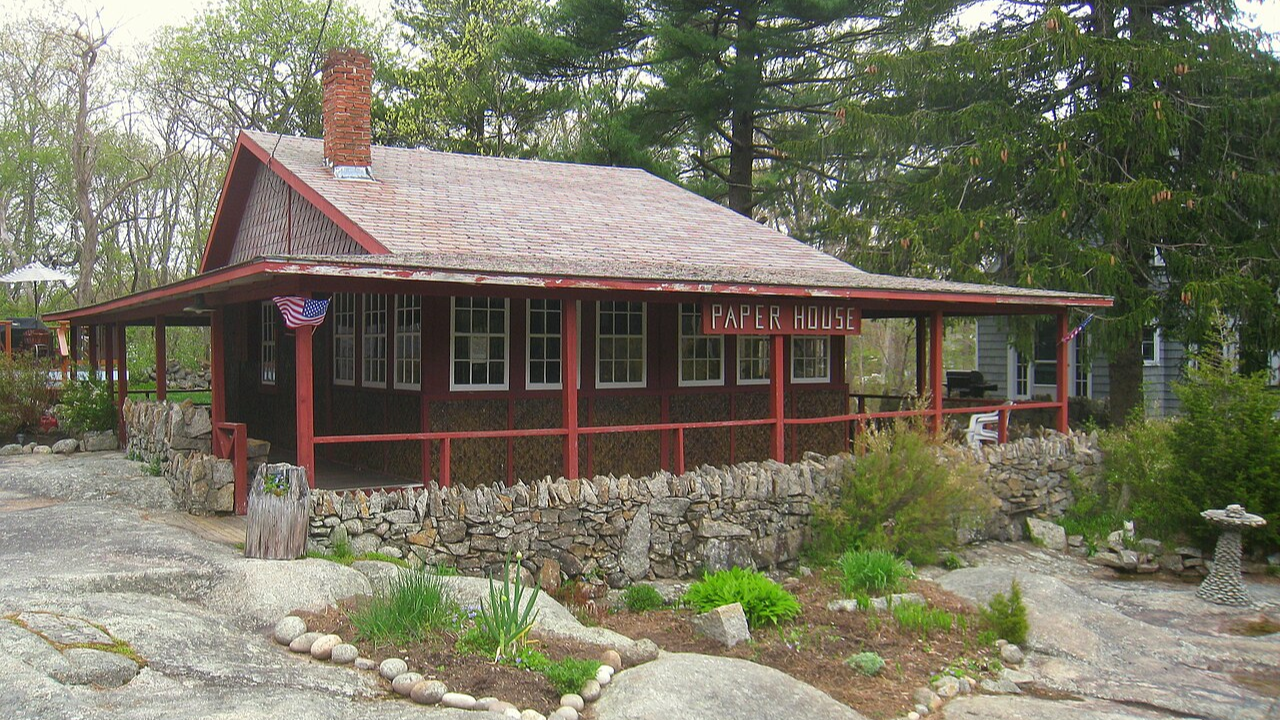
In 1922, an American engineer began building a summer house in Rockport, Massachusetts, with an unusual material in mind: old newspapers. Elis F. Stenman was interested in whether discarded pages could do more than carry the day's news, so he began pressing and bonding them into the walls of his house. What started as an experiment with paper insulation gradually spread through the building. More than 100,000 newspapers were eventually used, with flour-based glue holding layers together and varnish helping protect them from moisture. The wooden frame remained the house's structural backbone, but paper became its defining feature. Stenman later made furniture and household objects from newspapers, leaving printed headlines and advertisements visible in parts of the interior. More than a century later, the Rockport Paper House remains an unusual record of an engineer's attempt to turn a material normally discarded within days into something built to last. The house ultimately became a remarkable example of early recycling, preserving everyday printed history within its walls for generations.
Get breaking news anytime, anywhere. Download the TOI app now!













