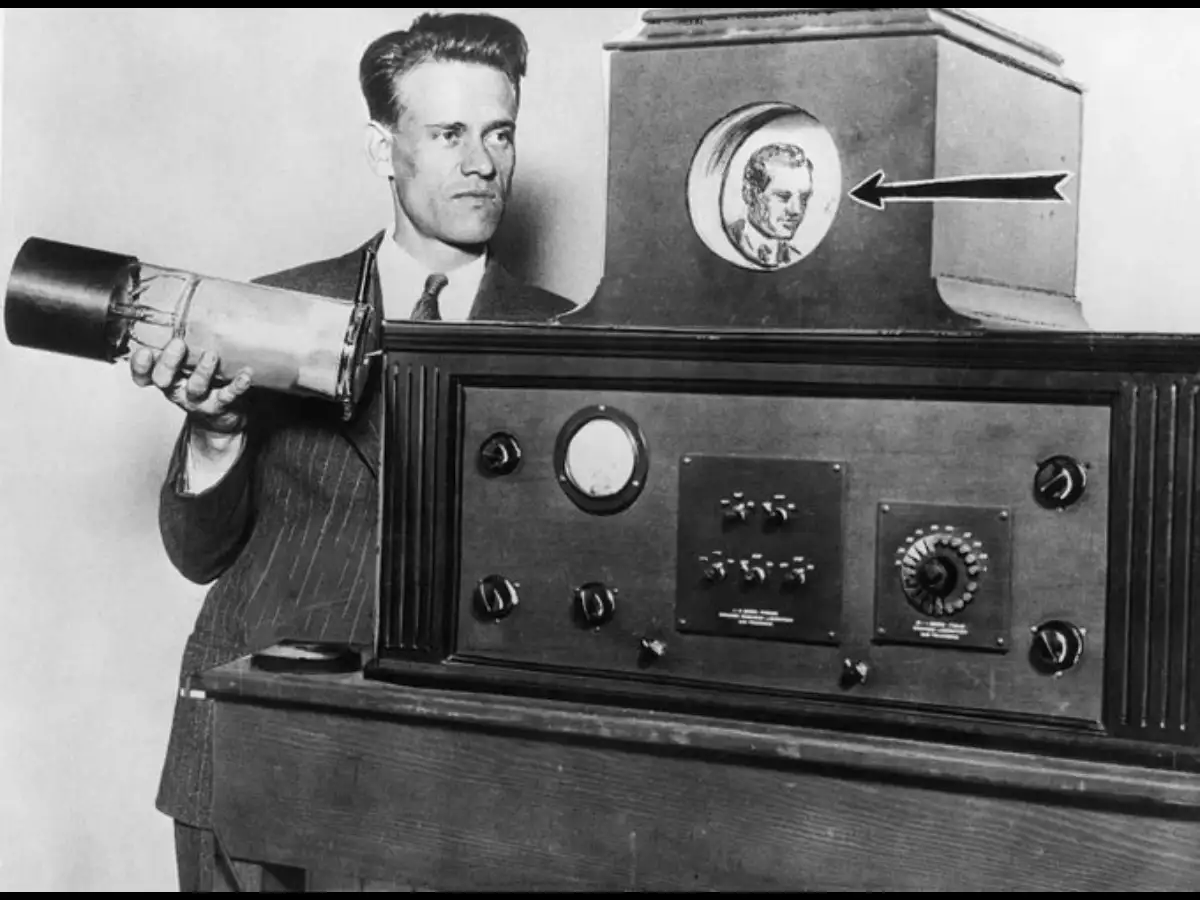
In 1921, a 14-year-old boy walking behind a horse in a potato field in Idaho had an idea that would eventually help transform how the world watched moving images. His name was Philo T. Farnsworth, and the inspiration came from something remarkably ordinary. The idea came from the parallel rows being carved into the soil by a farm harrow, according to a report in Science Blog.

As Farnsworth moved back and forth across the field, he noticed how each furrow ran neatly beside the previous one. Somewhere in those repetitive movements, he imagined that a picture could be broken down into individual lines, transmitted one after another and then reconstructed into a complete image. It was an idea that would become central to electronic television.
The potato field that inspired a television revolution
Farnsworth's insight was surprisingly simple. Instead of trying to transmit an entire picture at once, he imagined breaking it into a sequence of horizontal lines. If those lines could be scanned quickly enough, transmitted and reconstructed in the same order, the human eye would perceive them as a single moving image.
His wife, Elma “Pem” Farnsworth, later recalled how he explained the concept to her: “I can scan it like you read a book, one line to the other.”
The comparison captured the idea perfectly. Just as someone reads a page from one line to the next, Farnsworth envisioned an image being processed systematically, line by line. At a time when inventors were struggling to create practical television, that was a major conceptual leap.
ALSO READ: Gloria Steinem death reason
From a farm field to a high school blackboard
Farnsworth's idea might have remained an idea if not for a teacher who recognized its potential. At Rigby High School in Idaho, Farnsworth sketched his concept for an electronic television system on a classroom blackboard. His science teacher, Justin Tolman, kept the drawing and remembered the young student's explanation.
According to the Television Academy's historical account, Tolman encouraged him with the words: “If you want to badly enough, you’ll do it.” Farnsworth continued developing the concept even though the technology needed to make it work did not yet exist.
The first image was a simple straight line
It took years for Farnsworth to turn his teenage idea into functioning machinery. On September 7, 1927, he successfully transmitted his first electronic television image. Appropriately, the image was a simple straight line.
The achievement demonstrated that his system could take an image, break it into electrical information through scanning, transmit that information and reconstruct it at the receiving end.