Get all your news in one place.
100's of premium titles.
One app.
Start reading
The Times of India
The Times of India
World
TOI World Desk

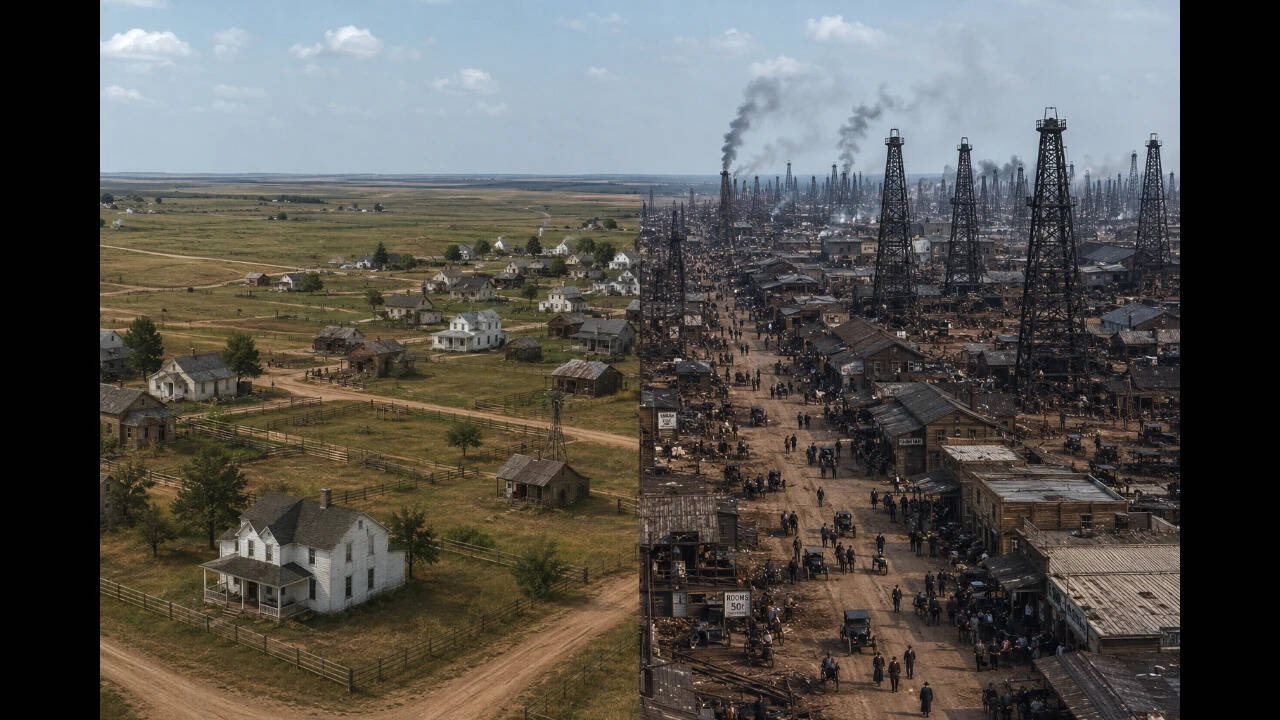
In 1918, oil transformed a Texas farming hamlet from 340 people to 16,000 almost overnight; four years later, the boom was over

A small Texas farming community known for growing peanuts changed rapidly after oil was discovered in September 1918. Workers, drilling companies and speculators rushed into Desdemona, turning the quiet settlement into a crowded oil boomtown. Tents, shacks and drilling equipment spread across the landscape as newcomers arrived hoping to find work or profit from the sudden rush.

Get breaking news anytime, anywhere. Download the TOI app now!

According to the records preserved by the Texas State Historical Association , Desdemona's population grew from 100 in 1892 to 340 in 1904. The community maintained this modest size as a quiet farming hamlet for the next fourteen years, remaining at roughly 340 residents until it soared to an estimated 16,000 almost overnight during the 1918 oil boom. Oil production peaked at 7,375,825 barrels in 1919, but declined sharply as the field was overdrilled. By 1922, the boom had effectively ended, and much of the temporary population had moved on.

From peanut fields to an oil frontier

Texas State Historical Association also notes that before oil arrived, Desdemona was an agricultural settlement whose economy depended largely on trade and peanut farming. The town had been known for years by the informal name “Hogtown”, a reference to its location near Hog Creek. Its transformation began in September 1918, when Tom Dees, director of the newly formed Hog Creek Oil Company, struck oil on land belonging to Joe Duke. The discovery placed Desdemona among the growing collection of oil boomtowns developing across Eastland County.

The town quickly filled with workers, lease buyers and speculators. People arrived hoping to work in the oilfields, buy leases or profit from the rapidly rising value of oil-related investments. According to the Texas State Historical Association, the oil rush also triggered a wave of speculation that extended far beyond the drilling sites. By 1919, the Desdemona field was probably the second-largest field in the regional oil belt. Shares in the Hog Creek Oil Company that had originally sold for $100 reportedly changed hands for as much as $10,250, reflecting how quickly expectations of oil wealth had overtaken the small farming community. Desdemona was no longer simply producing oil; it had become a place where people were gambling on the fortunes that the next well might bring.

The boom brought pollution and disorder

The rapid growth came without the infrastructure normally needed to support thousands of additional residents. Desdemona's boomtown landscape was crowded with makeshift accommodation and oil equipment. The Texas State Library and Archives Commission notes that large quantities of oil frequently overflowed storage tanks, polluting streams and creeks and fouling the air. Public health problems compounded the environmental mess. Torrential rains followed an earlier drought, while influenza and typhoid reached epidemic proportions. The sudden population increase also brought gambling houses, brothels and violent crime. By April 1920, the situation had become serious enough for the Texas Rangers to be sent to Desdemona to maintain order.

Four years later, the oil rush was fading

Wells that had once produced at extraordinary rates were yielding less, and the excitement surrounding new drilling gradually faded. Businesses that had expanded to serve thousands of newcomers found fewer customers, while workers who had arrived in search of jobs began looking elsewhere for opportunities.

The downturn showed how fragile an oil boom could be compared with a stable economy. While the town had enjoyed a period of wealth and economic expansion because of the oil, most of its prosperity had been based on the continuation of drilling and production. With that becoming more difficult, Desdemona could no longer maintain the activity levels that had been seen before. Those who came for the boom had left, and Desdemona had to adapt to a smaller, less oil-dependent economy.

Sign up to read this article
Read news from 100's of titles, curated specifically for you.
Already a member? Sign in here
Related Stories
Top stories on inkl right now
One subscription that gives you access to news from hundreds of sites
Already a member? Sign in here
Our Picks
Fourteen days free
Download the app
One app. One membership.
100+ trusted global sources.