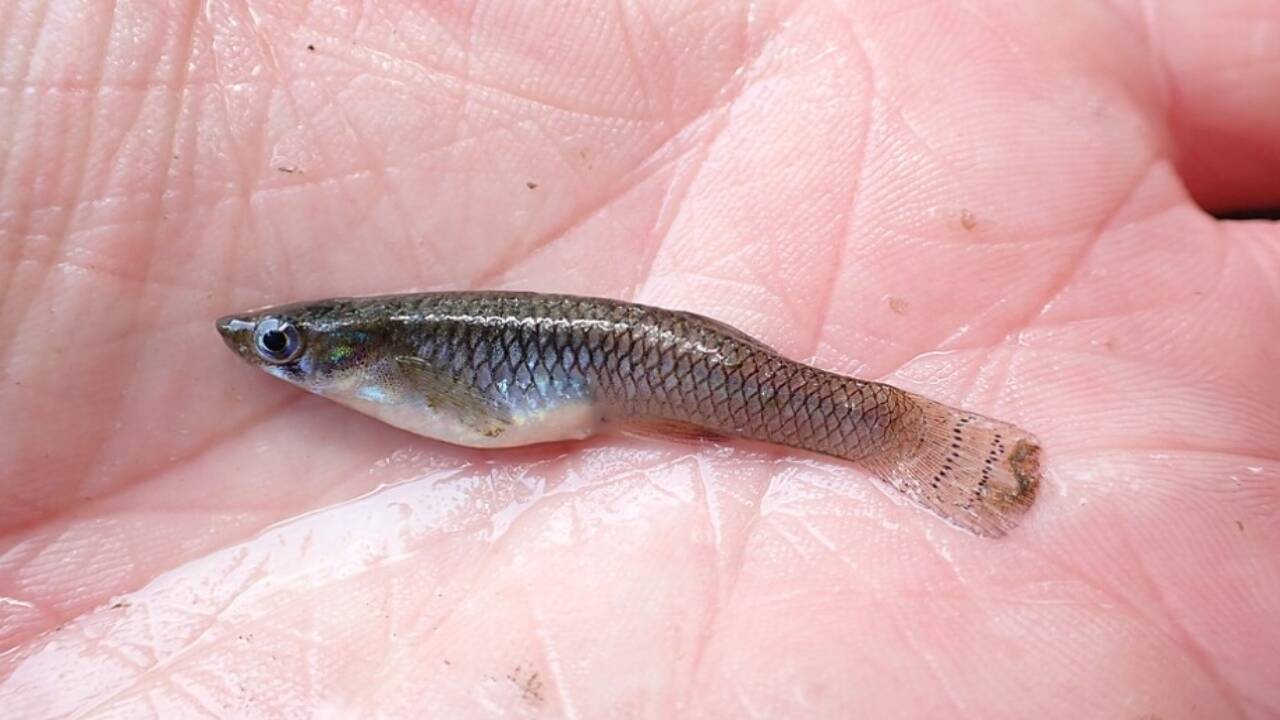
In 1916, Japan brought the American mosquitofish, Gambusia affinis, into the country as a way to control mosquitoes and the diseases they carried. The first introduction took place in Nara Prefecture after the fish arrived via Taiwan. More releases followed, including transfers to Okinawa and other parts of Japan. The fish were appealing as a mosquito-control tool because they readily eat mosquito larvae and can survive in shallow, slow-moving water. But the species did not stay within the places where people released it. It established itself in irrigation channels, ponds, rice fields and other waterways, and by 1970 it had spread to many parts of the country. Japan's National Institute for Environmental Studies lists the 1916 introduction, the later spread and the species' impact on native medaka, or Japanese rice fish.
Get breaking news anytime, anywhere. Download the TOI app now!

The original idea was simple: put a fish that eats mosquito larvae into places where mosquitoes were breeding. The trouble was that mosquitofish are not selective about what they eat. They can take mosquito larvae, but they also feed on other small aquatic animals and can attack fish. They are also more aggressive than medaka, a native Japanese fish that lives in many of the same lowland waters. Once mosquitofish became established outside the areas where they were first released, the fish were no longer serving only as mosquito-control agents. They had become an invasive species competing for space and food in Japanese waterways.
From mosquito control to a threat for medaka
The impact on medaka became clear in places where the two fish lived together. A study in central Japan examined small irrigation ditches where both species were present and found that medaka living alongside mosquitofish often had damaged tail fins. The severity of the injuries increased with mosquitofish density, although the researchers did not find that mosquitofish numbers alone explained the size of medaka populations. The study published in Wildlife Conservation Japan suggested that habitat changes in the rice-field system also played an important role. That makes the story more complicated than saying mosquitofish simply replaced medaka wherever they appeared.
Other research has shown more direct effects. A study on male medaka found that injuries to the anal and tail fins, which can result from attacks by mosquitofish, were linked to changes in reproduction. Damaged fins reduced the number of eggs spawned, and injuries to the anal fin also lowered the proportion of eggs that were fertilised. The researchers did not conclude that every medaka population exposed to mosquitofish would collapse, but the findings showed that attacks could have consequences beyond the immediate loss of individual fish.
The spread of mosquitofish also became difficult to reverse because the fish could thrive in the kinds of waterways people had already created. Irrigation ditches, drainage channels and rice fields gave them plenty of places to live, while their tolerance of poor water quality helped them survive in environments that could be challenging for other species. They were also repeatedly moved by people after the original introduction. A fish intended to remain in one mosquito-control programme could therefore become established elsewhere through another release.
A biological control idea with a longer legacy
By the second half of the 20th century, mosquitofish were no longer a small experiment in disease control. Records show that they had become established across a large part of Japan, including southern Honshu, Shikoku, Kyushu and Okinawa. The fish are now listed under Japan's Invasive Alien Species Act, which prohibits their import, transport and keeping. The designation reflects concerns over their effects on native species, including medaka.
The mosquito-control benefits were also less straightforward than the original plan suggested. A 1989 ecological study of mosquitofish in Tokushima found that the fish were effective at reducing mosquito larvae in some waterways but also observed that medaka populations became less common as mosquitofish increased. The results show the trade-off that followed the introduction: the fish could do the job people wanted, but they also affected native wildlife in ways that were difficult to control.
The history of mosquitofish in Japan is less about one failed experiment than about an idea that kept producing consequences long after the original release. In 1916, the priority was reducing mosquitoes and the diseases associated with them. Over the following decades, the fish spread into waterways across much of the country and encountered species such as medaka that had never been part of the original plan. Some medaka populations were affected by attacks and competition, while changes to their habitat also played a role. What began as a public-health measure became a lesson in how difficult it can be to control the wider effects of an introduced species. In Japan, the fish remained in the waterways long after the original introductions, turning a short-term attempt at mosquito control into a much longer story about invasive species and native fish.