Get all your news in one place.
100's of premium titles.
One app.
Start reading
The Times of India
The Times of India
World
TOI World Desk

In 1913, Los Angeles began diverting Owens River water, helping dry Owens Lake into a dust-blowing salt flat; controls now cut dust by up to 99% in treated areas

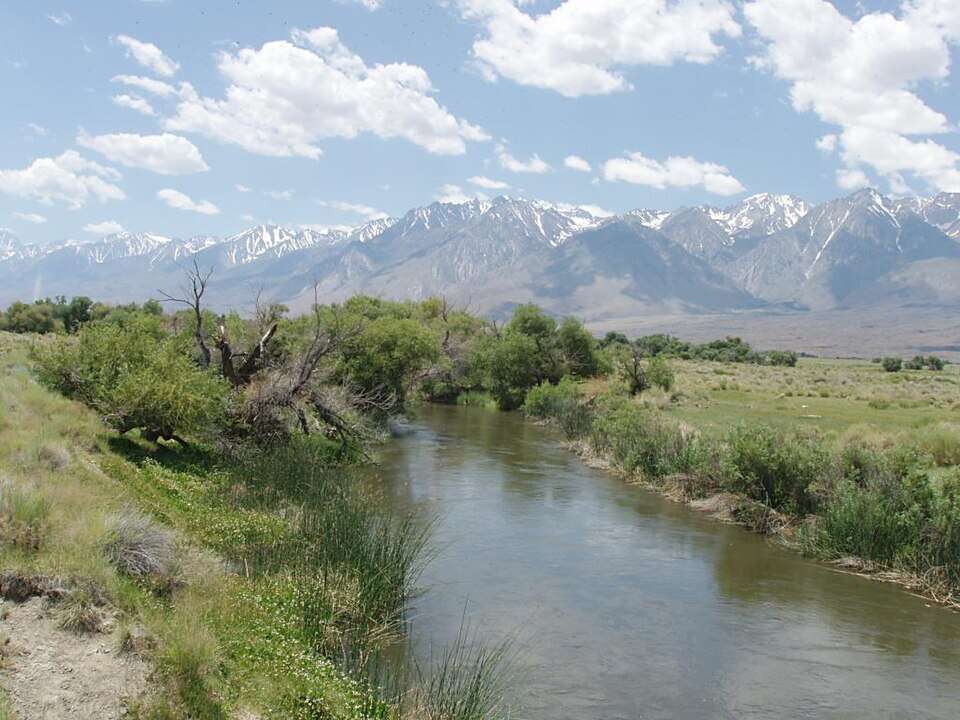
With its opening in November 1913, the Los Angeles Aqueduct was widely regarded as a major engineering achievement. Covering 233 miles, the water delivery system transported water from the Owens Valley in California to Los Angeles and supported the city's growth. However, despite helping supply water to millions of people, it also caused environmental damage in Owens Valley that has persisted for decades.

Get breaking news anytime, anywhere. Download the TOI app now!

According to History.com , the completion of the Los Angeles Aqueduct in 1913 gave the rapidly growing city access to a much larger water supply. Los Angeles had a population of around 300,000 when the aqueduct opened, and the new water source helped support the city's continued expansion in the decades that followed. Meanwhile, people living in Owens Valley had to watch as their rivers, canals, and eventually Owens Lake dried out as more and more water was directed south.

Los Angeles sought water

At the beginning of the 20th century, the city of Los Angeles relied mostly on water supply from the Los Angeles River and underground water reserves. Since the population was growing rapidly, authorities worried that there would not be sufficient water in the future. At this point, William Mulholland, then superintendent of the Los Angeles water department, and former Los Angeles mayor Fred Eaton realized that Owens Valley could provide the water they needed.

According to History.com, Los Angeles gradually acquired land and water rights in the valley. In addition, voters provided over $24 million in bonds in order to construct the aqueduct. Construction work began in 1908, and thousands of people worked to complete the massive project before it opened in 1913. On November 5, 1913, while the water flowed into the city, Mulholland said, “There it is; take it!”

From this point, the aqueduct became the basis of further development of the city. For many residents of Owens Valley, the same project became the beginning of their struggle for water.

The California Water Wars

The long-term drought may have worsened the problem by making water scarcer for irrigation. As Los Angeles continued to purchase water rights in the 1920s, the people of Owens Valley feared for their economic survival. However, Los Angeles continued purchasing land and water rights, and by 1924 had acquired about 90 percent of the Owens Valley's water rights.

That year also saw many protesters take control of the Alabama Gates spillway and open the gates in protest, according to History.com. However, Los Angeles kept on purchasing land and water rights until 1926, when Los Angeles acquired around 90 percent of Owens Valley. According to History.com, the controversy became one of the most famous water-rights disputes in the United States.

From a flourishing lake to a dry salt flat

Probably the most evident effect of the aqueduct system is Owens Lake itself. Before the major diversions, the lake covered 110 square miles and was fed by the Owens River, which carried meltwater from the Sierra Nevada. The Northern Paiutes lived around the lake and relied on it and its surroundings for fishing, agriculture, and other purposes well before the arrival of settlers.

According to History.com, settlers took the land and water rights, marking a new chapter in the region's history. With the increasing amount of water being taken out of the valley towards Los Angeles, the flows of water into the lake were slowly disappearing.

Eventually, the Owens Lake dried up and now consists mainly of a salt desert. As History.com describes it, the once-flourishing lake became a dry, dust-prone plain. Apart from the change in the lake itself, the environmental effects extended to the whole Owens Valley.

The efforts to curb dust are ongoing

Although the decision was made more than a century ago, its environmental effects are still visible today. Dust from the dry lakebed became a major environmental problem because fine particles could travel long distances in strong winds.

As stated in the Great Basin Unified Air Pollution Control District , dust mitigation strategies such as shallow flooding, vegetation management, and gravel cover have reduced PM10 emissions by about 99 percent in Owens Lake's treated areas. This project is a major dust mitigation effort in the US.

More than a century after the Los Angeles Aqueduct opened, its legacy remains controversial. For Los Angeles, it provided the water needed for rapid growth; for Owens Valley, it brought environmental damage, water-rights disputes, and major changes to the natural landscape.

Sign up to read this article
Read news from 100's of titles, curated specifically for you.
Already a member? Sign in here
Related Stories
Top stories on inkl right now
One subscription that gives you access to news from hundreds of sites
Already a member? Sign in here
Our Picks
Fourteen days free
Download the app
One app. One membership.
100+ trusted global sources.