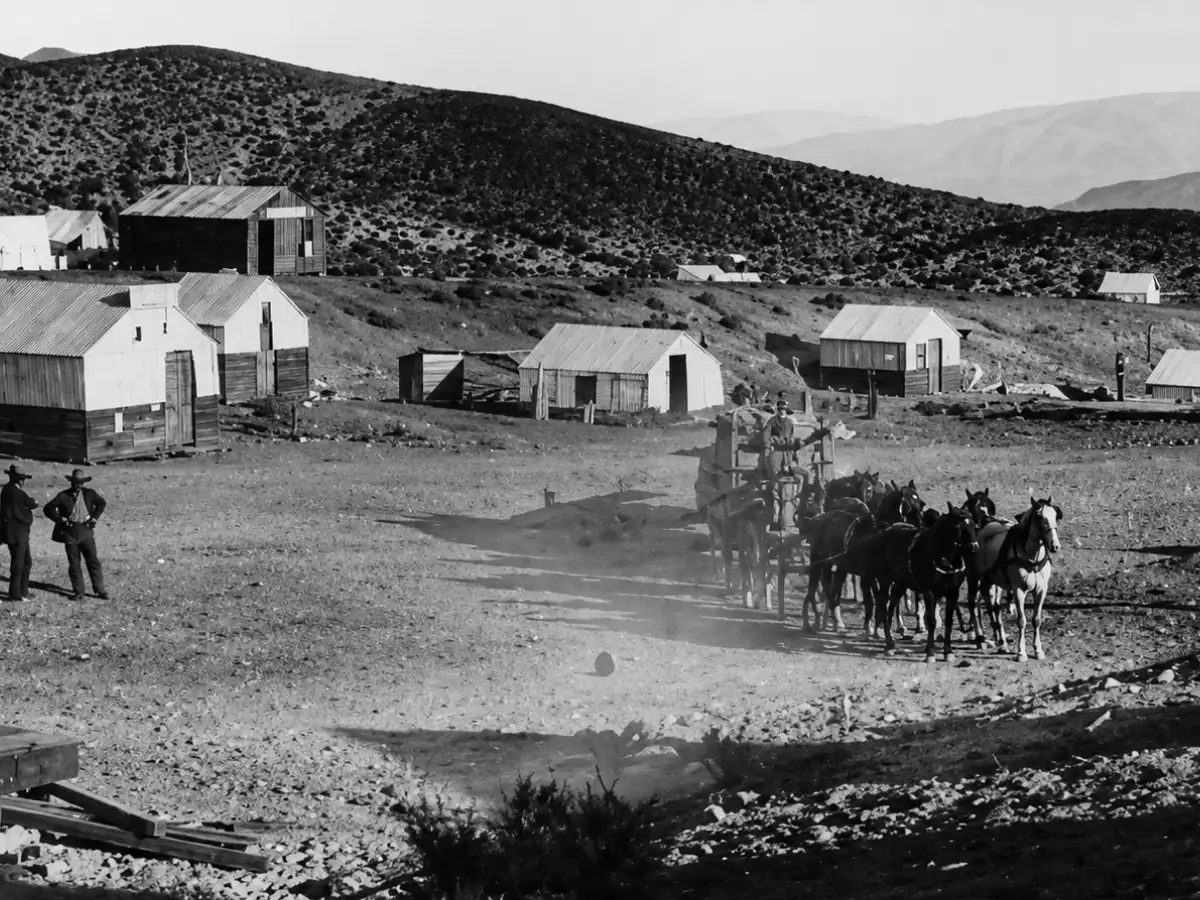
A single copper discovery in the California desert once pulled 2,000 people into a place with no water of its own and no way to bring in supplies. That was Greenwater. According to the National Park Service's overview of Death Valley's ghost towns, Greenwater grew up around a copper strike made in 1905, reached a population of 2,000, and by 1909 the mining had collapsed without ever turning a profit. Today, the agency says no ruins remain at the site. Anyone who has watched a hyped stock or a buzzy startup rocket up and then vanish will recognize the shape of this story.
How a rumor turned into a town of 2,000
Prospectors saw signs of copper in the Greenwater area as far back as the 1880s, but the place was too far away and too difficult to work with. Nothing really happened because of that. Then in 1905 Fred Birney and Phil Creasor were searching for gold near the Black Mountains when they found a lot of copper instead. Arthur Kunze claimed some land around the same time. Prospectors argued for years about who found the copper first. More important than the argument was how quickly the news spread. People in the mining world learned that the valley had one of the largest copper discoveries ever seen within a few months. Investors started paying attention right away. A big steel businessman named Charles Schwab put money into the area, and shares in Greenwater's mining companies went up to $5.25 each for a time. That price was based on hope, not on copper that had been found. The news about the discovery also caused a rush to build a town. Three different camps appeared close to each other. One was called Greenwater; another, Furnace. A third was called Copperfield. After competing for supplies and people through 1907, the camps joined together and kept the name Greenwater.
Life in a town with no water of its own
Greenwater took its name from a spring, but that spring never produced enough water to feed a town of thousands. Water had to be hauled from outside the district and sold for fifteen dollars a barrel, according to the National Park Service's history of Greenwater Valley mining. So Greenwater built out something close to a real civic life. Banks, stores, saloons, restaurants, and lodging houses lined its streets. Residents read the Greenwater Miner and a lively magazine called the Death Valley Chuckwalla. For a settlement that had not existed a year earlier, Greenwater briefly looked like a functioning town dropped into one of the harshest places on the continent.