
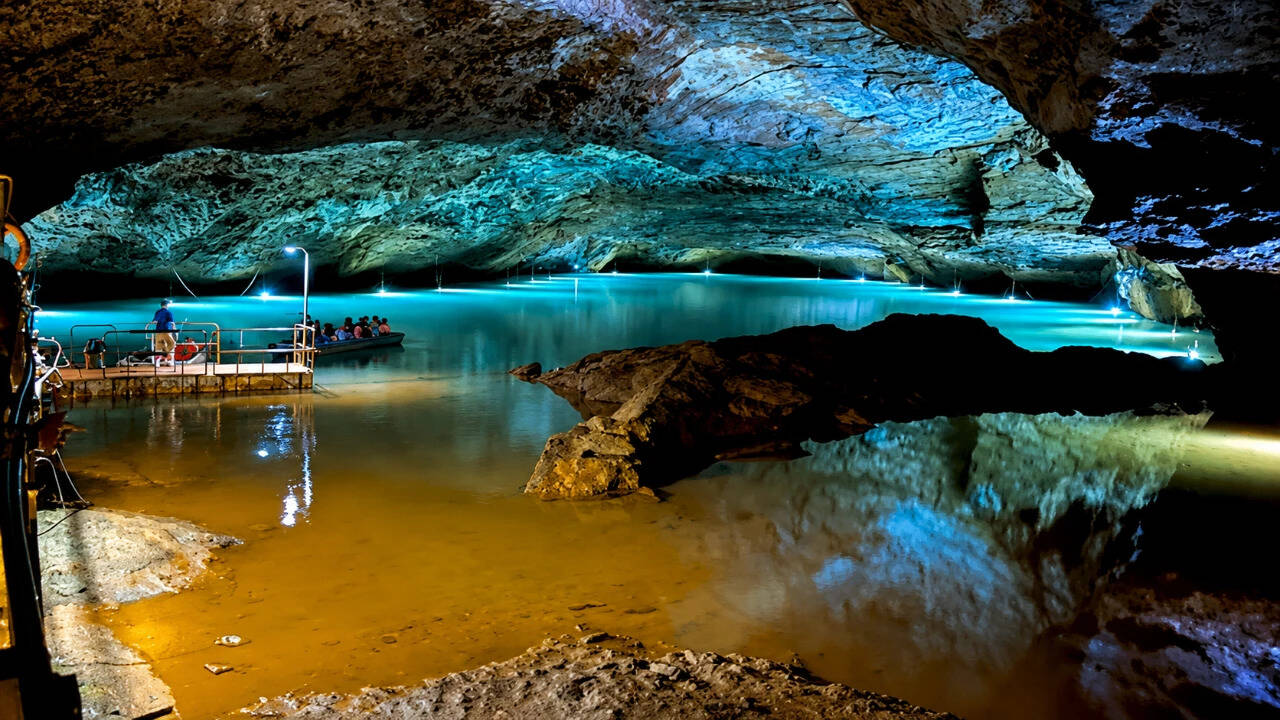
In 1905, a 13-year-old boy exploring Tennessee's Craighead Caverns squeezed through a narrow, muddy passage and stumbled upon something far larger than he could have imagined: a vast chamber containing an underground lake. His name was Ben Sands, and his discovery would eventually become known as the Lost Sea, today recognised as the largest underground lake in the United States. More than a century later, the cavern remains one of Tennessee's most unusual natural attractions, with visitors travelling deep underground to see its enormous body of water. The Lost Sea is an American wonder about 140 feet below the surface. The cave itself has an even older history, with evidence of Indigenous use, Civil War-era mining and other human activity. What began with a curious teenager squeezing through an opening has since become a place where geology, history and exploration converge beneath the Tennessee landscape. The discovery also demonstrates how moments of curiosity can uncover natural wonders that remain hidden for generations. More than a century later, that single act of teenage curiosity continues to echo through every guided tour and boat ride across the Lost Sea, a quiet reminder that some of nature's most extraordinary wonders remain hidden until someone dares to look closer.
Get breaking news anytime, anywhere. Download the TOI app now!















