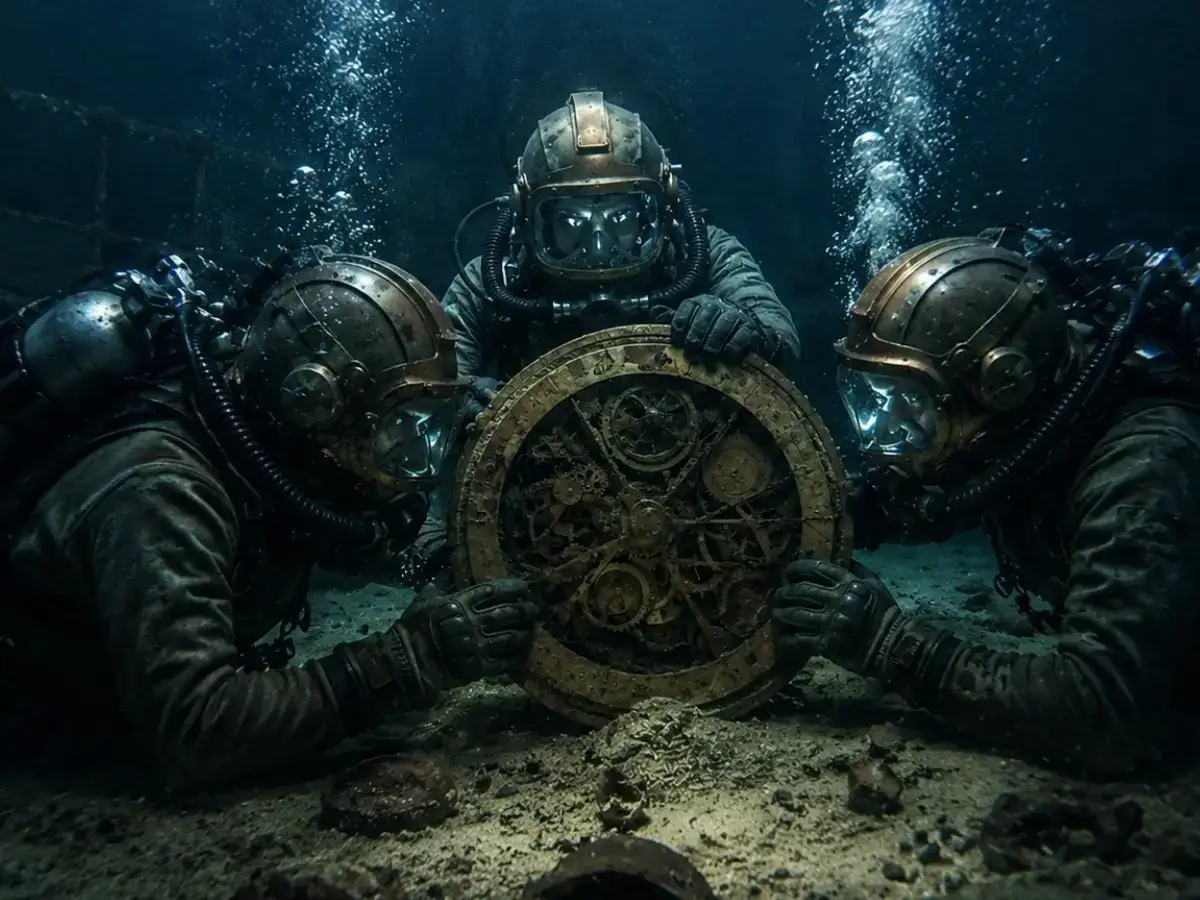
From what was supposed to be a routine sponge diving trip near the Greek island of Antikythera emerged an unprecedented discovery in the field of archaeology. In 1900, a group of sponge divers, who, due to unfavorable weather, had been forced to alter their intended path of travel, discovered an ancient shipwreck full of valuable statues, ceramic pieces, and other luxurious items. Among the items found in the wreckage were some corroded bronze plates that proved to be a remarkably sophisticated piece of machinery known today as the Antikythera Mechanism.
This discovery was significant since it presented a challenge to previous notions regarding the level of technological sophistication of ancient civilizations. It was discovered through subsequent analysis that the mechanism is able to perform complex calculations of astronomical cycles that were assumed to be far too complicated to be produced during that time period.