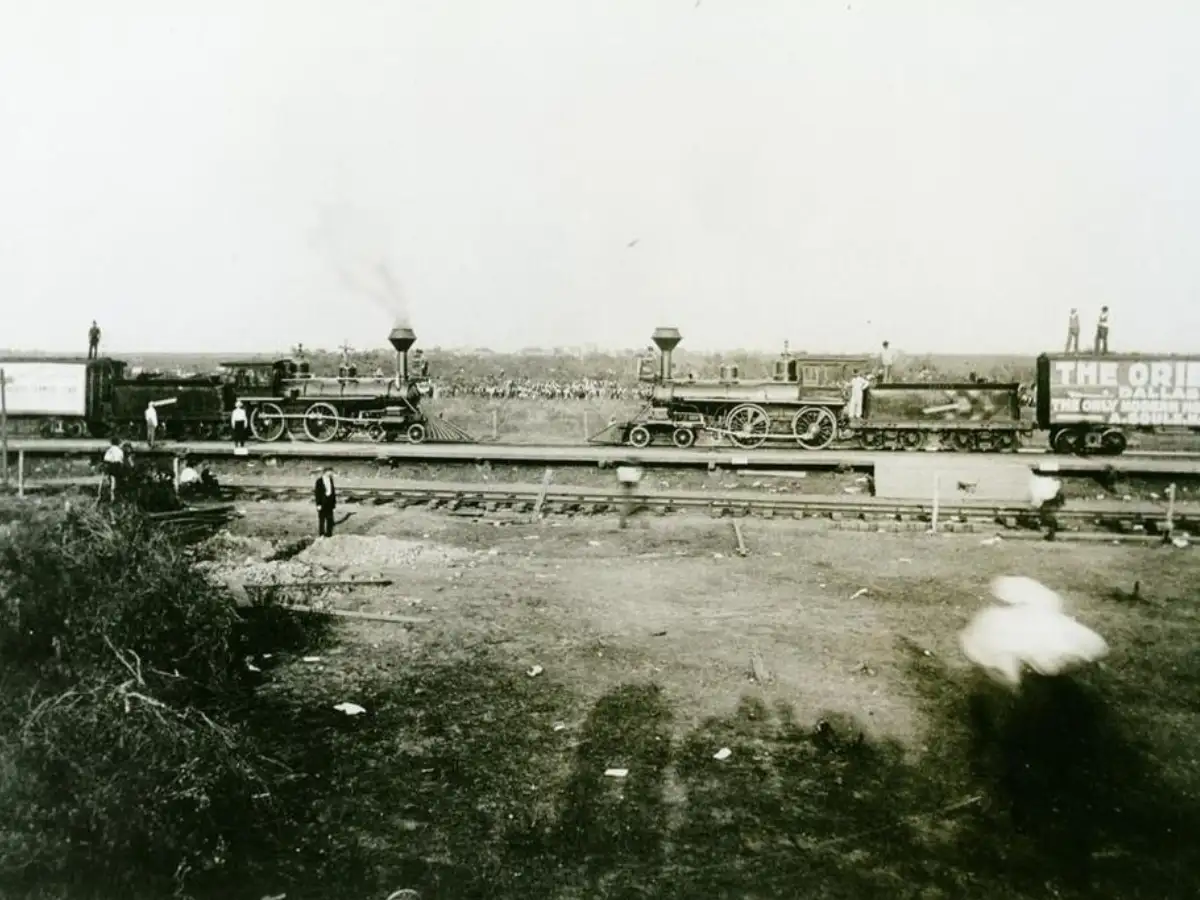
On September 15, 1896, an estimated 40,000 spectators traveled to a temporary settlement in rural Texas to observe the deliberate, high-speed collision of two full-scale steam locomotives. The event, subsequently known as the Crash at Crush, was conceived by William George Crush, a passenger agent for the Missouri–Kansas–Texas Railroad (commonly referred to as "the Katy"). Crush's objective was straightforward: to transform an engineered train wreck into a large-scale public spectacle that would generate revenue through passenger traffic to the site.