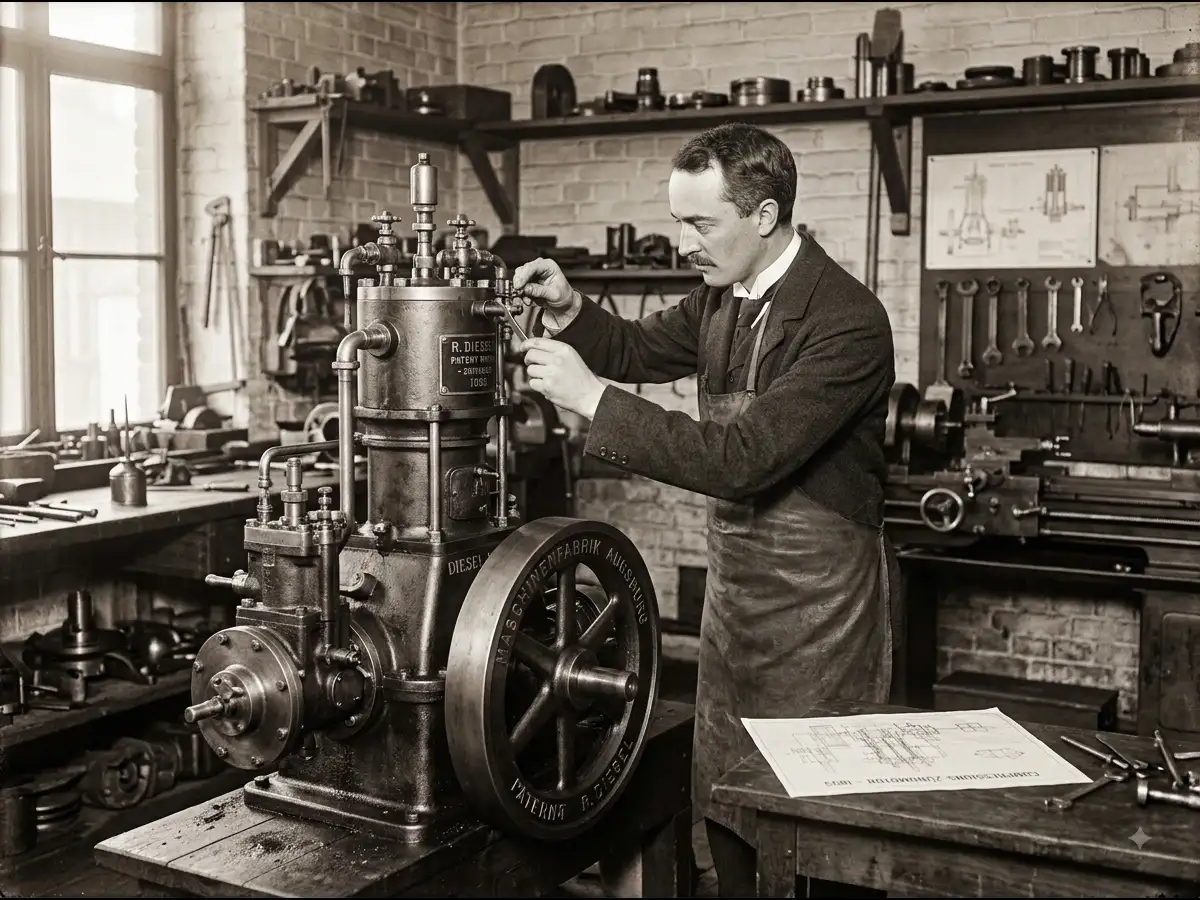
In 1893, Rudolf Diesel published details of a new engine based on compression ignition . The German inventor and mechanical engineer wanted to develop an engine that could convert heat into useful work with greater efficiency than the systems available at the time. His work eventually led to the diesel engine, which became part of transport, shipping, agriculture, power generation and industry. Diesel's idea was different from the spark-ignition engines that were also being developed during the period. Instead of using a separate ignition source, the engine compressed air to a high pressure. The resulting heat allowed injected fuel to ignite.
The engine was also connected to Diesel's economic ideas. He believed that an engine could give farmers, craftsmen and small businesses access to mechanical power without depending entirely on large industrial systems. He also examined vegetable oils as possible fuels.