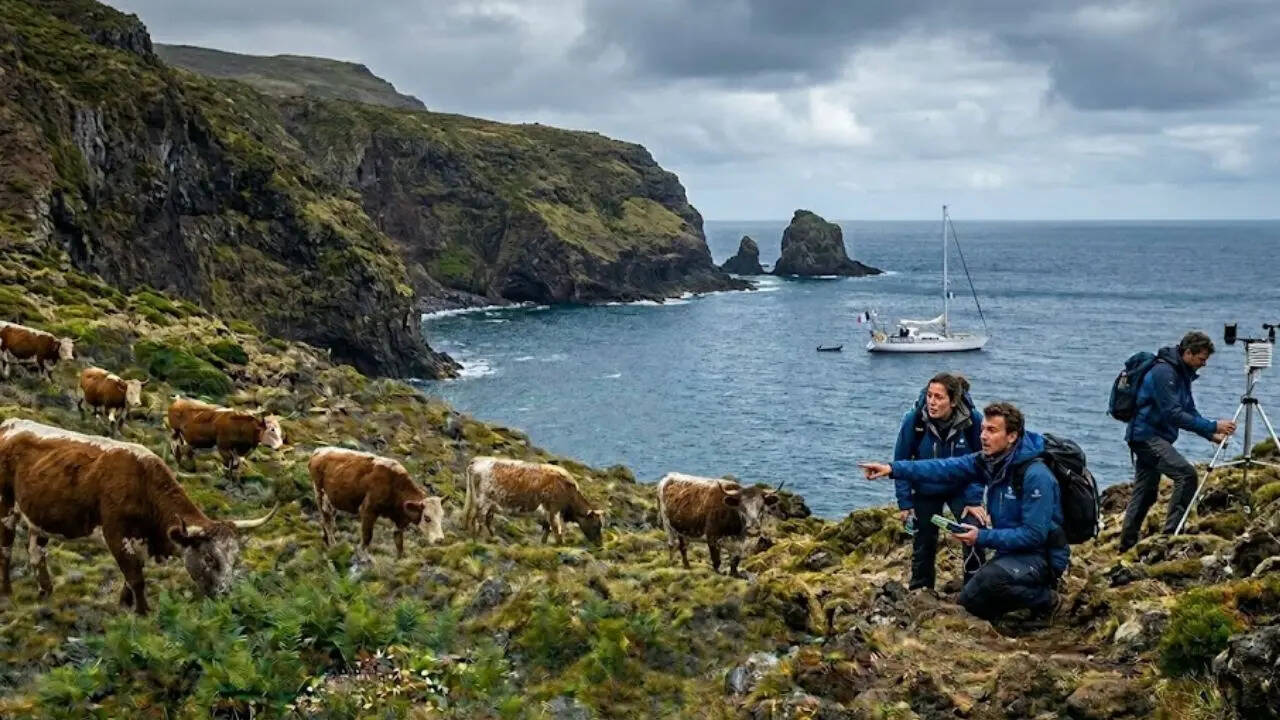
In 1871, a French settler by the name of Heurtin left Amsterdam Island in the Indian Ocean. He left behind five cattle on this barren volcanic land, and without any human help, it appeared biologically unsustainable. Over a century later, scientists returned to check on the herd and found something astonishing. The cattle population had grown to nearly 2,000 strong, despite severe inbreeding and tough weather conditions.
Known as ‘Heurtin cows,’ these animals managed to survive against all odds. Studies have shown that this isolated group developed a special set of genetic traits that could change how we understand resilience and quick adaptation in domestic animals when they return to the wild. This unique population demonstrates nature's remarkable ability to thrive in isolation, offering invaluable lessons on evolutionary survival and genetic endurance.