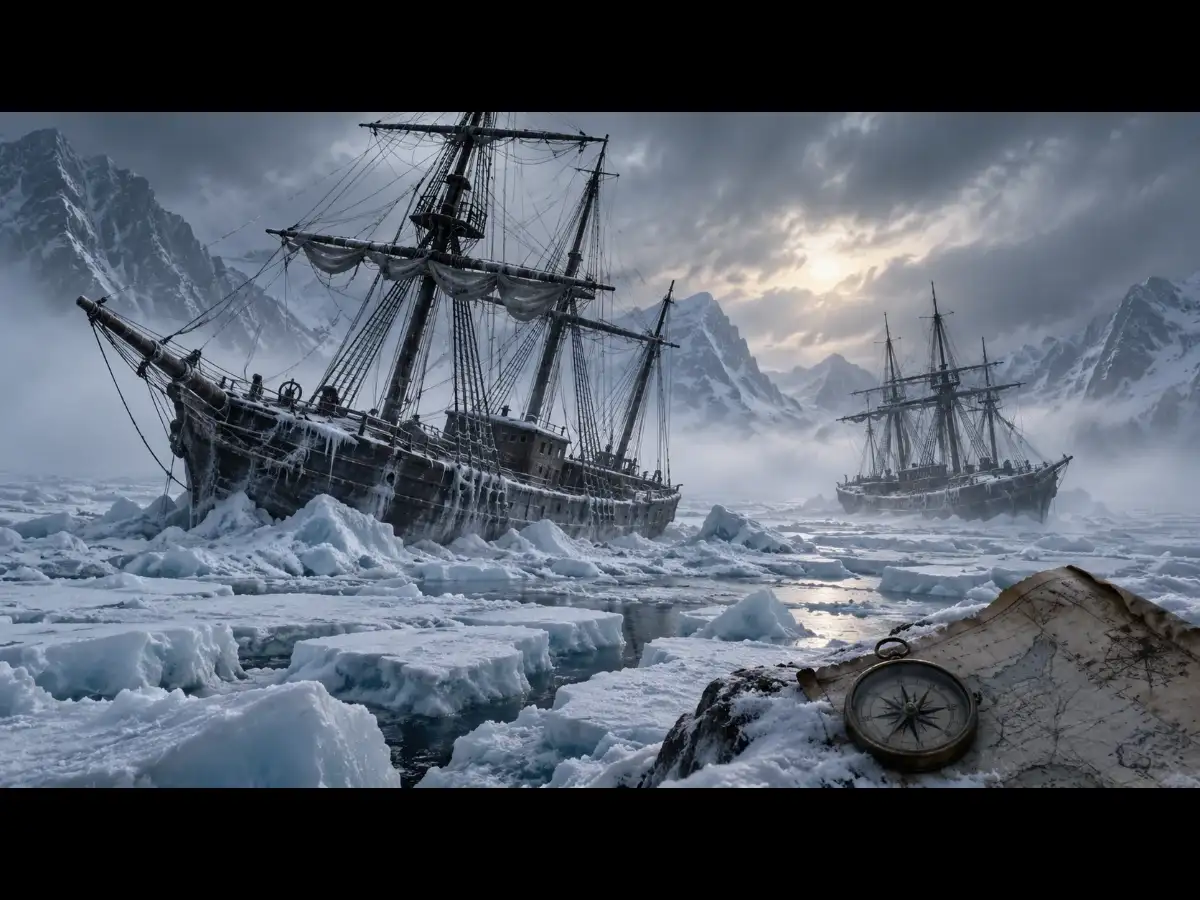
For decades, the fate of Sir John Franklin and the 128 men who sailed with him remained one of the Arctic’s most haunting mysteries. The expedition had left Britain with two specially equipped ships, experienced officers and supplies intended to last for years. Then the ships vanished.
What followed was one of the longest and most determined searches in polar exploration. More than 30 Arctic expeditions joined the official search effort between 1848 and 1854, while explorers continued looking for answers long afterward.

But some of the most important clues did not come from the European search parties. Inuit hunters and guides had witnessed events, heard stories and preserved knowledge about what had happened. Their accounts were often dismissed at the time, yet centuries-old knowledge of the Arctic landscape eventually became central to solving the mystery.
Nearly 170 years after the expedition disappeared, modern researchers combined Inuit Qaujimajatuqangit, Inuit knowledge and history, with Western science and underwater technology. That effort finally located HMS Erebus in 2014 and HMS Terror in 2016.