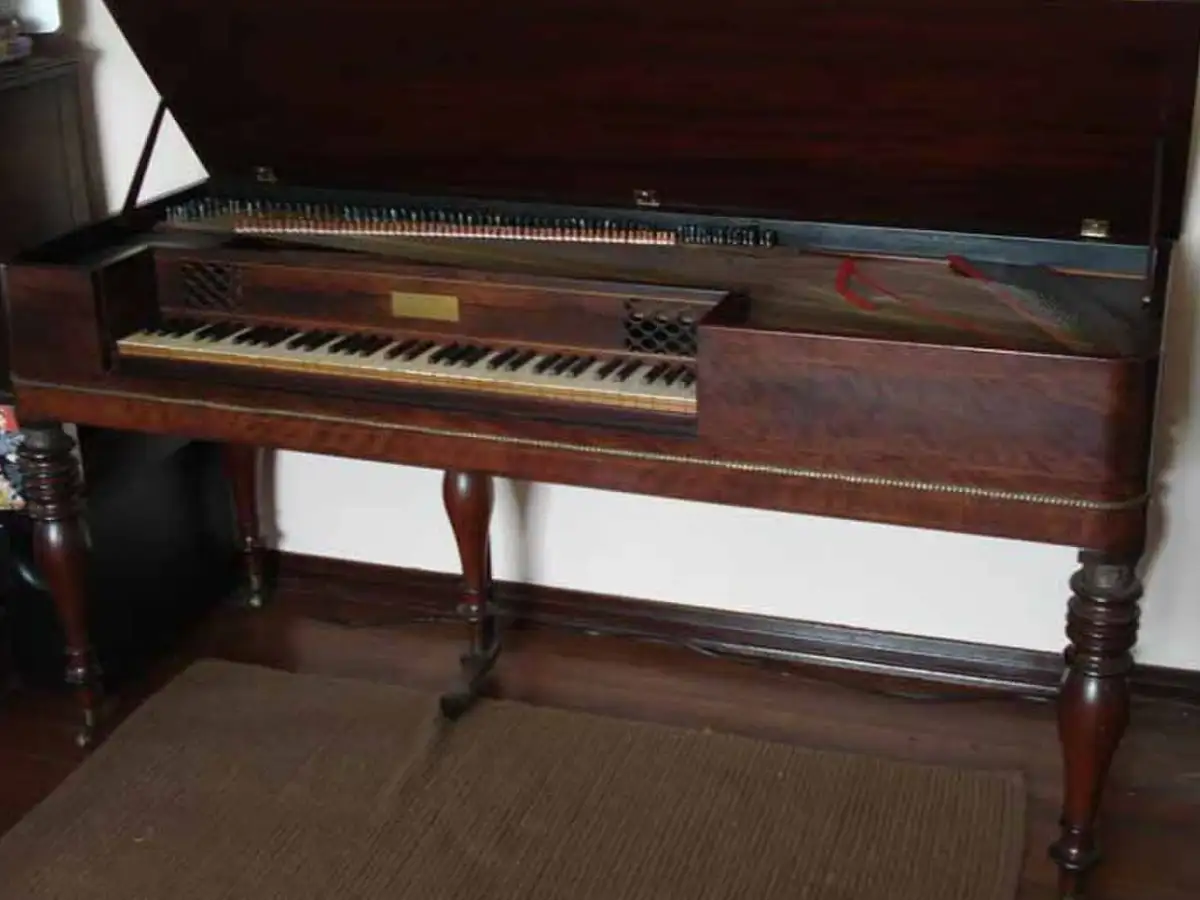
Somewhere between your last karaoke night and that one piano ballad you swear you're over, a piano probably hit you right in the feelings. That big, room-filling sound has an unglamorous backstory: a slab of cast iron hiding inside the case. According to the National Inventors Hall of Fame, Boston piano builder Alpheus Babcock patented a one-piece cast-iron frame to hold a piano's strings under tension in 1825 and is credited with developing it first. Before his design, pianos were made almost entirely of wood. However, the Colonial Society of Massachusetts shows that the real story is messier. Babcock's idea took a long time to catch on, and it wasn't an overnight hit. It's a slow-burn story about timing, rivals, and how long a good idea can wait for its moment.
Why wood was holding pianos back