
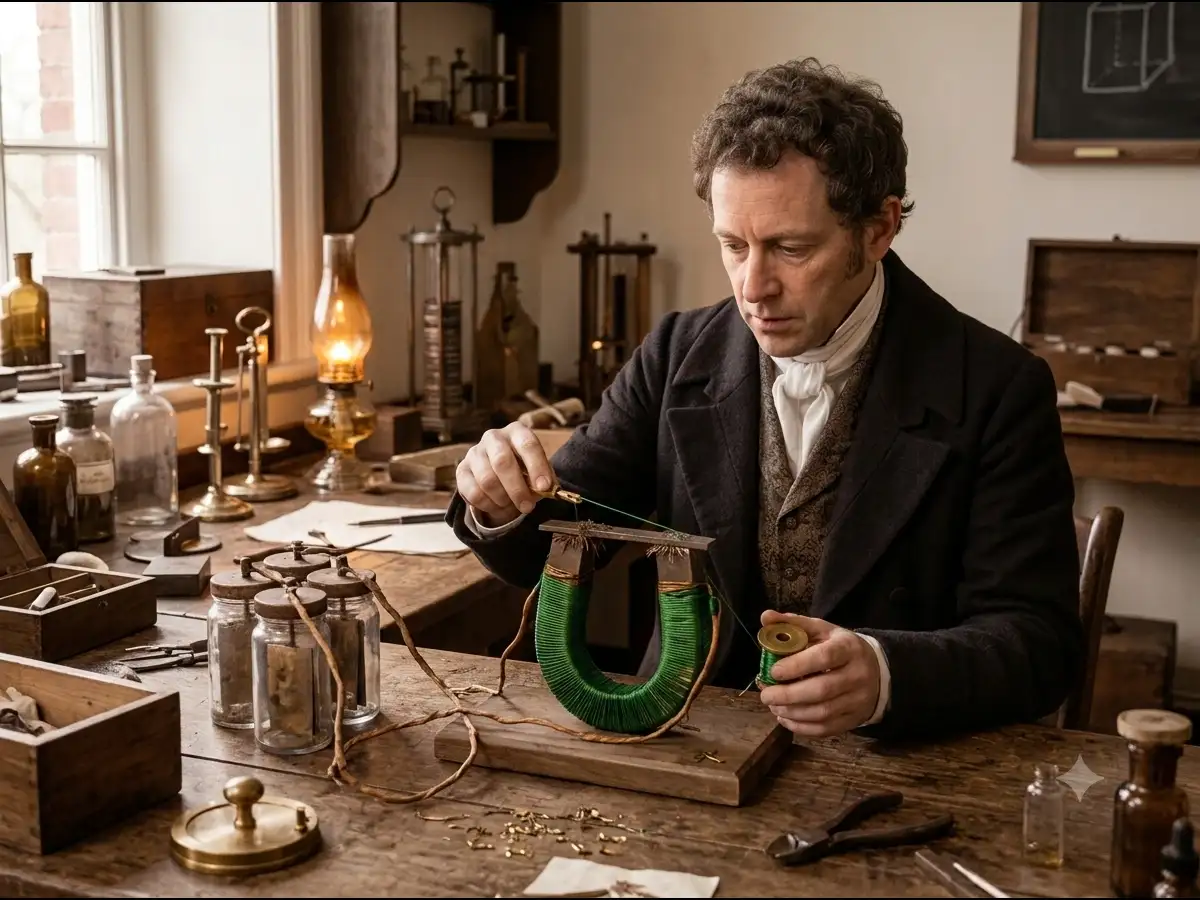
In 1824, an English engineer invented the first working electromagnet laying the foundation for modern electrical engineering. The engineer was William Sturgeon, an English electrical engineer and experimenter who developed a device that showed how electricity could be used to create and control magnetic force. The work is associated with 1824, when Sturgeon was working as a science lecturer. His first electromagnet was exhibited the following year, in 1825. The device used a horseshoe-shaped piece of soft iron wrapped with copper wire. When electricity passed through the wire, the iron became magnetized. When the current stopped, the magnet lost its magnetic effect. This principle became important for later developments in electrical engineering, electric motors, telegraph systems and other electrical devices.














