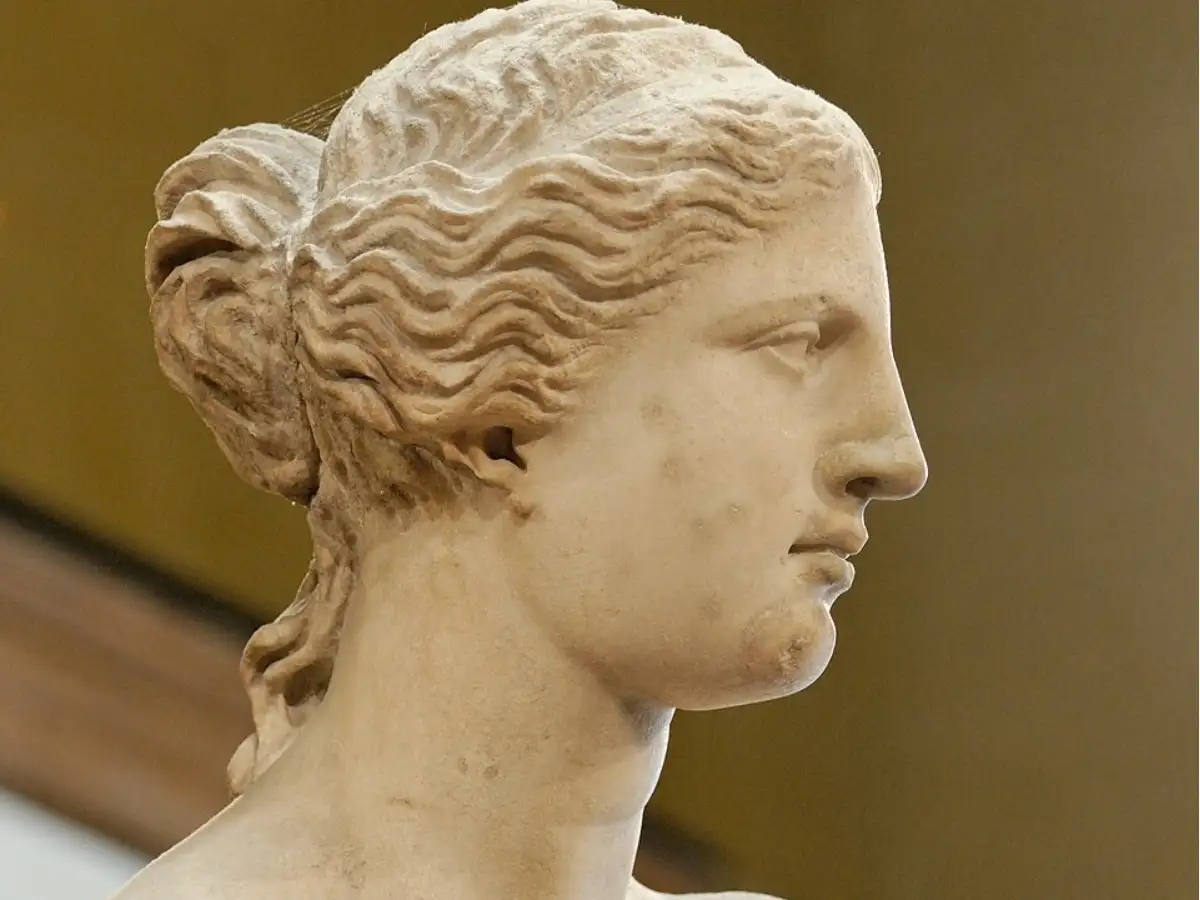
The story of the Venus de Milo is not one of archaeological discoveries, elaborate ceremonies, or even a well-planned dig. The beginning of the discovery started with a farmer who moved stones.
In April of 1820, a local farmer on the Greek island called Melos, but more commonly known as Milos, stumbled across pieces of a statue hidden in the ruins on the Greek Aegean Island. As Britannica states, the piece was unearthed in four pieces on April 8, 1820. Back then, no one could foresee that this piece of art, which had been lying buried for years in the ruins, would go on to become one of the most iconic pieces of art.

Currently, the Venus de Milo is housed in the Louvre Museum, seen by countless people every single year. Yet, at first, the discovery of the piece occurred in one of the most mundane ways possible: a person who was clearing out stones stumbled upon the statue fragment.
A discovery hidden in plain sight
As it is recalled, the actual scenario appears to be somewhat unbelievable as well. As cited on History.com, the farmer happened to be clearing rocks from among ruins when he found out about the marble statue. In the vicinity, French naval officer Olivier Voutier realized that the discovery could prove to have some historical value.
Everything started from thereon. In fact, the statue was not whole. When found, it was found to be divided into several parts, having spent many years underground. However, in its incomplete form, it appeared obvious to those present that it was an exceptionally beautiful piece of art.
The accidental character of the event added more charm to this discovery. At one point, these were just ruins, and the next – it was one of the greatest sculptural masterpieces of antiquity.
Why Europe became captivated
It was not just the sculpture but also the time of discovery that played an equally important role.
Europe during the nineteenth century was already very interested in the civilizations of ancient Greece and Rome. Classical art was all about beauty, harmony, and prestige. As Britannica explains, the Venus de Milo is normally considered to be the goddess Aphrodite, who was the Greek goddess of love, and dates back to the Hellenistic period around the second century BC.
The statue appeared to have all those elements that Europe adored in its ancient civilization.
With its twisting torso and flowing robes, the statue appeared to be both dynamic and gentle. At the same time, the size of the statue and its overall posture were awe-inspiring. The statue did not appear to be an artifact that needed restoration, but rather was a direct link to an extinct civilization.
The missing arms that became part of the legend
Ironically, one of the most famous aspects of the statue is something that it is now missing.
When the Venus de Milo first received broad recognition, she was already without her arms. As stated by History.com, there has been much discussion throughout the years as to what the statue may have originally held in her hands.
The question became a key aspect of the sculpture.
Instead of detracting from the statue, the missing arms only served to add intrigue to the piece. There was no way to ever truly solve the puzzle; the audience could imagine all sorts of things. Perhaps she held an apple? Maybe it was a mirror or a shield, or maybe even some fabric? Whatever it was, it became part of the story of the statue.
As Smithsonian Magazine reports, controversy over what the original form of the statue was has carried on for decades.
The Venus de Milo became not just a great ancient work, but an unfinished story.
From island ruins to the Louvre
The sculpture's travels after its discovery speak volumes about the reality of the time.
As Britannica and publications by the Louvre claim, the sculpture arrived in France in 1821 and quickly became one of the museum's star exhibits.
This was important for many reasons. Firstly, the sculpture was discovered not just as an archaeological find. Secondly, its arrival marked a race between Europeans to uncover ancient relics.
The transformation of a face partially buried in an old ruin on a Greek island into an exhibit in one of the world's premier museums made it a global icon of art and history.
However, despite its long reign at the center of historical attention, the core of the story has remained surprisingly human.
What the farmer expected to be just another rock turned out to be a face from ancient times looking back through millennia of decay and disintegration.
And that accidental discovery is what makes the story so captivating. The Venus de Milo is eternal not only because of its beauty but because of how easy it is to forget history underneath our feet.