
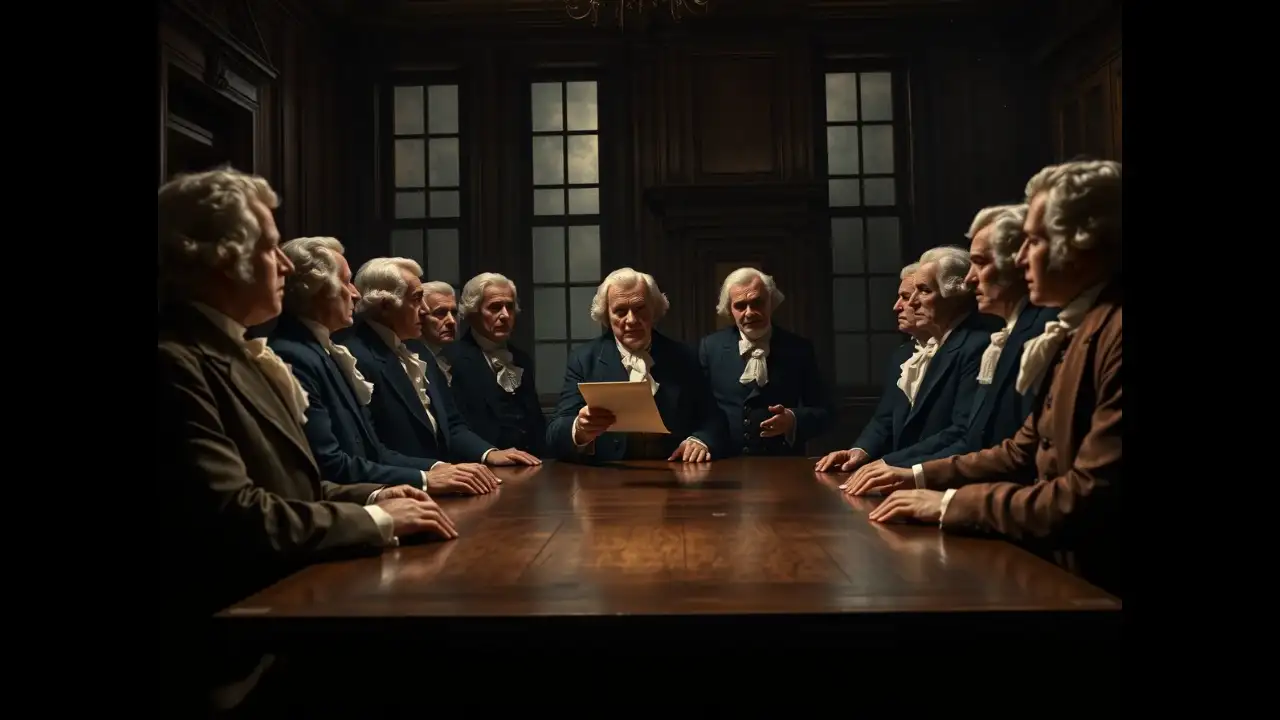
In 1788, the Congress of the Confederation authorized the first national election and declared New York City the temporary national capital. In 1788, the United States stood at a historic turning point. The American Revolution had ended, the Articles of Confederation had proved inadequate for governing the new nation, and the Constitution was moving toward implementation. After New Hampshire became the ninth state to ratify the Constitution on June 21, 1788, Congress received the news on July 2 and began preparing for the transition to the new federal government. In September, the Congress of the Confederation established the framework for the first federal elections and selected New York City as the temporary seat of the new government. These decisions helped transform the United States from a loose confederation into a constitutional republic with an elected president and Congress.
The decision was especially significant because the Constitution created an entirely new national political system. Under the Articles of Confederation, there was no separate executive president elected by a national electoral process. The Constitution instead established a president, a vice president, a Senate, and a House of Representatives. Once the required nine states had ratified the Constitution, the Confederation Congress had to organize the transition. On September 13, 1788, it adopted a resolution establishing the timetable for choosing presidential electors and voting for the nation's first president. The resolution also set March 4, 1789, as the date for the new government to begin operating.













