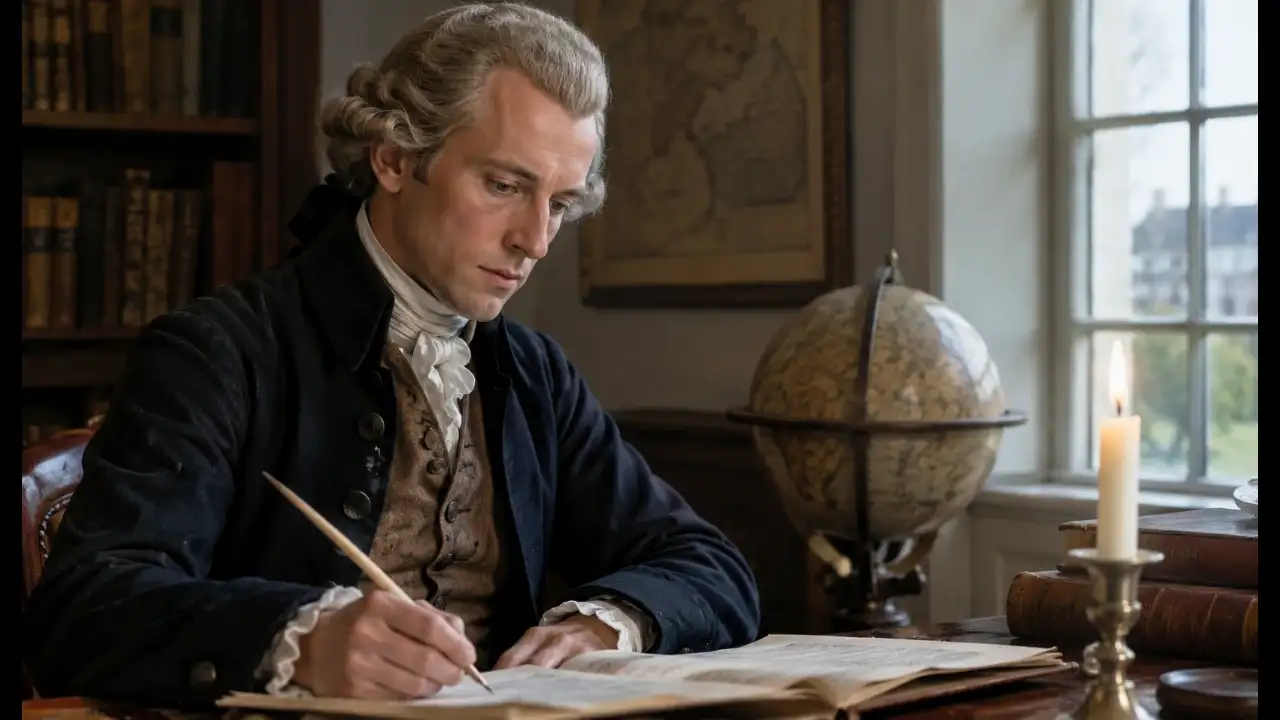
Immanuel Kant is remembered for questions about morality, reason and human freedom, but his academic career began with something far more physical: fire. In 1755, the young philosopher earned his master’s degree after submitting a thesis examining the nature and structure of fire, years before the works that would make him one of the defining thinkers of modern philosophy.
The subject was not an accidental detour. Kant had spent much of his early intellectual life trying to understand force, motion, matter and the workings of nature. His scientific interests shaped the questions he later carried into metaphysics, especially the problem of how seemingly different things interact and how order can emerge from natural processes.