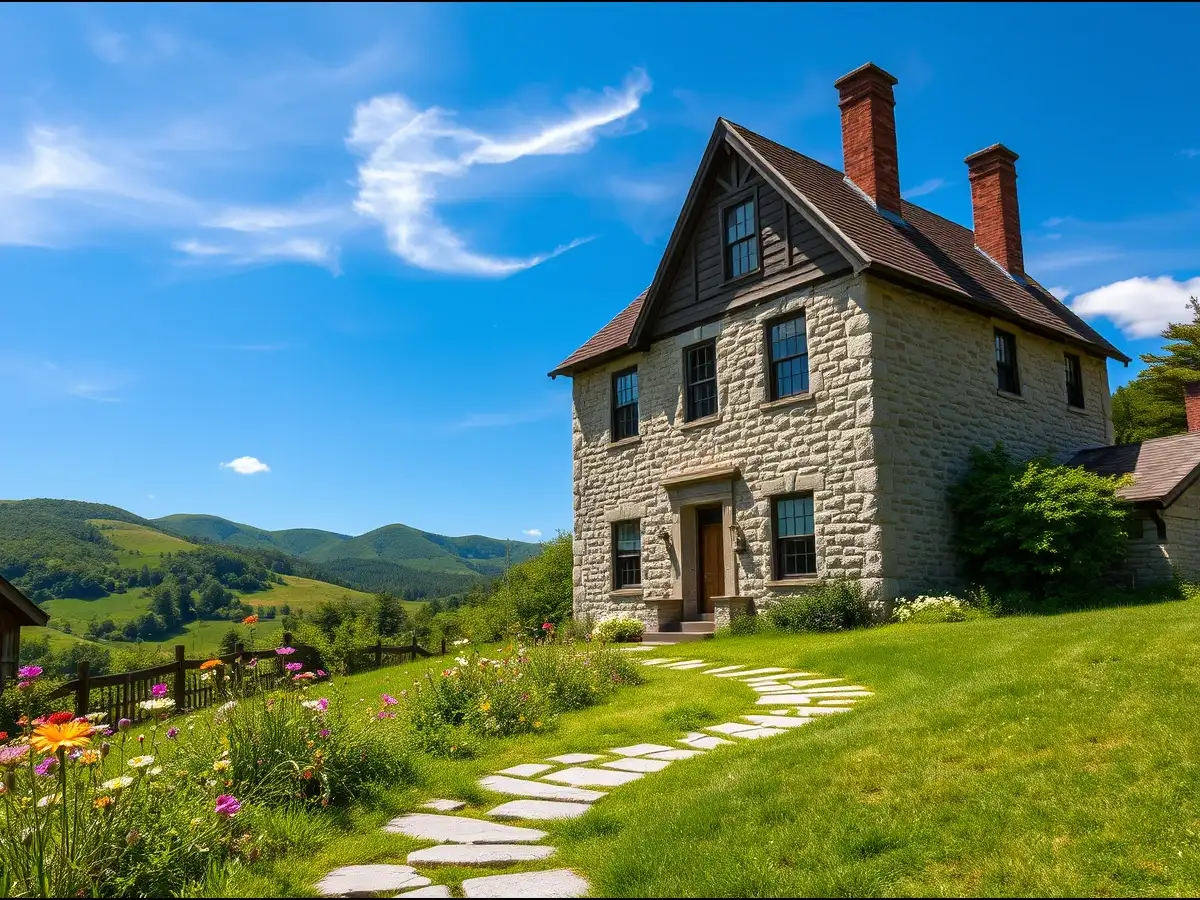
There are old houses, and then there is the Bronck House in Coxsackie. Built in 1663, the house is considered the oldest house in upstate New York, according to the Greene County Historical Society. It was standing decades before Albany's oldest building was constructed, as per a report by Times Union.
More than 350 years later, the Bronck House is still open to the public, with its early structure, family history and unusual old buildings preserved on the property.

The house also tells the story of eight generations of the Bronck family and the changing world around them.
How did the Bronck family arrive in Coxsackie?
Pieter Bronck, a sailor from Jonkoping, Sweden, came to New Netherland with his wife, Hilletje Jans, in 1652. The couple had married in Amsterdam in 1645 before crossing the Atlantic.
They first went to Beverwyck, where they opened a tavern and brewery. The area was home to traders, fur trappers, native Mohicans and others living on the frontier.
But life there did not go smoothly.
The Greene County Historical Society describes Pieter as having a “contentious personality” and says the frontier economy made it difficult for him to maintain a stable income.
Samantha Siri, an events coordinator and tour guide at the Bronck Museum, said it is believed Pieter was deeply in debt and that “he had such a bad reputation he was basically run out of town.”
Pieter eventually bought about 1,900 acres at the base of Kalkberg Ridge from the Katskill tribe. The land was known to the tribe as Koixhackung.
In 1662, Pieter, Hilletje and their young son Jans made the roughly 20-mile journey to their new property.
Their first home was extremely basic. They lived in a hole in the ground covered by a tarp before building a stone cellar and cutting old-growth trees for a one-room house.
The finished home was small by today's standards. The main room measured about 20 feet by 20 feet and had a garret above it. The stone cellar and garret became important storage spaces for food during the long winters.
“People ate what was in season,” Siri said. “They would stockpile as much as humanly possible in those cellars and attics.”
Winter meant spending most of the time inside.
Siri said the family would only leave the house “to use the privy or outhouse, or to check livestock.” Rodents were another problem, making the holes in the garret roof especially useful.
“They were to allow owls to nest in the attic space,” Siri said. “They were a form of pest control.”
What makes the Bronck House so important today?
The original house has survived with several early features still visible. Its wood beams, wide floorboards, cellar hatchway and early-Dutch-style door remain part of the interior.
The property also grew as the Bronck family became more established.
Pieter died in 1669, and his son Jans inherited the land. Jans expanded the home in 1685 by adding a stone west wing with a hallway, main room and loft.
In 1738, Jans' son Leendert and his wife, Anna de Wandelear, added another house made of brick. The Greene County Historical Society describes it as “an excellent example of rural Hudson Valley Dutch architecture modified by a federal period taste.”
The new building had four rooms, a large garret and a cellar. Its size reflected the growing wealth of the family.
Other buildings were later added to the property, including a detached kitchen, barns and a rare 13-sided barn built in the 1830s. It is the oldest documented multisided barn in New York. Its roof is supported mainly by the 13 walls, with just one center pole providing interior framing.
The Broncks remained on the land for generations. Seven generations after Pieter held the property for 276 years.
By the American Revolution, the family had already farmed the Coxsackie land for more than a century. Pieter's great-grandson Jan Leendert and his son Leendert, also known as Leonard Bronck, supported the Patriot cause. Leonard collected goods for the Continental Army.
READ ALSO: Weather forecast today: How will the latest nor’easter impact Atlantic City as high tides continue?
The family's history also includes its ownership of enslaved workers before New York emancipation in 1827.
In 1939, Leonard Bronk Lampman left the farm to the Greene County Historical Society in his will. The property has been open to the public since then and received National Historic Landmark recognition in 1967.
Today, the Bronck House and museum also serve as the home of the Vedder Research Library and the headquarters of the Greene County Historical Society.
Its story began when New York was still New Amsterdam and Albany was still Beverwyck. More than three and a half centuries later, the old house remains standing as a rare link to that much earlier period.
FAQs
How old is the Bronck House?The Bronck House was built in 1663, making it more than 350 years old.
Who built the Bronck House?
Pieter Bronck built the original one-room home after moving his family to the Coxsackie property.