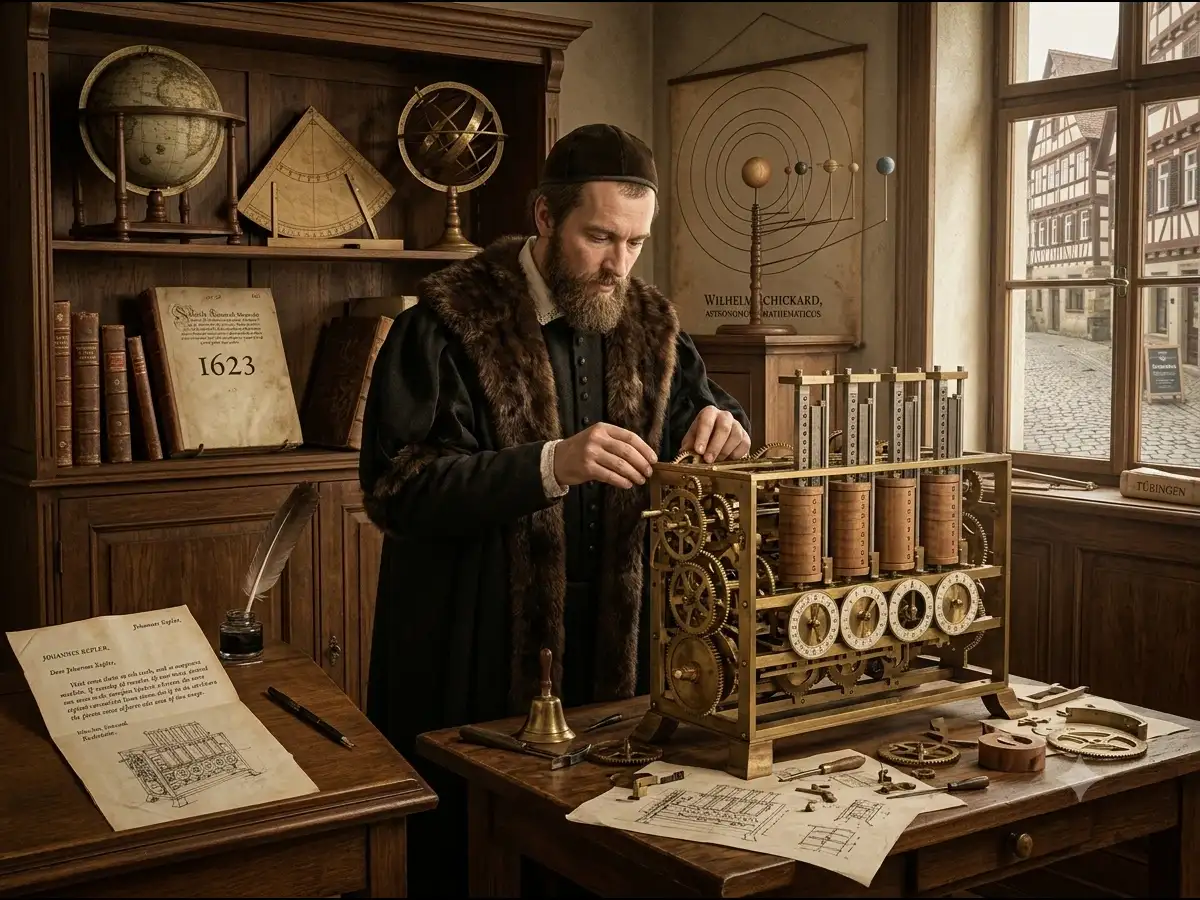
In 1623, a German astronomer invented the earliest known mechanical calculating machine . The inventor was Wilhelm Schickard, a German astronomer, mathematician and cartographer who lived from 1592 to 1635. His device became known as the calculating clock. Schickard designed a machine that combined an adding and subtracting mechanism with a system based on Napier's bones for multiplication and division. He described the machine in letters to Johannes Kepler in 1623 and 1624. The letters later became important in discussions about the history of mechanical calculators. No original machine has survived, but replicas have been made from the surviving drawings and descriptions.