
Get all your news in one place.
100's of premium titles.
One app.
Start reading
The Conversation
The Conversation
David McInnis, Professor of Shakespeare and Early Modern Drama, The University of Melbourne

In 1614, a mother of eight put on a play about her cheating neighbour. The scandalous story changes what we know about women in theatre

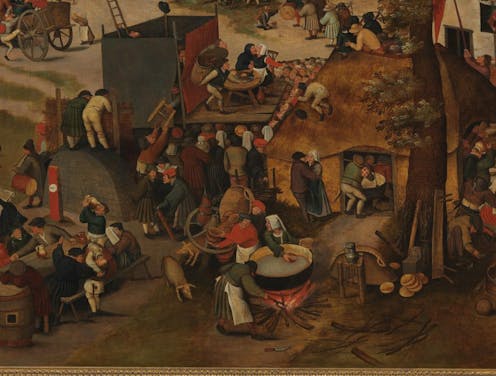
A Village Festival, With a Theatrical Performance and a Procession in Honour of St Hubert and St Anthony. Brueghel, Pieter, the younger (c.1564-1637/8). The Fitzwilliam Museum, Cambridge., CC BY

On September 4, in 1614, a woman named Alice Mustian put on a play in the English city of Salisbury. Erecting a stage in her own backyard, Mustian assembled a group of local children, including her ten-year-old son Phillip, to perform a play based on local gossip: that Mary Roberts, the wife of a joiner, had had an affair with a baker named Robert Humphries.

Nothing except eyewitness accounts of Mustian’s play has survived to the modern day. This is the case for most plays written and performed in early modern England. The vast majority have been lost, and are known only by sparse and fragmentary evidence, if at all.

Sign up to read this article
Read news from 100's of titles, curated specifically for you.
Already a member? Sign in here
Related Stories
Top stories on inkl right now
One subscription that gives you access to news from hundreds of sites
Already a member? Sign in here
Our Picks
Fourteen days free
Download the app
One app. One membership.
100+ trusted global sources.







