Get all your news in one place.
100's of premium titles.
One app.
Start reading
The Independent UK
The Independent UK
Vishwam Sankaran and Reuters

IMF reaches staff-level agreement to unlock $1.2bn for Pakistan

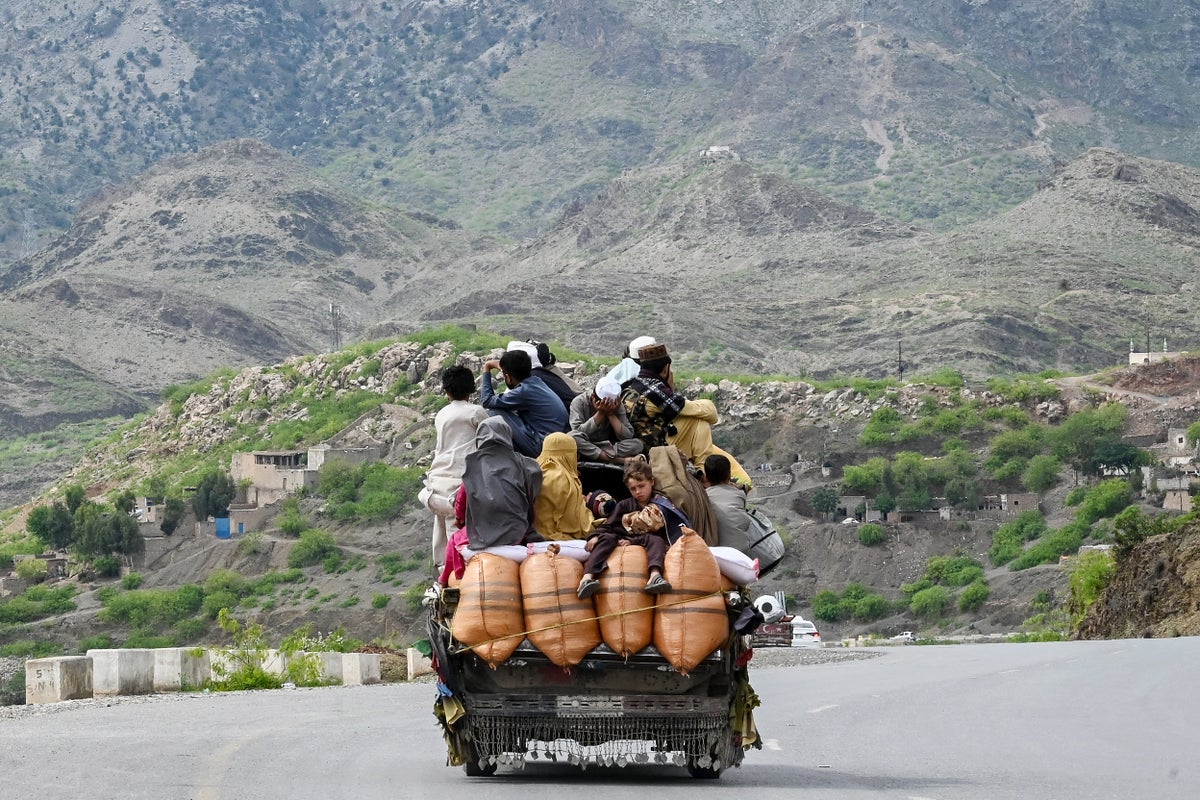
Afghan refugees along with their belongings travel in a vehicle along the mountainous Landi Kotal highway near the Torkham border in Pakistan - (AFP via Getty Images)

The International Monetary Fund (IMF) has ⁠reached a staff-level agreement with Pakistan towards unlocking $1.2bn in funding for the South Asian nation.

The new agreement, which requires the ⁠IMF board’s approval, would give Pakistan ​access ⁠to $1bn under the Extended Fund Facility (EFF) and $210m under the Resilience ‌and Sustainability Facility (RSF), bringing disbursements ‌under the ongoing program to $4.5bn.

Under the $7bn program, the ⁠Washington-based lender is urging Islamabad's policymakers to keep monetary policy tight and data-dependent to anchor inflation expectations and strengthen external buffers.

Pakistan’s central bank kept its ‌key policy rate unchanged at ​10.5 per cent this month, pausing ‌its rate ⁠cuts as rising global energy ⁠prices and regional tensions pose new ‌inflation ​risks for the import-dependent ‌economy.

In a statement, the IMF said that the two sides concluded the third review of the EFF and the second review under the RSF.

The IMF held rounds of talks between 25 February and 2 March with Pakistani officials in Karachi and Islamabad, but no agreement was finalised.

Further conversations, which continued after that, have led to the latest agreement.

“Upon approval, Pakistan will have access to about $1.0 billion (SDR 760 million) under the EFF and about $210 million (SDR 154 million) under the RSF, bringing total disbursements under the two arrangements to about $4.5 billion,” IMF mission chief Iva Petrova said.

The IMF also warned that the ongoing US-Iran conflict could hinder Pakistan's economic development.

“The conflict in the Middle East, however, casts a cloud over the outlook as volatile energy prices and tighter global financial conditions risk putting upward pressure on inflation and weighing on growth and the current account,” Petrova said in her statement.

“Account balance remained contained, and external buffers continued to strengthen,” she said.

IMF suggested flexibility in Pakistan's exchange rate to mitigate risks from the war in Iran.

“Exchange rate flexibility should continue to serve as the primary shock absorber, including against spillovers from the conflict in the Middle East,” Petrova said.

Sign up to read this article
Read news from 100's of titles, curated specifically for you.
Already a member? Sign in here
Related Stories
Top stories on inkl right now
One subscription that gives you access to news from hundreds of sites
Already a member? Sign in here
Our Picks
Fourteen days free
Download the app
One app. One membership.
100+ trusted global sources.