Get all your news in one place.
100's of premium titles.
One app.
Start reading
The Times of India
The Times of India
World
TOI World Desk

Iguanas Raft To Anguilla: scientists track 200-mile hurricane voyage; study reshapes island origins

For much of the twentieth century, biologists debated whether land animals could cross open oceans on floating natural debris and establish themselves on islands they could not otherwise reach. In October 1995, a fisherman on the small Caribbean island of Anguilla saw something floating towards its shores that no one had expected to see.

Get breaking news anytime, anywhere. Download the TOI app now!

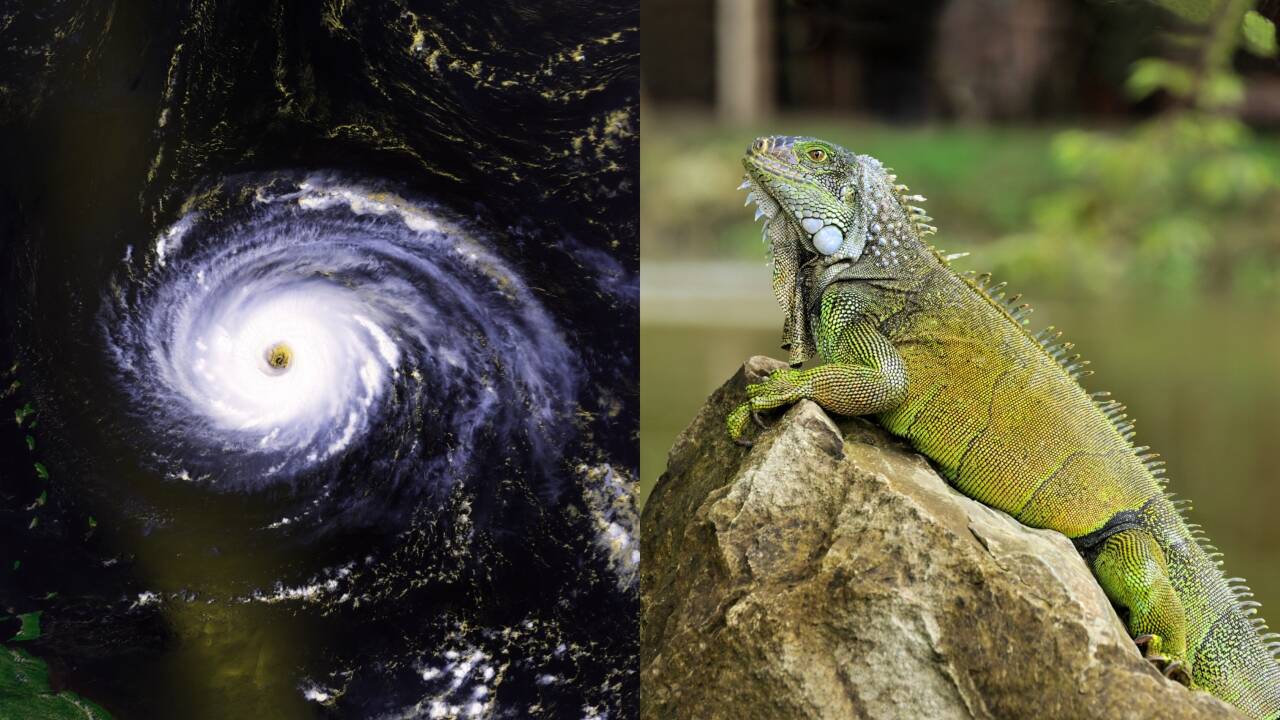
Hurricane Luis had swept across the northern Leeward Islands as a devastating Category 4 storm weeks earlier in September 1995. Luis had produced gusts of more than 100 knots as it passed close to islands, including Guadeloupe, uprooting trees and plants over a large area of the region before passing on, a preliminary report from NOAA's Hurricane Research Division said. A second hurricane, Marilyn, arrived about a week later and added to the devastation. Neither storm was exceptional for the Caribbean’s hurricane season, but the debris they left behind in the ocean included an unexpected guest.

An unexpected invasion

On 4 October 1995, fishermen off Anguilla's eastern beaches saw a giant mat of logs and uprooted trees floating towards the island, some of the trunks said to be over thirty feet long. As the battered raft came ashore over the next few days, residents discovered it was carrying living green iguanas, a species previously unknown to Anguilla. Local fisherman Cleve Webster subsequently recalled watching in disbelief as one of the animals came ashore, its tail dragging behind the wood it held onto in the sea.

They had made the trek with 15 or more iguanas arriving alive but weak and dehydrated. Photographs of the reptiles were sent to Ellen Censky, a herpetologist then working at Carnegie Museum of Natural History who had studied Anguilla’s lizard fauna. She identified the animal as iguana iguana .

Attempting to locate their origin

More than a look was needed to confirm that the iguanas had actually rafted over open water rather than arrived in some other way. The team tracked the path of storms Luis and Marilyn, compared it with known ocean current patterns and identified the kinds of trees on the raft with vegetation known to thrive on Guadeloupe. All the evidence pointed to the same conclusion: the iguanas had been washed out to sea after storms had destroyed the trees they were resting in, then survived a journey of some 200 miles clinging to the wreckage until it eventually reached Anguilla’s coastline.

The findings were reported in the 8 October 1998 issue of Nature and attracted attention because they provided unusually direct evidence for long-distance oceanic dispersal by terrestrial animals. Nature’s coverage described the finding as strong direct evidence that vertebrates could cross open water on natural rafts and establish populations on islands they could not otherwise reach. Vertebrates could disperse across oceans by rafting on natural debris and successfully colonise new islands as a result. The observation provided a concrete mechanism for a form of long-distance dispersal that fossil and genetic evidence had often suggested.

A founding population

The rafting iguanas didn’t die off quickly when they arrived, however, and instead formed a substantial breeding population on Anguilla. Censky and her team caught and tagged seven of the original arrivals for tracking purposes. When researchers returned about three years later, they found that the founding iguanas had survived and that younger animals had already hatched on the island, along with younger iguanas that had been hatched there since. What started as an accident of two hurricanes hitting within days of each other became a small, permanent addition to the wildlife of Anguilla and a rare, fully documented example of just how many of the world's island species may have arrived at their homes in the first place, not by deliberate migration but by sheer chance.

Sign up to read this article
Read news from 100's of titles, curated specifically for you.
Already a member? Sign in here
Related Stories
Top stories on inkl right now
One subscription that gives you access to news from hundreds of sites
Already a member? Sign in here
Our Picks
Fourteen days free
Download the app
One app. One membership.
100+ trusted global sources.