
Get all your news in one place.
100’s of premium titles.
One app.
Start reading
Homes & Gardens
Homes & Gardens
Tenielle Jordison

‘If Your Christmas Cactus Has Aerial Roots, Act Now’ Warns a Plant Expert – It’s an Early Sign Your Houseplant is Struggling

Are Christmas cactus poisonous to cats and dogs .

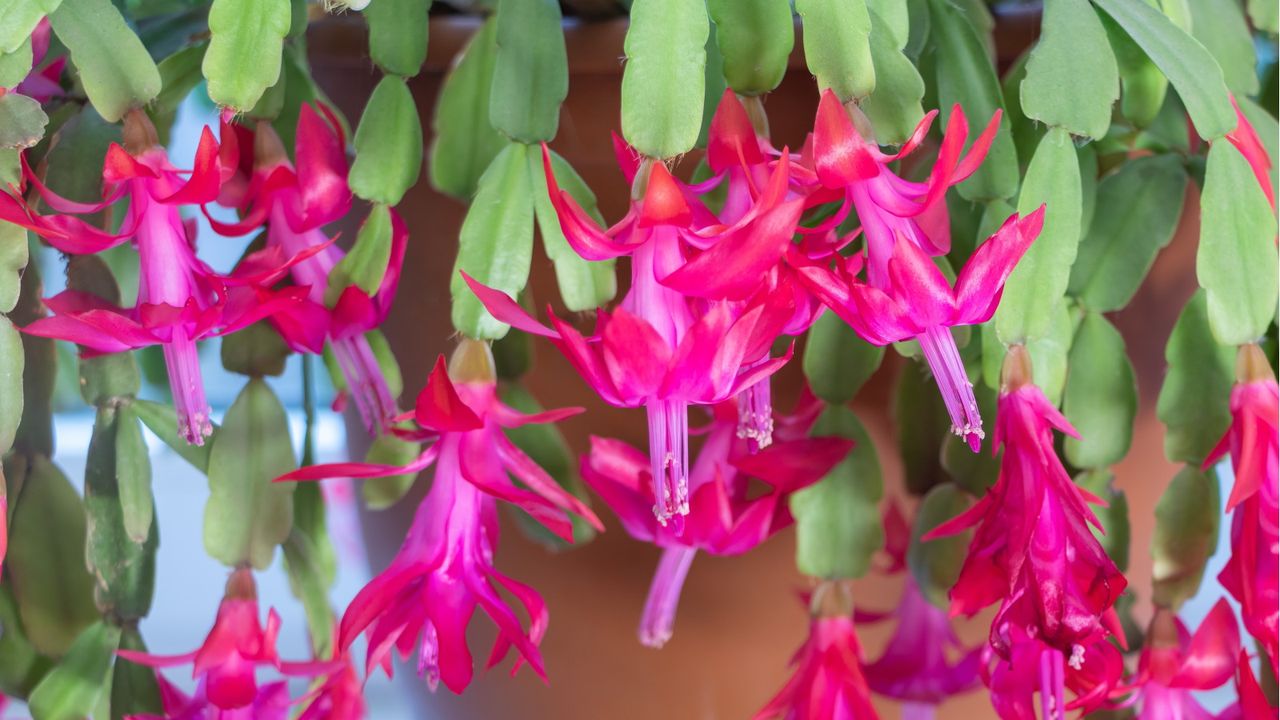
The festive season is upon us and there's one highlight I look forward to every year: my Christmas cactus blooming. These popular holiday plants come to life during the Christmas season, but it's also the time of year a lot of problems emerge. One sign something isn't quite right with your Christmas cactus is the presence of tiny white roots sticking out between leaf segments.

The key to successful Christmas cactus care is understanding its native environment, and these roots, known as aerial roots, are a clue about their growing habit in their southeast Brazil habitat. As epiphytes, Christmas cacti are found growing on surfaces like tree bark in tropical rainforests, rather than in soil. Aerial roots allow them to attach to these surfaces, while also soaking up nutrients and moisture.

However, as a houseplant, Christmas cactus (or Schlumbergera) rather has soil roots. Plant expert Maksim Kazakou says when aerial roots start to emerge, it's often a sign the root system beneath the soil is struggling and it can be an early indication that your Christmas cactus is starting to decline. Here, Maksim explains more about why a Christmas cactus has aerial roots and what to do about it.

Why Does My Christmas Cactus Have Aerial Roots?

(Image credit: Moelyn Photos via Getty Images)

In its native environment, Christmas cactus aerial roots are not anything to worry about. In fact, they're actually a sign of a healthy and vigorous growth.

'The Christmas cactus is an epiphyte, which means that in its natural habitat, it grows on the branches of trees,' explains Maksim. 'Aerial roots are completely normal for epiphytic plants, helping them absorb extra moisture from the air and anchor themselves to the trees they grow on,' he explains.

Other popular indoor plants that are epiphytes include orchids and monsteras. White it's completely normal to spot aerial roots growing on these two plants in the home (especially orchids), Maksim explains aerial roots suddenly appearing on a Christmas cactus should be taken as a warning sign.

As houseplants, a Christmas cactus (like this pink Christmas cactus from The Sill) comes potted in soil with roots beneath soil level. But, if you start to notice small white aerial roots appear between the leaf segments, Maksim says to take note:

'Indoor Christmas cacti sometimes grow aerial roots when their root system isn’t functioning as well as it should,' he explains. 'This can happen if the soil has become compacted and lost its airiness or ability to hold moisture. Another common reason is that the plant has outgrown its container and needs repotting,' Maksim explains.

While the aerial roots themselves aren't a problem, they essentially act as a stress response from your Christmas cactus' unfavorable environment. It will try to use them to find nutrients and moisture where soil roots are unable to.

Likewise, aerial roots may also emerge as the plant tries to climb and access more light if it's growing in a spot that is too shaded.

For this reason, Maskim urges to take action to improve your Christmas cactus' growing environment.

What To Do If Your Christmas Cactus Has Aerial Roots

(Image credit: Maria Dattola Photography via Getty Images)

The first thing to do is diagnose the problem. As Maksim notes above, it could be a number of issues.

Take a close look at the soil health of your Christmas cactus. You'll know it's compacted if it appears pale, hard, and if water pools on top of it when you water your Christmas cactus.

If your soil is looser but absorbs water very slowly, it could be that your Christmas cactus has become pot-bound and is running out of room in its current container.

Both of these issues can dehydrate and suffocate plant roots, causing your Christmas cactus to send out aerial roots as a sort of lifeline to access more nutrients and moisture.

That's why it's key to repot your Christmas cactus, either to give it fresh, non-compacted soil, or to provide a larger container.

Before doing so, consider pruning houseplant roots that are damaged, mushy, or rotting. This is also an opportunity to remove any damaged tendrils, as struggling plant roots can lead to your Christmas cactus turning brown.

Use essential pruning tools, like these bypass pruning shears from Amazon, to remove damaged foliage and roots. Always cut above a leaf node to encourage new growth, and follow the one third pruning rule as to not shock your plant and stunt growth.

When repotting, make sure to use the best soil for a Christmas cactus, i.e. one that is well-draining and nutrient rich. You can find Christmas cactus potting mix on Amazon.

You should also select a planter that has drainage holes (like this beautiful glazed planter from Wayfair) to ensure excess moisture doesn't stay trapped in the pot and rot roots.

At the same time, consider how much light your Christmas cactus is getting. These succulents need around six to eight hours of bright light daily, so make sure to reposition it if it is currently sitting somewhere with low light.

Making all of these adjustments will result in a happier, healthier Christmas cactus. Just make sure to continue providing essential care going forwards and avoid making common Christmas cactus mistakes.

FAQs

Should I Cut Off Christmas Cactus Aerial Roots?

No, there is no need to remove Christmas cactus aerial roots. As houseplants, they can be a sign the roots beneath soil level are struggling, but the aerial roots themselves are not harmful to the plant. You can even take advantage of them by taking cuttings of a leaf segment with aerial roots and using it to propagate your Christmas cactus.

If you find you aren't getting any flowers from your Christmas cactus, it might be that you aren't taking essential steps to make a Christmas cactus to bloom. This includes providing a dark period for your Christmas cactus in the lead up to the festive season.

Shop Christmas Cactus Essentials

Sign up to read this article
Read news from 100’s of titles, curated specifically for you.
Already a member? Sign in here
Related Stories
Top stories on inkl right now
One subscription that gives you access to news from hundreds of sites
Already a member? Sign in here
Our Picks
Fourteen days free
Download the app
One app. One membership.
100+ trusted global sources.