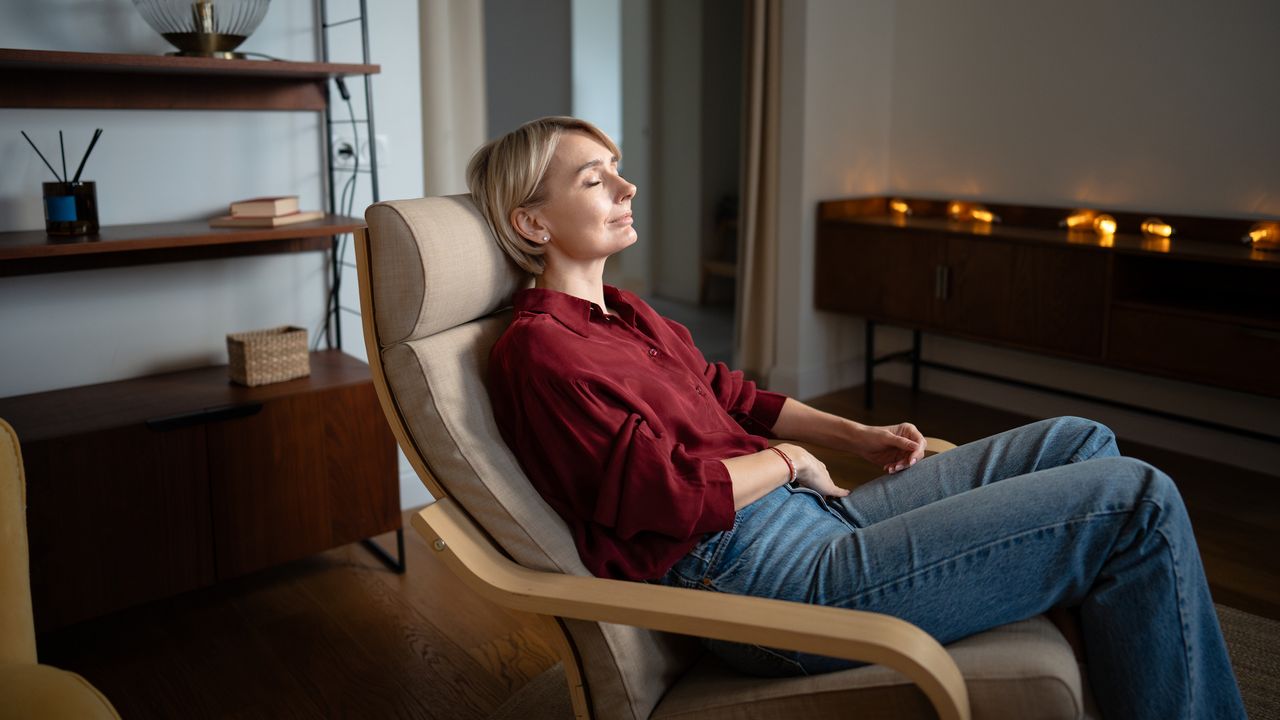
One of the biggest misconceptions I hear as a meditation practitioner is that you need to be sitting still, cross-legged on a yoga mat with your eyes closed to practice mindfulness.
While there are many types of mindfulness practices—from breathwork and guided meditation to visualization—there is one technique I return to regularly and always recommend to clients. And it can be done seated in a chair, standing or lying down.
Progressive muscle relaxation (PMR) is a relaxation technique developed by an American physician in the early 1900s. It involves tensing and releasing muscle groups in turn.
It’s common to carry physical tension, often without realizing it. Think hunched shoulders or a clenched jaw, both of which can be seen as symptoms of modern, busy lives.
A PMR practice helps to bring awareness to stress in your body, and through the muscle contraction and relaxation process, it releases both physical and mental tension.
The practice involves tensing a specific muscle group for a few seconds as you inhale, then releasing the contraction as you exhale.
The science behind the technique is compelling, too. A 2021 study found 20 minutes of PMR increased feelings of relaxation, while a 2024 review suggested PMR could be effective in reducing stress, anxiety and depression in adults.
More recently, a 2026 review noted PMR can also improve sleep quality and reduce sleep disturbance.
I often recommend it to clients who struggle with other meditation and mindfulness practices, or who are busy and always on the go.
PMR offers a way to focus, anchor and train your attention—and you can do it whether you’re sitting at a desk, standing in line at the coffee shop or lying in bed after a long day.
Ultimately, however—like all mind-body practices—you have to try it to discover if it works for you.
How to practice PMR
You can learn to practice PMR alone or use a guided practice. I often recommend this YouTube video to my clients.
It’s important to feel the tension build in the muscles you’re tensing but without strain. Always find a pace and intensity that’s comfortable for you.
This practice usually starts in your feet, by curling and tensing your toes for five seconds as you inhale, before releasing gently as you exhale. Then work up your body.
If it helps to focus your attention, you could say the word “relax” out loud or in your head, as you exhale.
When your mind wanders (which is normal), pause for a few breaths, then gently guide your attention back to your body and the next muscle group to work on.
In my experience, even just a few minutes of PMR at the end of a busy day can help your body relax and mind unwind.