
Get all your news in one place.
100's of premium titles.
One app.
Start reading
LiveScience
LiveScience
Brandon Specktor

Scientists scan famous 'Earthrise' crater on mission to find alien life in our solar system

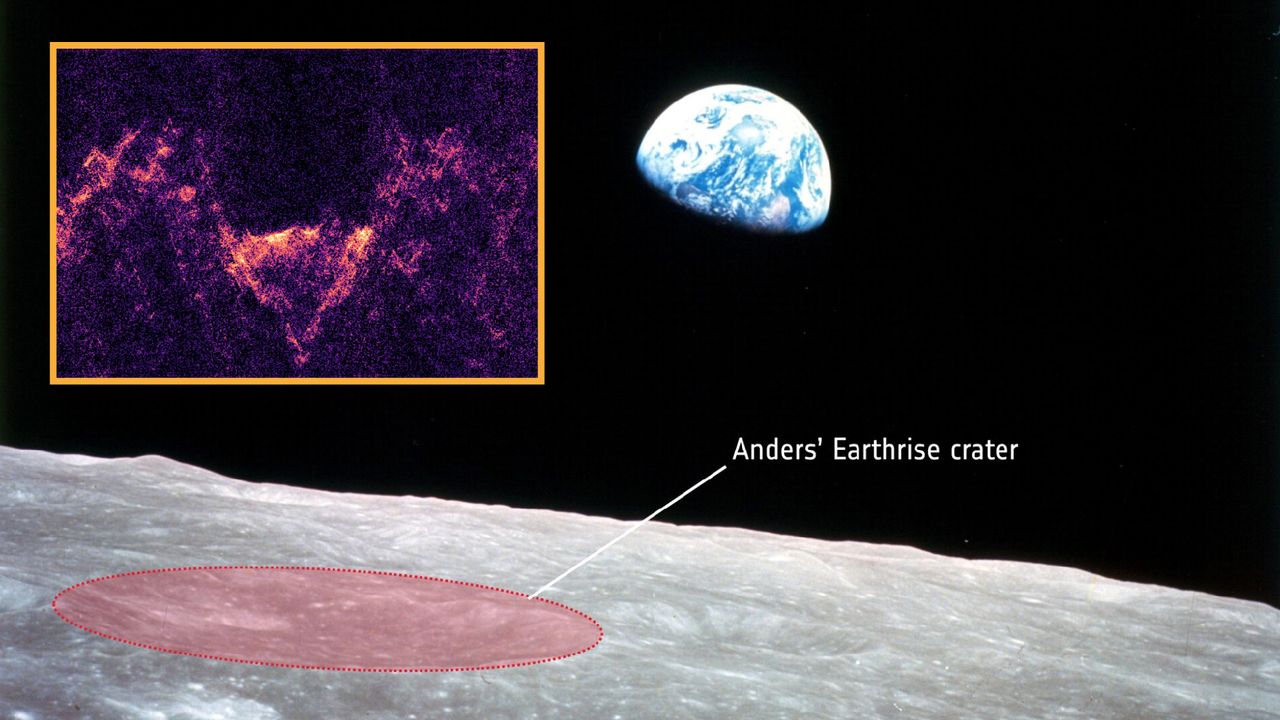
A photo of an earthrise as viewed from the moon, with a crater on the moon outlined and labeled in red. An inset image shows an elevation model of the crater.

A lunar crater immortalized in one of the most famous photographs ever taken has just played a key role in the hunt for alien life in our solar system.

Stretching nearly 25 miles (40 kilometers) across the far side of the moon, the lunar impact crater formerly known as "Pasteur T" may be the most-viewed lunar crater in history. Countless Earthlings have seen it spreading prominently through the foreground of the iconic "Earthrise" photo snapped by American astronaut William Anders on Dec. 24, 1968, during the Apollo 8 mission. The majestic photo, which shows a half-lit Earth rising majestically above the lunar horizon, became so famous that the crater was renamed "Anders' Earthrise" in 2018.

Sign up to read this article
Read news from 100's of titles, curated specifically for you.
Already a member? Sign in here
Related Stories
Top stories on inkl right now
One subscription that gives you access to news from hundreds of sites
Already a member? Sign in here
Our Picks
Fourteen days free
Download the app
One app. One membership.
100+ trusted global sources.