A strike and hundreds of protests are set to take place across the country on 30 and 31 January, as grassroots organizers take action against Immigration and Customs Enforcement (ICE) activity in their communities.
After the deaths of at least eight people in connection to ICE since the start of the year – including the high-profile killings of Renee Good and Alex Pretti in Minneapolis – activists are demanding the permanent removal of ICE and Customs and Border Protection (CBP) from towns and cities across the US.
For the first action on Friday, organizers, led by several student groups at the University of Minnesota, are calling for a “national shutdown”, which means: “No work. No school. No shopping. Stop funding ICE.” The “blackout” day, which many online are referring to as a “general strike”, is an effort to “shut down the economy”, organizers say.
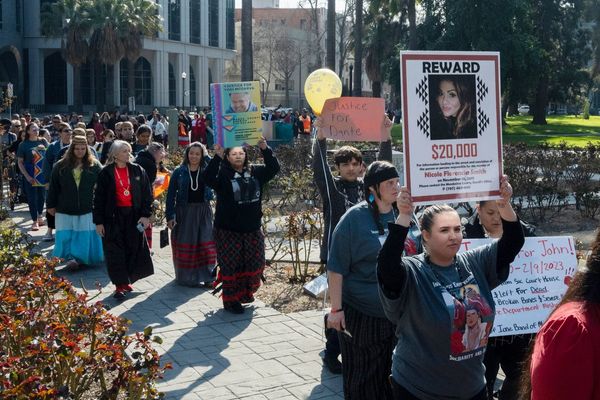
On Saturday, organizers, led by the national grassroots organization 50501, will stage an “ICE Out of Everywhere National Day of Action”, which will include a variety of protests, demonstrations, and vigils, in all 50 states and Washington DC.
Why organizers are calling for a strike and ‘ICE Out’ protests
Across both days, organizers are calling for justice for the people detained by ICE and those killed at the hands of ICE or while in ICE custody. This includes cases that haven’t gained widespread attention, such as 55-year-old Cuban immigrant Geraldo Lunas Campos, who was killed while in ICE custody at Camp East Montana in El Paso, Texas, on 3 January, ICE’s detention of five-year-old Liam Ramos in Minnesota this month as he returned home from school, and the ICE shooting of 43-year-old Keith Porter Jr in Los Angeles on New Year’s Eve.
Saturday’s protests come amid growing national anger over the ICE killings of Good and Pretti in Minneapolis that were captured on video earlier this month. Polling this week from YouGov found that opposition to ICE has increased from earlier this month, with more Americans supporting than opposing abolishing ICE.
“We are responding to people’s outrage. We’ve seen the Overton window shifting,” said Gloriann Sahay, a national coordinator with 50501. “We’re seeing people from typically non-political spectrums get involved in this conversation and say: ‘This doesn’t feel like America.’”
The actions build on last weekend’s mass mobilization in Minneapolis, in which hundreds of businesses closed and thousands of people took to the streets on 23 January as part of a general strike to protest against the local immigration enforcement surge.
This week, news of the national strike spread far and wide on social media. Celebrities shared support, including singer Ariana Grande, who shared an infographic about the strike to her Instagram story and actor Pedro Pascal, who posted drawings of Pretti and Good on Instagram with the caption:“Pretti Good reason for a national strike.”
What the strike and protests will look like
The two days of protest will draw on a variety of strategies, organizers told the Guardian. On Friday, student groups, including the Somali Student Association, Black Student Union and Graduate Labor Union at the University of Minnesota, will lead walkouts in the state and are asking their peers across the country to do the same. “Students are always at the heart of movements for justice across the world,” the organizations wrote in a statement online. “We demand ICE out for good!”
The walkouts will be followed by protests on Saturday. 50501 is calling for protests at ICE detention facilities and field offices and for airport protests that target airlines transporting ICE detainees, including Global Crossing Airlines and World Atlantic Airlines, and at the offices of US members of Congress who back ICE.
The group has also announced plans to challenge Democratic lawmakers who have recently voted to fund the Department of Homeland Security (DHS) or to expand ICE’s authority. Organizers say they are tracking votes related to immigration enforcement and intend to support primary challengers against incumbents they describe as “pro-ICE”. Among the lawmakers named in the campaign are representatives Henry Cuellar and Vicente Gonzalez of Texas, Don Davis of North Carolina, Laura Gillen and Tom Suozzi of New York, Jared Golden of Maine, and Marie Gluesenkamp Perez of Washington.
Organizers are calling on Congress to block DHS funding until ICE is dismantled and to pass legislation ending federal cooperation with local law enforcement. Chuck Schumer, the Senate’s top Democrat, demanded Republicans agree to new restrictions on ICE, including requiring agents to wear body cameras and no masks, before they would sign a bill to fund the DHS on Thursday to avert a partial government shutdown.
In Florida, organizers plan to continue holding vigils for people being detained and killed by ICE, protesting at Alligator Alcatraz, the south Florida immigration detention facility, and at the Sarasota school board to fight a recently passed resolution that calls for schools to cooperate with ICE. “Rapid response is not new to Florida,” said Sarah Parker, a Tampa-based national coordinator with 50501. “We have the infrastructure, we have the will, and we are not giving up.”
Other anti-ICE actions organizers are calling for
Beyond street protests, 50501 is also rolling out a series of pressure campaigns to disrupt what it sees as the infrastructure supporting immigration enforcement.
One of the most prominent is the “No Housing for ICE” campaign, which urges hotels to stop providing accommodations to ICE, CBP and DHS agents during operations. People are encouraged to call hotels, leave negative online reviews, organize demonstrations outside properties’ housing agents, and book and cancel reservations to disrupt their ability to do business. The campaign follows previous actions in Los Angeles, Minneapolis and other cities, in which people have banged pots outside the hotel where ICE agents had checked in.
Another initiative, called “#DontServeICE”, will target local businesses, restaurants, gas stations and retailers. Through social media and consumer boycotts, the movement wants to persuade businesses to refuse service to ICE agents in their communities.
The campaign also calls on chambers of commerce and business associations to adopt non-cooperation pledges and encourages consumers to boycott companies that have ties to ICE operations.
Free DC, a Washington DC organization supporting the Day of Action, plans to protest at all of the city’s Target locations on 31 January. After ICE violently detained Target employees in a Minneapolis-area store earlier this month, activists called for a renewed boycott of the corporation. On virtual calls on 26 January, with more than 1,100 supporters, organizers said Target was just one corporation of many that they plan to boycott and pressure to take a stand against ICE.
Why protests are growing across the US
The protests reflect a broader and intensifying national struggle over immigration enforcement, police accountability and the role of federal agencies in local communities. Over the past decade, following family separations at the US-Mexico border and reports of human rights violations at detention facilities, ICE has been a focus for activists calling for abolition or significant reform and oversight.
In the past year, protests against ICE have intensified and spread across the country as communities and advocacy groups fight aggressive raids, deportations, racial profiling and deadly force at the hands of agents.
Demonstrations erupted in major cities, including Los Angeles, New York City, Portland, and Chicago, with organizers staging rallies, marches, sit-ins, vigils, and strikes to draw attention to federal immigration policies and enforcement actions. Protests have also appeared in smaller cities such as Milwaukee and Oklahoma City, where hundreds of people have rallied against ICE operations and policy decisions. In the past month, thousands of people in Minneapolis marched through subzero temperatures to protest against a federal immigration enforcement surge and the deaths of Good and Pretti, among many others.
Saturday’s actions are not an endpoint but part of a sustained campaign, 50501 told the Guardian. After the National Day of Action, the group plans to participate in an “Impeach Trump National Day of Lobbying” on 17 February. Organizers say they are committed to continuing their campaign until their demands have been met.
“The temperature has drastically changed,” Sahay said. “It has increased from a burning fire to an inferno and I hope that people who have never taken up the call before come out for their neighbors and for the fabric of America.”