
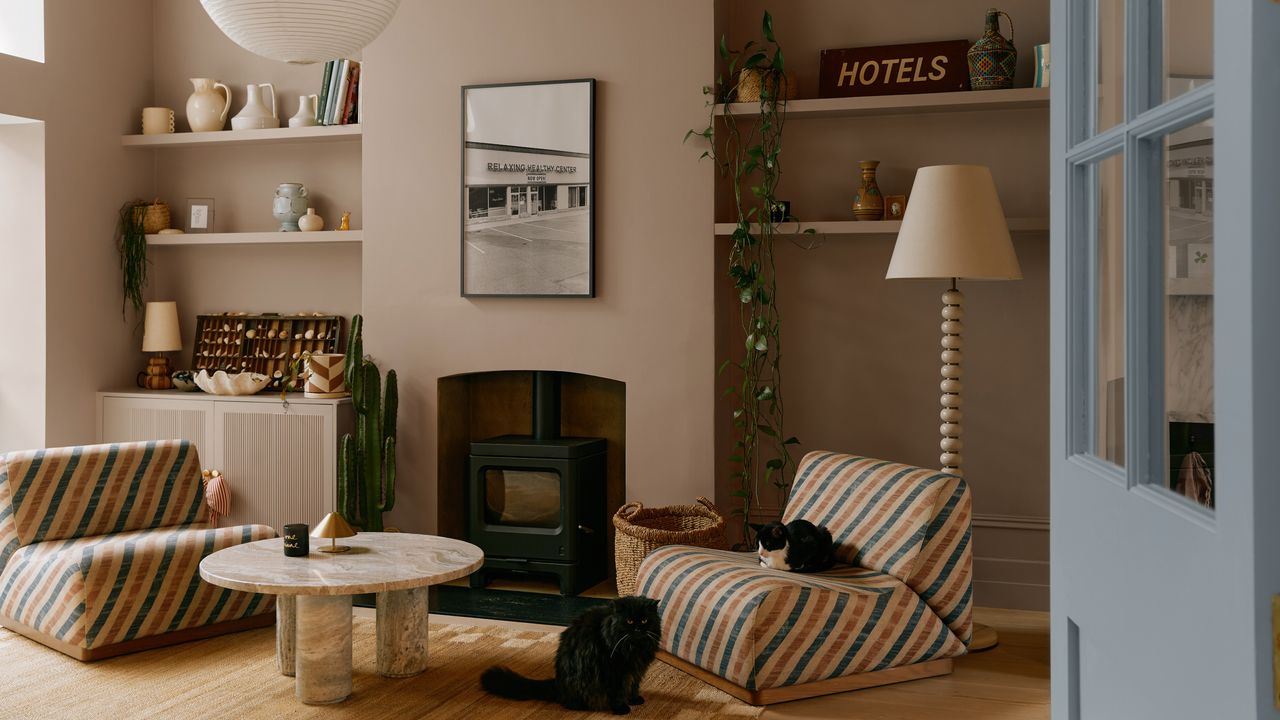
It turns out that there's much more to choosing a color palette than meets the eye. The most knowledgeable designers and experts on all things hues don't just pay attention to color theory, contrast, or balancing warm and cool.
To get the most out of your interiors, you need to be paying attention to Light Reflectance Value, says Rob Abrahams, founder of paint brand COAT Paints. "I’m a self-proclaimed color geek, and while most people know at least a little bit about sheen, I’m also obsessed with LRVs, how they interact with sheen and how they can both be harnessed to create rooms with either soft glows or bright, sunny interiors," he says.
Perhaps most interestingly, he adds, they can be used to help shape the emotional response you get from your home. Intrigued? We asked Rob to break down the term — and decode the difference between LRVs and that other paint-choosing talking point, sheen.
What are LRVs?
LRV stands for light reflecting value, and every single color has one and is scored on a scale of zero to 100. Dark colors have very low LRVs, meaning that they absorb light, while a pure brilliant white has an LRV of 100, not absorbing any light at all. The LRV has an effect on how much light there is in any room — the lower the LRV, the less light there is to play with.
How Are LRVs Different From Sheen?
Sheen affects the behavior of the light, rather than the amount of light. It’s also graded on a scale of zero to 100, but thought about in terms of percentages. A really matte paint finish or surface has a sheen of 0%, while a high gloss finish could go up to 80%. I would always think about the LRV first — how light you want the room to be — and the sheen, or what you want to do with that light, second.
How Can I Harness the Power of LRVs?
LRVs can be used to change the feel and shape of a room. If you have very high ceilings, a color with a lower LRV than what you have on the walls will help to bring them in a little and make the room a little cozier. For smaller spaces, colors with higher LRVs will open them up a little.
That said, I don’t believe that all small spaces should be filled with high LRV shades. Little rooms with both low LRVs and low sheen are really soft — you can see the edges a little less clearly, so they end up seeming more cocooning than claustrophobic.

A room with a low LRV color, like Farrow & Ball's Inchyra Blue, can feel cozy and cocooning.
Can I Change the Color Temperature of a Scheme Using LRVs?
Most of us want our homes to have very warm glows, and if you understand LRVs, you can use them to create one. Colors such as burned oranges and reds, which tend to have LRVs of around 20 to 25, work well with artificial light to help you get the glow.
The trick is to keep the light source very close to the color itself — so a wall-mounted light with a shade that reflects the bulb back onto the wall will create the right effect.

Pushing the light against the wall, this lamp from the Original BTC X Buchanan Studio collab is the perfect accompaniment for a warm glow.
How Can I Make Sure I'm Picking the Right Sheen?
I just love mixing sheens a lot, and while the classic example seems to be a matte on the walls and a high-gloss paint on the woodwork, there are so many more things you can do.
A high sheen will make a space seem more dramatic, so if you go for a low LRV and a high sheen, you’ll have a really impactful scheme — this approach works well in a powder room, for example. That said, for a British home, I would never recommend anything higher than a 30% sheen for your walls. Most of the housing stock in the UK is imperfect, and a really gloss paint will make the light bounce off every bump, lump, and imperfection.
What About the Effect of the Direction a Room Faces?
If you have a large south-facing room then the natural light will be a little more yellow and sunny — this means you can afford to go higher on the LRV scale as the colors will get knocked back by that sunshine.
North-facing rooms get a bad rep but actually they’re the most stable and the colors in them change the least, which can make them easier to decorate. Here, go for warmer colors with lower LRVs that will balance that cool light, and then go for a low sheen, which will make it seem cozier even despite its cool natural light.
What Materials — Apart From Paint — Affect the LRV of a Room?
Every color has an LRV value, whether it’s a paint or not. But for design, the focus should be on surface interplay. Decorating with tiles, either in materials like a matte terracotta or a shiny ceramic, can vastly change not just how much light there is in a room but how it behaves, as can the choice of flooring and even mixing metals.
Chrome is back in a big way at the moment, and of course it’s great for sheen, reflecting the light around the space. Pair metallic fixtures, fittings, and furniture with colors that have a high LRV, and the space will feel light and bright.

Chrome has major light-reflecting properties, so pair this H&M lamp with a similarly high LRV paint for an impactful scheme.
If you find you have paint colors that feel flat and dull in your home, there are ways to fix them, as these experts explain.
For more ideas from the cutting-edge of interior design, subscribe to our newsletter, and you'll get our articles delivered directly to your inbox.