Get all your news in one place.
100's of premium titles.
One app.
Start reading
The Conversation
The Conversation
Karina Vamling, Professor emerita of Caucasus Studies, Malmö University

I was in Georgia in the late 1980s: I observed how tradition survived harsh Sovietisation and rapid transformation

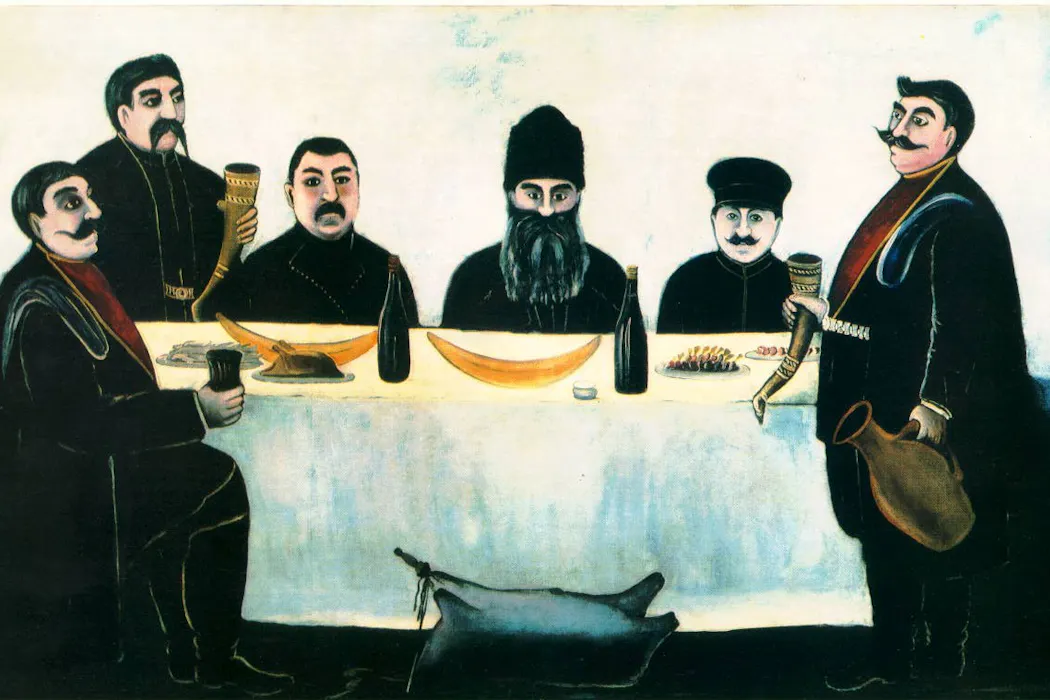
Begos' Friends by Georgian painter Niko Pirosmani, painted in the 1910s. At a keipi or festive supra, the tamada holds a kantsi (horn) and introduces a toast. Wikiuka/Wikimedia

When Soviet president and Communist party secretary Mikhail Gorbachev introduced the policies of perestroika (reconstruction) and glasnost (openness) in the mid-1980s, it marked the beginning of cautious reforms of the Soviet Union. Georgia, or the Georgian Soviet Socialist Republic, to give it its full name at the time, was on the periphery of the union.

Far from Moscow, it lay hidden on the other side of the Caucasus mountain range on the edge of the Black Sea. As a doctoral candidate in linguistics on a research grant to Tbilisi University, I spent one year living there, between 1987 and 1988. I was conducting research on the Georgian language.

Sign up to read this article
Read news from 100's of titles, curated specifically for you.
Already a member? Sign in here
Related Stories
Top stories on inkl right now
One subscription that gives you access to news from hundreds of sites
Already a member? Sign in here
Our Picks
Fourteen days free
Download the app
One app. One membership.
100+ trusted global sources.