Get all your news in one place.
100's of premium titles.
One app.
Start reading
Tom’s Guide
Tom’s Guide
Technology
Dan Bracaglia

I walked 5,000 steps with the Fitbit Air vs Garmin Cirqa — Round 2: We have a new champ

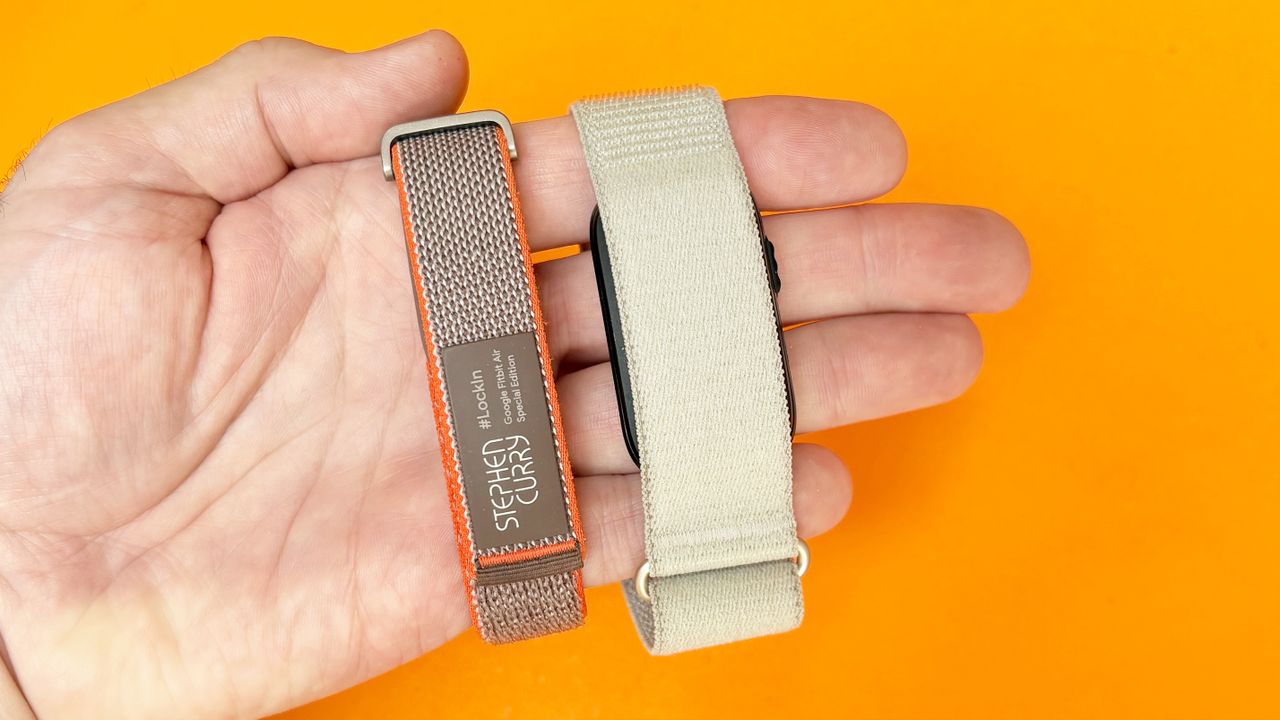
Close-up of the Fitbit Air next to the Garmin Cirqa.

Google and Garmin both recently dropped new screen-free fitness trackers to rival the popular Whoop 5.0. The biggest difference? The Fitbit Air and Garmin Cirqa are both subscription-free.

I’ve already tested the Fitbit Air vs Garmin Cirqa head-to-head in a prior walk test comparison, but a hiccup with the latter’s data meant a rematch was inevitable.

About as evenly matched as they come, both the Air and Cirqa track your sleep, workouts, and overall health. Garmin’s insights go a bit more in-depth than Fitbit’s, but the Cirqa is also twice the price of the Air, $199 vs. $99.

When it comes to onboard tech, neither device has GPS, so you must carry a paired smartphone for location tracking data during outdoor workouts.

I walked 5,000 steps with the Fitbit Air vs Garmin Cirqa

(Image credit: Dan Bracaglia/Tom's Guide)

So, which screen-free tracker is the more reliable wearable? I walked 5,000 steps with the Fitbit Air on my left wrist and the Garmin Cirqa on my right wrist to find out (the opposite of the previous test).

For good measure, I also tracked the walk using the Strava app on my iPhone 16, and as always, I manually counted my steps with some help from an old-school tally counter (one click = 100 steps).

Find the results of the Fitbit Air vs Garmin Cirqa walk test, round 2, below.

Garmin Cirqa

Fitbit AIr

Control

Steps

5,006 steps

5,009 steps

5,000 steps (manual count)

Distance

2.77 miles

2.71 miles

2.69 miles

Climb

394 feet

248 feet

393 feet

Average pace

16 mins 46 secs per mile

16 mins 58 secs per mile

16 mins 49 secs per mile

Average heart rate

not recorded

125 bpm

n/a

Max heart rate

not recorded

153 bpm

n/a

Calories burned

240 total calories

398 total calories

n/a

Battery usage

0%

2%

n/a

Garmin's step count was closer

(Image credit: Dan Bracaglia/Tom's Guide)

Given the fact that the Fitbit Air, Garmin Cirqa, and Strava were all making use of the same location data, courtesy of my smartphone, you'd expect metrics like distance, steps, and pace to be pretty similar across the board. And that is very much the case.

However, when it comes to steps, Garmin's tally was closer to my actual count than Fitbit's by a whopping margin of... three steps. This is to say, both devices performed remarkably well here.

Strava's step count, for what it's worth, was 4,992, another impressive result.

The Fitbit Air continues to struggle with climb data

Some things never change. While the Garmin Cirqa and Strava calculated virtually the same amount of ascent for my rather hilly walk, the Fitbit Air significantly undercounted.

This is far from the first time the Air has logged lower-than-expected climb data. I had a similar result when I last pitted the Air vs Cirqa in a walk test. It also undercounted in a walk test versus the Apple Watch 11, and another time in a comparison against the Pixel Watch 4.

All three tracking methods noted similar distance and pace

(Image credit: Dan Bracaglia/Tom's Guide)

Despite inconsistencies in climb data, the Fitbit Air, Garmin Cirqa, and Strava app all calculated roughly the same amount of distance covered and average pace for my ~45-minute walk around sunny Seattle, Washington. That said, Garmin was the most generous with my efforts and speed.

Garmin failed to record any heart rate data

Well, this is a first: For unknown reasons, the Garmin Cirqa failed to record any heart rate data during my walk. This is particularly disappointing given the fact that it performed well in every other regard. Coincidentally, when I last tested the Garmin against the Fitbit, heart rate data was one of the few metrics it did log.

The Fitbit Air's max and average heart rate data, meanwhile, are right around what I expected for my walk, based on previous walk data from a zillion other tests.

Fitbit burned more battery and calories

(Image credit: Dan Bracaglia/Tom's Guide)

Finally, neither device used much battery recording my walking workout, which makes sense given neither has a screen or GPS to power. While the Cirqa registered zero drain, the Air used just 2%.

Not only did the Fitbit burn more battery, but it also said I burned more calories than the Garmin during my stroll. That said, fitness tracker calorie counts are notoriously inconsistent, and one of the main metrics I tend to ignore.

Which of these two fitness trackers would you be more likely to use? Let me know in the poll below.

More from Tom's Guide

Sign up to read this article
Read news from 100's of titles, curated specifically for you.
Already a member? Sign in here
Related Stories
Top stories on inkl right now
One subscription that gives you access to news from hundreds of sites
Already a member? Sign in here
Our Picks
Fourteen days free
Download the app
One app. One membership.
100+ trusted global sources.