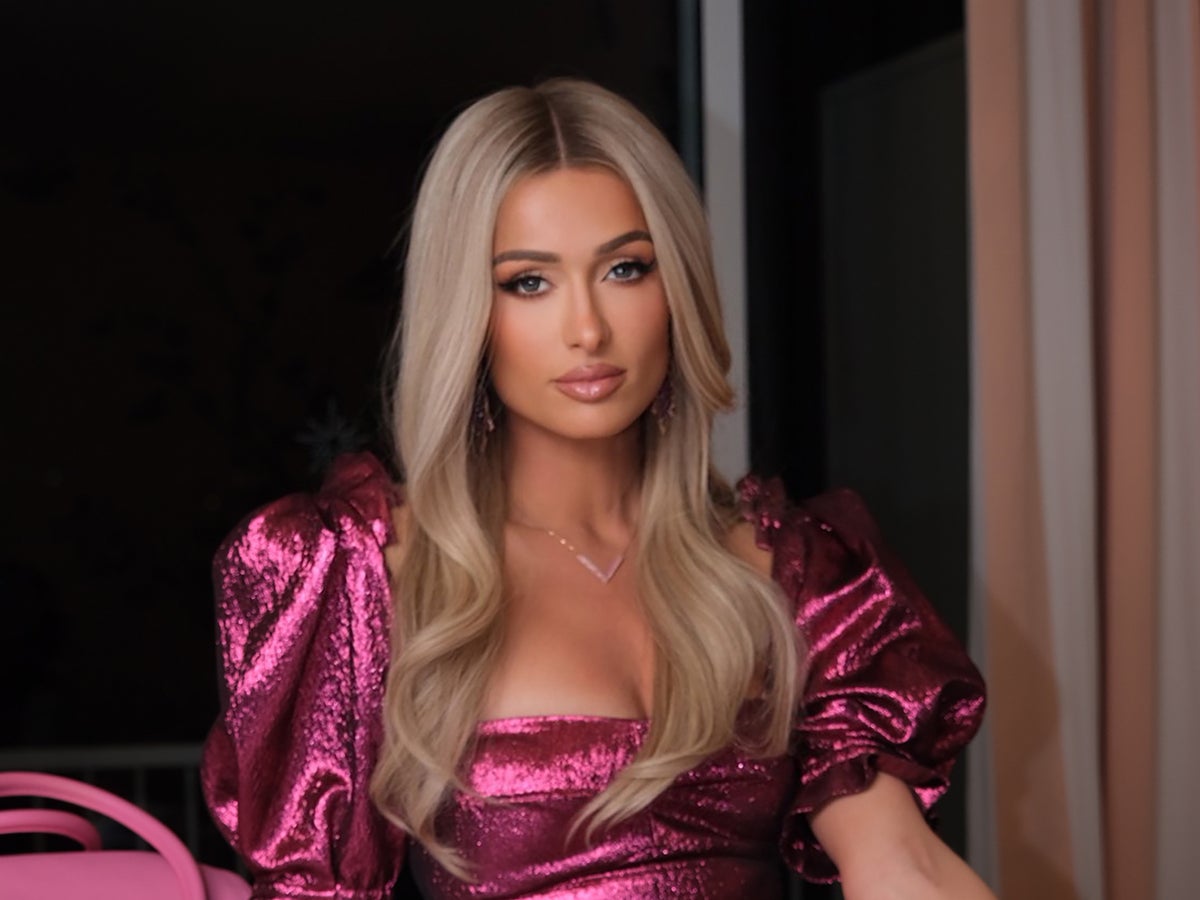
In the summer of 1998, at a lockdown facility in Utah for troubled teenagers, a 17-year-old Paris Hilton invented herself. “I was in so much pain that I created this Barbie doll fantasy life,” the heiress tells me, gazing off into the middle distance. “It was a character I put on as a mask to protect myself.” She’d pretend to be a girl named Amber Taylor, someone who – unlike her – hadn’t been raped by a stranger, or kidnapped from her bed by masked men hired by her worried parents. From a young age she’d learnt to modulate her voice until it sounded “raspy and alluring”, like the phone sex operators she’d see advertising themselves on late-night TV. Pretending became a kind of freedom. “My family always wanted me to be very proper and conventional,” she continues. “But I didn’t want to be known as the Hilton Hotel granddaughter. I wanted to be known as someone else.”
Where to begin with everything that happened next? Hilton became a paragon of Y2K excess, a shiny Pop Art goddess with a terracotta tan, diamond belly rings, a chihuahua named Tinkerbell and a closet full of Juicy Couture. Make that several closets. Alongside her BFF Nicole Richie, another celebutante far savvier than she first let on, Hilton starred in a comic reality series called The Simple Life from 2003 until 2007. Its premise was to take two pampered socialites and give them gnarly jobs to do, from milking cows in Arkansas to making beds at a nudist colony in Miami. Away from the show she released an album and starred in movies. She befriended Britney Spears and dated Greek shipping heirs and a Backstreet Boy. She trademarked the phrase “That’s hot” and went to jail for violating her probation for reckless driving. She made self-deprecating jokes on national television about the sex tape sold against her will by an ex-boyfriend, because that’s what young, traumatised women were expected to do back then. “I was like a cartoon,” she sighs.