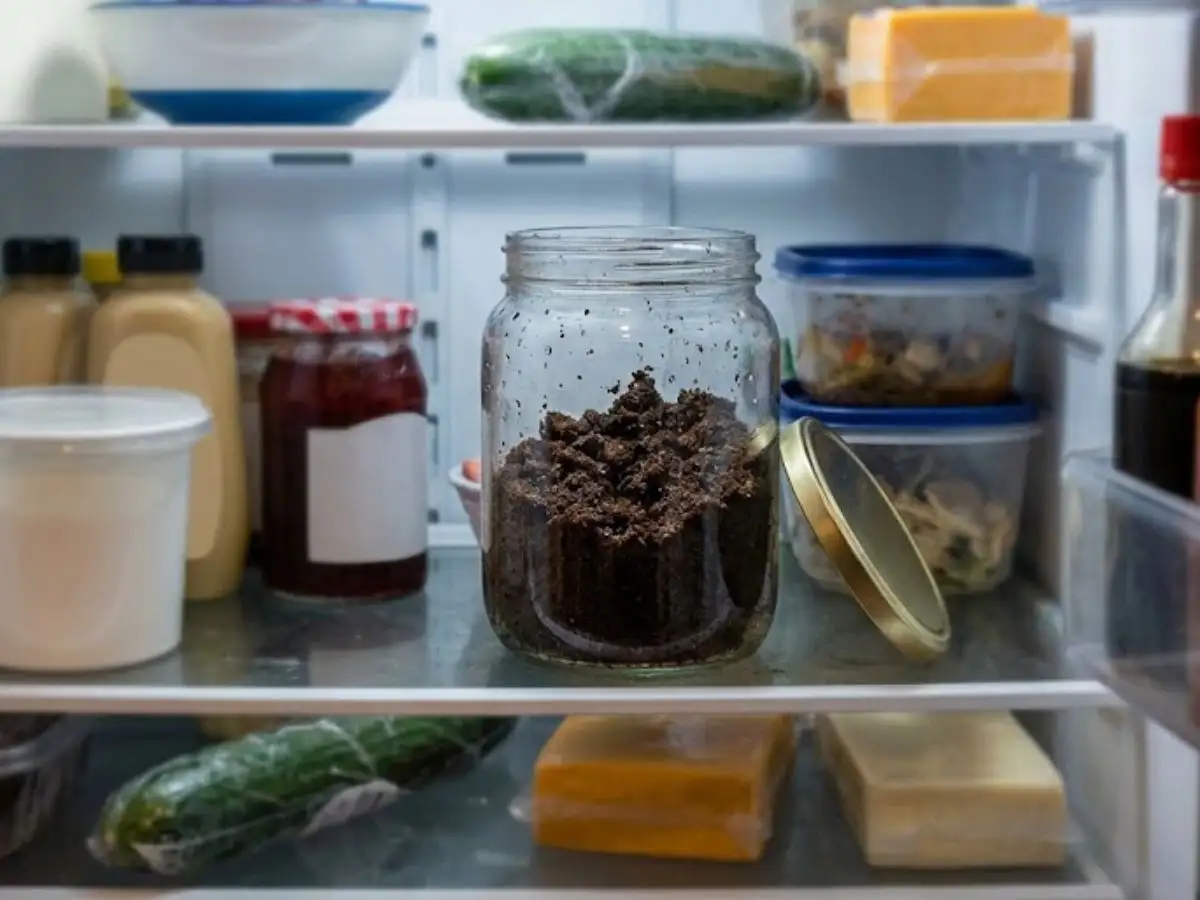
After making coffee, whether using a traditional espresso machine, Italian moka pot, French press or another brewing method, most people throw the leftover coffee grounds into the trash. But those used grounds can have a second life around the home. One of the better-known household uses is placing dried, used coffee grounds in an open jar inside the refrigerator. The idea is simple: coffee may help reduce or mask some unpleasant smells that develop inside the fridge.
This trick is particularly easy because it uses something that is already available in the kitchen. However, there are a few important steps to follow if you want to try it, especially because wet coffee grounds can become a breeding ground for mold.
The main reason is to help reduce or mask unpleasant refrigerator odours. Different foods release volatile compounds as they are stored. Some of these compounds can contribute to the familiar mixture of smells that develops inside a refrigerator, particularly when foods have been stored for several days.
Coffee has a porous structure that can retain some compounds present in the surrounding air. Its characteristic aroma can also help reduce the perception of other odors. That is why an open container of coffee grounds is sometimes used as a simple household odor-control method.
However, this does not mean coffee grounds will completely eliminate every smell. Their effectiveness can depend on several factors, including the amount of coffee used, its moisture level, the size of the refrigerator and the source and strength of the odor.
How to use used coffee grounds correctly
If you have just made coffee, don't immediately put the wet grounds into a jar and place them in the refrigerator. The first step is to drain the coffee grounds well after brewing. The less excess liquid they contain, the better.
Next, spread the used grounds across a plate, tray or another clean surface. Leave them to dry thoroughly before transferring them to a container. This step matters because damp coffee grounds can develop mold. Putting a large amount of wet organic material inside a closed or poorly ventilated space can also create an unpleasant smell of its own.
Once the grounds are dry, place around two to four tablespoons in a clean, open jar or small container. The container should remain open so that the grounds can come into contact with the surrounding air. Place it on a stable shelf inside the refrigerator where it is unlikely to be knocked over.
ALSO READ: Japan’s sleep contest offers $14,000 prize
When should the coffee grounds be replaced?
There is no need to keep the same coffee grounds in the refrigerator indefinitely. Check them regularly, particularly for signs of moisture. If the grounds become damp, clump together or develop an unusual appearance or smell, they should be removed.
Freshly dried grounds are preferable because moisture can encourage mold and may reduce the usefulness of the method. You can then dry a new batch of used coffee grounds and place them in a clean container.
It is important to distinguish between reducing an odor and removing its source. Coffee can help mask or reduce the perception of some odors, and its porous structure can retain certain volatile compounds. But putting coffee grounds in the fridge will not solve the underlying problem if the smell is coming from spoiled food, a forgotten container or a food spill.
For example, if a piece of food has gone bad, placing coffee grounds beside it will not make the refrigerator hygienic. Instead, the source of the odor should be dealt with first.
What should you do before putting coffee in the fridge?
Before relying on coffee grounds, inspect the contents of the refrigerator. Check dates on food packages and look for anything that may have spoiled. Pay particular attention to leftovers, fruits and vegetables, dairy products and containers that may have been sitting in the refrigerator for too long.
After removing anything spoiled or expired, clean areas where food may have leaked or spilled. Shelves, drawers and the refrigerator's rubber door seals can all collect food residue over time. These areas should be cleaned properly because even small amounts of trapped food can contribute to persistent odors.
Once the refrigerator has been cleaned, dried coffee grounds can be used as an additional measure for lingering smells.
Used coffee grounds don't necessarily have to go straight into the trash. Depending on how they are handled, they can also be reused for certain household or gardening purposes.
The important point is to avoid storing wet grounds for long periods, particularly in warm or poorly ventilated conditions. For the refrigerator method specifically, drying the grounds thoroughly and using a clean, open container are the key steps.