Get all your news in one place.
100's of premium titles.
One app.
Start reading
Digital Camera World
Rob Redman

I used Capture One's new tethered film scanning tools – and it's now my favorite way to work with my negatives

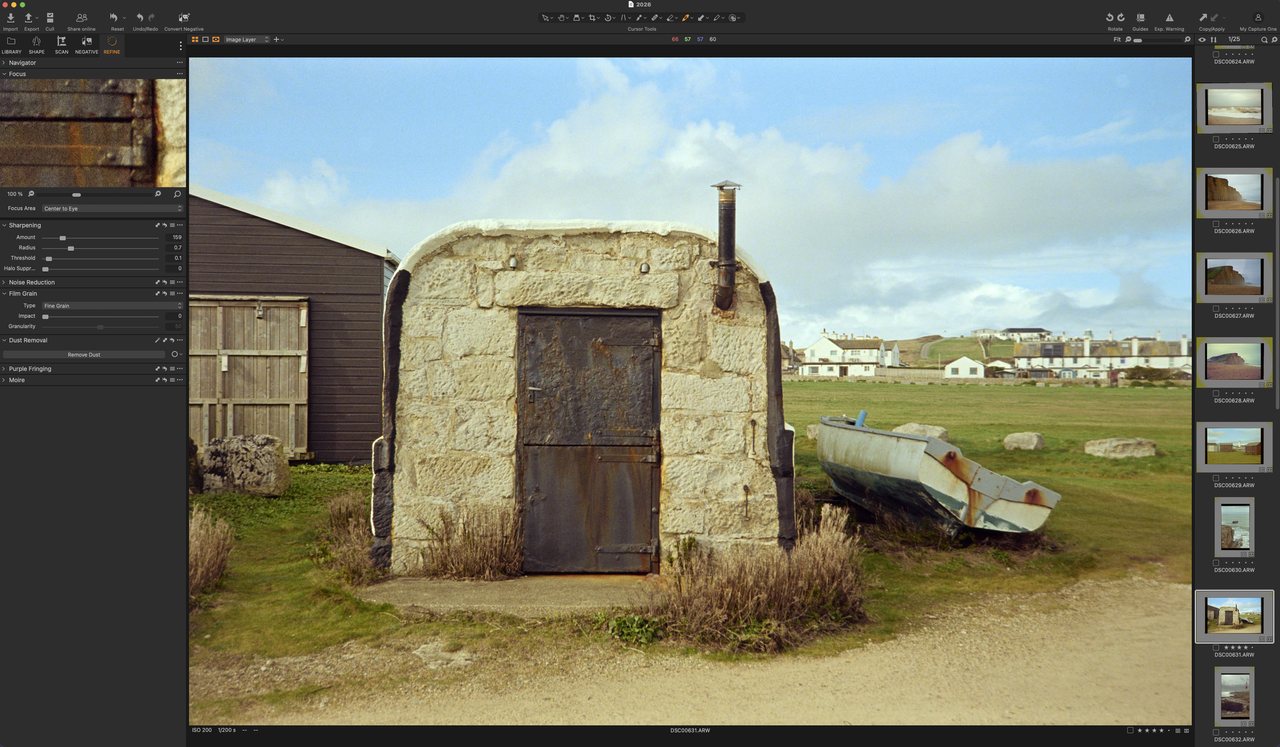
Screen capture of Capture One's negative scanning workflow.

When most of my photography was studio-based and digital, I was an advocate of using a Capture One workflow, which suited my needs very well. I loved the file organisation as much as the image editing tools, and shooting tethered makes so much sense for this type of work. However, it just didn’t seem to work for me when I started shooting a lot more film after a few years away. I decided to make the move to Lightroom, purely so I could use Negative Lab Pro for scanning my film. It works and works well, but I’ve never been totally satisfied, so I was very pleased to see Capture One announce an update, with a whole workspace and set of tools for scanning negatives.

I could return to Capture One's catalogue and session workflow for organising my files, and that feels so good, but it’s really the film scanning that excites me, for a number of reasons. First off, it means one less piece of software, a license to buy, tools installed, etc. Having native tools for a task is always preferable in my book.

Secondly is the more physical side of the process. I can now scan my negatives while tethered, with a massive live view on my monitor. That means attaining focus is easier, aligning my negatives is simpler, and keeping my hands off the camera means less possibility of knocking things out of whack.

A dedicated workspace for film scanning clears away clutter and keeps workflow smooth. (Image credit: Rob Redman)

Using Capture One for scanning is a real joy. Set up some guides to align the film carrier to, white balance, then crop. Copy those settings with a single click, and they’ll be applied to each frame as you rattle through a whole film in no time. It’s the fastest way to get a film ingested, and the results are rather lovely. I’ve done a few experiments, comparing this method with my previous setup, and I’m getting more consistently good results now. This is ongoing as the Capture One release is still fairly new, but I’m confident this will be my process for the foreseeable future.

Then there’s the matter of Capture One's image editing tools. This may be more a matter of taste, but I think the tools on offer work very well. I like how you only need to see what you need, and the new film scanning layout is excellent. Lightroom is possibly a touch easier on the eye, but I’m glad I’m no longer needing to bring up plugins, which is a blessing in itself.

So, for all the film photographers out there, I would highly recommend downloading a trial of Capture One, bagging yourself a tether cable, and giving it a whirl. Shooting negatives has never felt so rewarding.

Sign up to read this article
Read news from 100's of titles, curated specifically for you.
Already a member? Sign in here
Related Stories
Top stories on inkl right now
One subscription that gives you access to news from hundreds of sites
Already a member? Sign in here
Our Picks
Fourteen days free
Download the app
One app. One membership.
100+ trusted global sources.