The best running watches are now remarkably accurate when it comes to tracking your pace and distance when outdoors, with multi-band GPS ensuring reliable stats even in the trickiest spots.
However, when you run indoors on a treadmill, you’ll almost certainly notice that your watch gives different pace and distance stats to the treadmill itself, which is due to the fact it can’t use GPS and is estimating your pace.
How do watches track indoor runs

To determine your stats indoors watches use an accelerometer and stats like your height and stride length.
The watch can sense when you’re taking steps using the accelerometer, then use your height and also your training history to judge your stride length — steps x stride length will give you the distance run.
This is usually reasonably accurate once you’ve done a few indoor runs and calibrated the watch afterwards — many devices including Garmin watches let you change the distance at the end of an indoor run to match the treadmill, then use that data going forward.
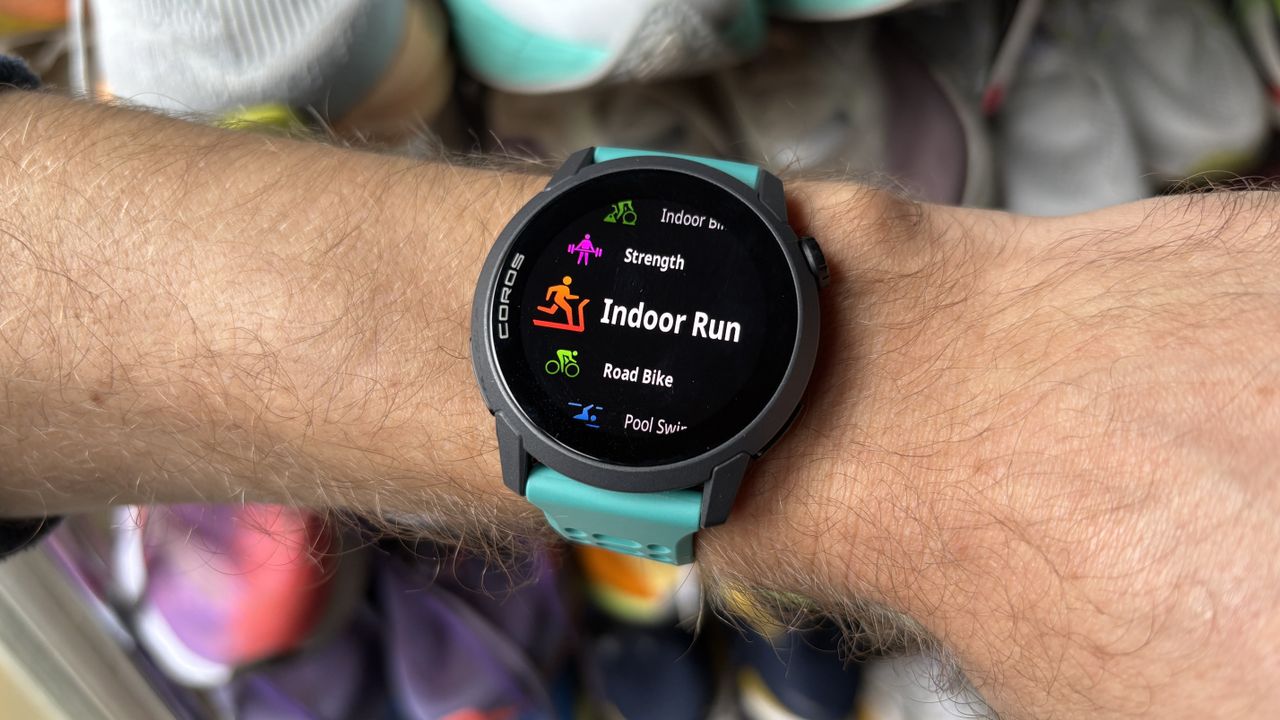
It’s far from perfect though, often getting my overall run distance wrong by as much as a mile. As someone who has used the treadmill a lot lately during the winter, I have been using a clever feature on my Coros Pace 4 that allows you to get perfect data on your watch during treadmill runs.
Manual speed and grade adjustments

Coros didn’t go for an incredibly high tech solution to the problem of inaccurate treadmill run data. Instead the fix is delightfully simple — you enter the speed you’re running at on the watch itself.
You can set the speed and grade of the treadmill before you start a run, or adjust it on the fly by holding the back button and going into the activity settings. You can also pause your run and adjust the pace, if that’s easier than fiddling with your watch while running.

It’s easy to do and means your watch will have perfect data on all kinds of runs, resulting in perfect pace graphs on Strava as well once you export your run there.
You can even connect your watch to Zwift using the virtual run feature and then broadcast the pace and cadence stats to use the virtual training app without having to connect it directly to a treadmill.
Other ways to get accurate treadmill run data

This Coros feature is appealing to me because it is so simple and works with each and every treadmill you might use, but there are more sophisticated solutions you can use as well.
Some smartwatches like the Apple Watch can connect directly to certain treadmills using NFC tech and get their stats directly from the machine.
You can also use a footpod to get more accurate indoor pace and distance stats — Coros themselves make a pod, while the best I’ve tested myself is the Stryd pod.
Of course, there is also always a chance the treadmill itself is incorrect — if you have one of the best treadmills at home, you might want to check it’s calibrated correctly from time to time.

Follow Tom's Guide on Google News and add us as a preferred source to get our up-to-date news, analysis, and reviews in your feeds.