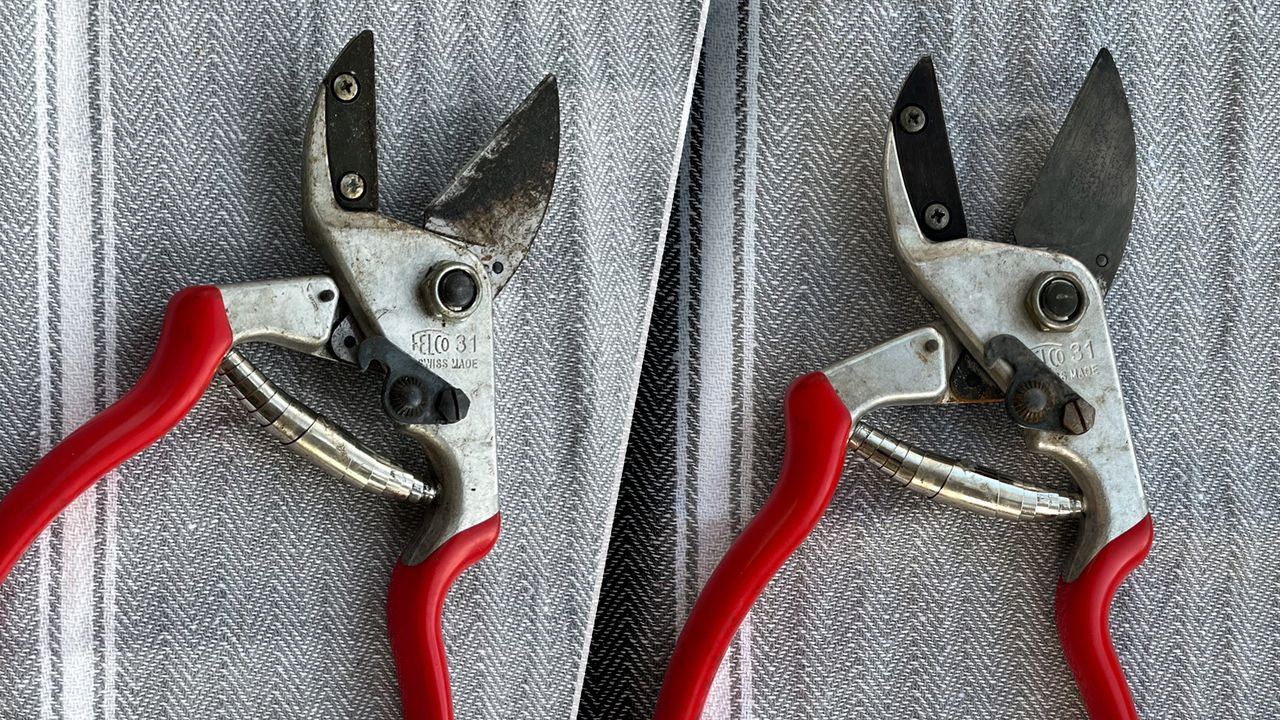
It’s that time of year when you start getting out your garden tools ahead of spring to realize they are not looking their best. If you’ve stored your tools in a shed or other outbuildings, they're likely looking worse for wear and brown with rust.
What’s more, if you discard your tools without cleaning them, you’ll have an even bigger battle on your hands to bring them back into good working order. Pruning shears are one of the tools that often get neglected, and because they have moving parts and need to have a sharp cut to prevent infection, they are one of the tools that need extra care and attention.
I usually follow a routine to clean my pruning shears, and despite wiping them down after each use, I often give them a deep clean.
However, I saw another method on Instagram, and since I have a few pairs of pruning shears, I thought I would give this alternative a shot to see if it was easier than my usual approach.
How I cleaned my pruning shears
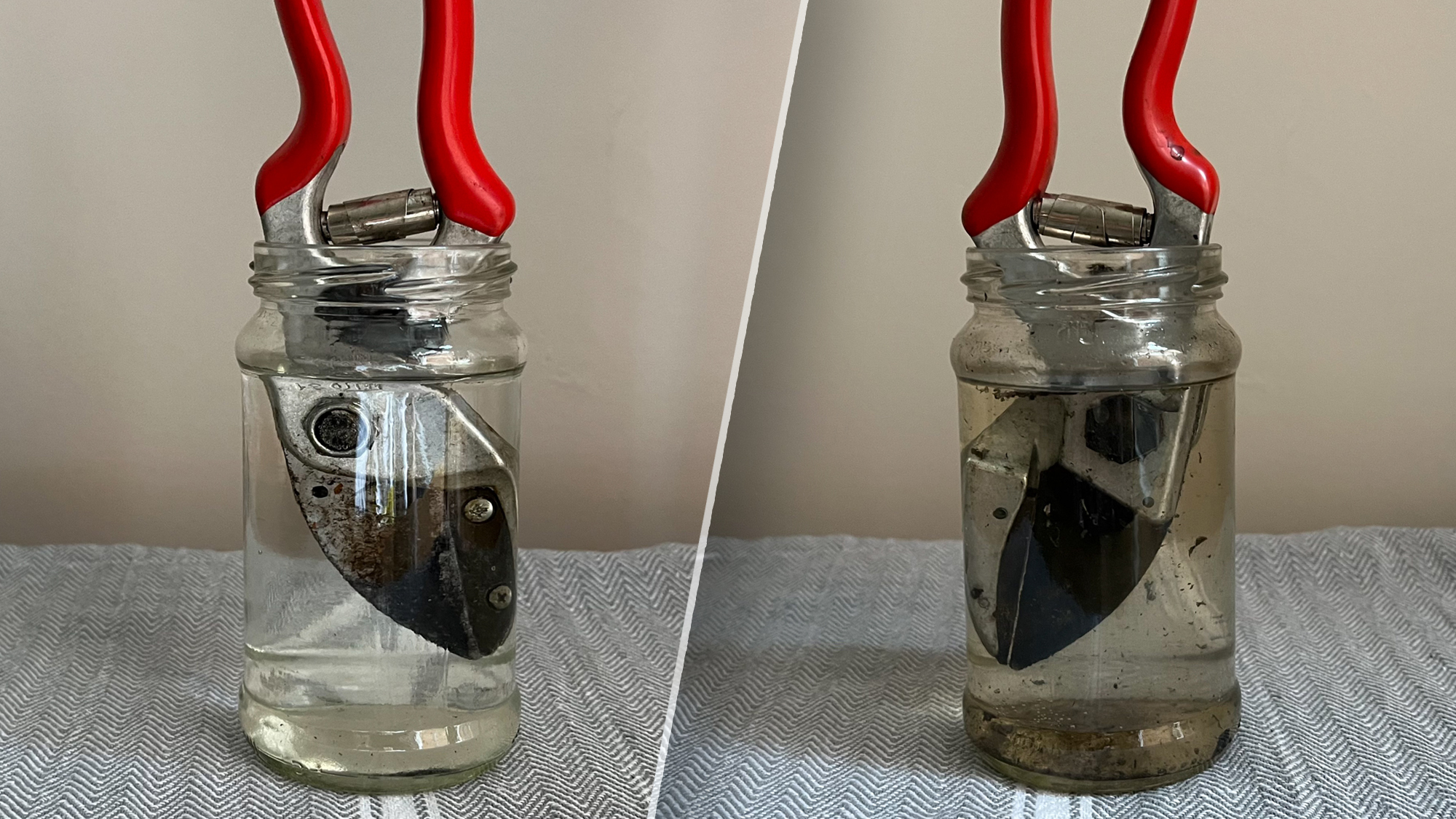
After watching Misilla Dela Llana’s Instagram post @learntogrow I followed her instructions on how to clean pruning shears. Rather than using bypass pruning shears, which she uses in her demonstration, I picked a forlorn pair of anvil pruning shears, which were sitting at the back of my shed.
Anvil pruning shears aren't my go-to tool. I mainly use bypass pruners when I'm gardening, which have scissor-like blades. However, anvil pruners have a different appearance and purpose. They have a single blade that cuts down onto a block and are designed for cutting through thick, dead, or woody stems, which bypass pruners can’t manage.
Here's what I did
1. As Dela Llana described, I placed my pruning shears in a jar of distilled vinegar and left them overnight. In the morning, I could see how much dirtier the solution looked and that the vinegar had removed some of the residue.
2. I rinsed my pruning shears under the tap before giving them a good scrub with a toothbrush. This helped to remove any residue that the vinegar had loosened but not dislodged.
3. I then placed my pruning shears into a solution of water and baking soda, using one cup of water to one tablespoon of baking soda, and let them soak for 10 minutes. According to Dela Llana, this helps neutralize the vinegar’s acidity.
4. After removing my pruning shears from the baking soda solution, I rinsed them under the tap and dried them with a clean cloth.
5. To finish, Dela Llana recommends applying oil to your tool once it is dry. She advises using linseed, camellia, or a multi-purpose mineral oil, but warns against using vegetable oil as it can go rancid.
The result
You can see from the before-and-after images above that this method removed the residue from my pruning shears. However, I did have some concerns about leaving them to soak in vinegar overnight.
Since I was cleaning Felco pruning shears, I have contacted the company to see if this is a cleaning method they recommend. I'll update this article once I gain a response.
The verdict
Although this cleaning method did remove the residue from my pruning shears, I didn’t find it any easier than my usual method.
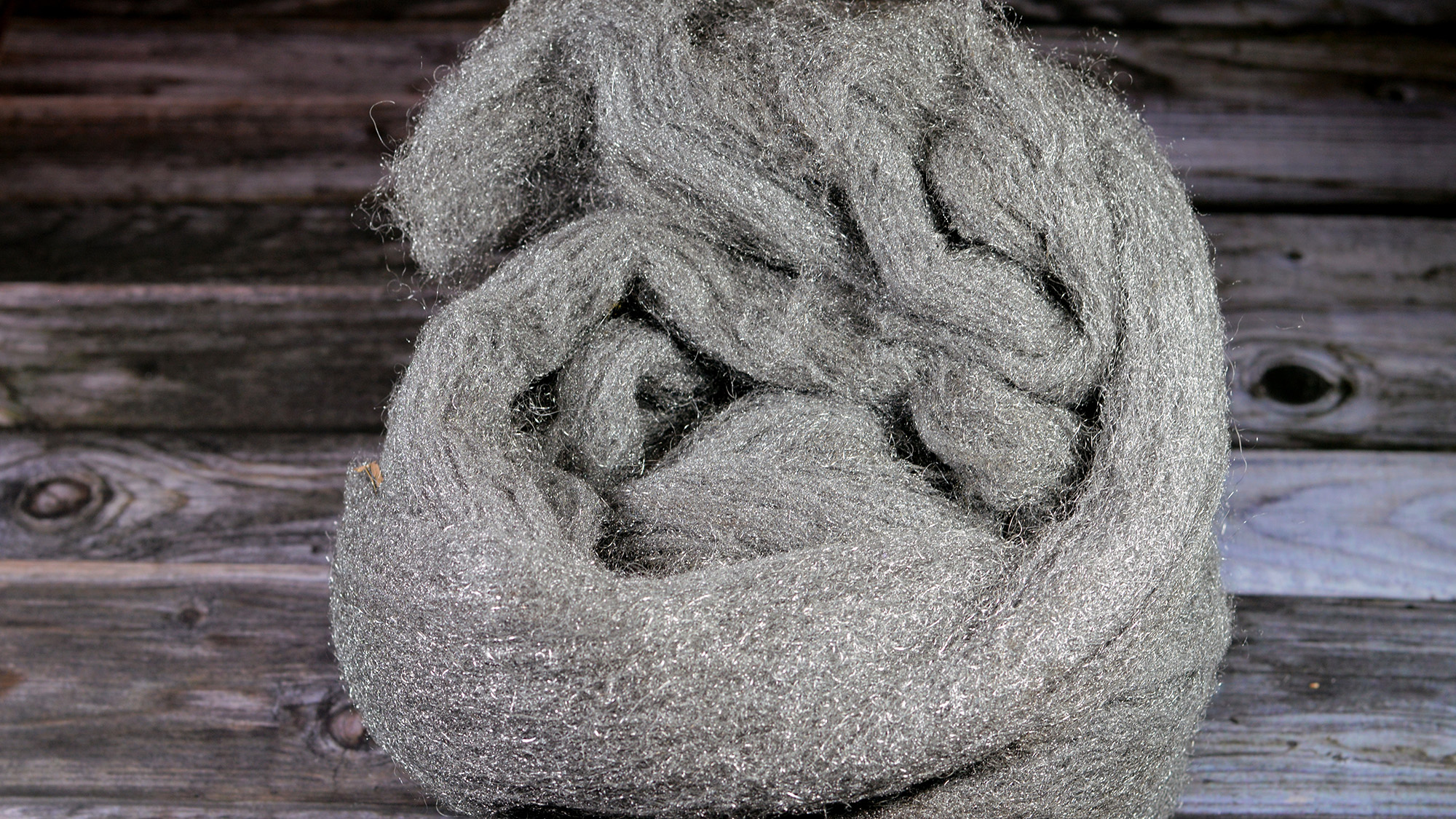
In fact, I find taking them apart, giving them a rub with wire wool and applying oil before reassembling them is far easier than waiting for them to soak in vinegar, even if it is overnight.
What's more, my favored cleaning method gives me a greater sense of achievement, and that's why I'm goig to be sticking with my tried and tested method.

Follow Tom's Guide on Google News and add us as a preferred source to get our up-to-date news, analysis, and reviews in your feeds.